

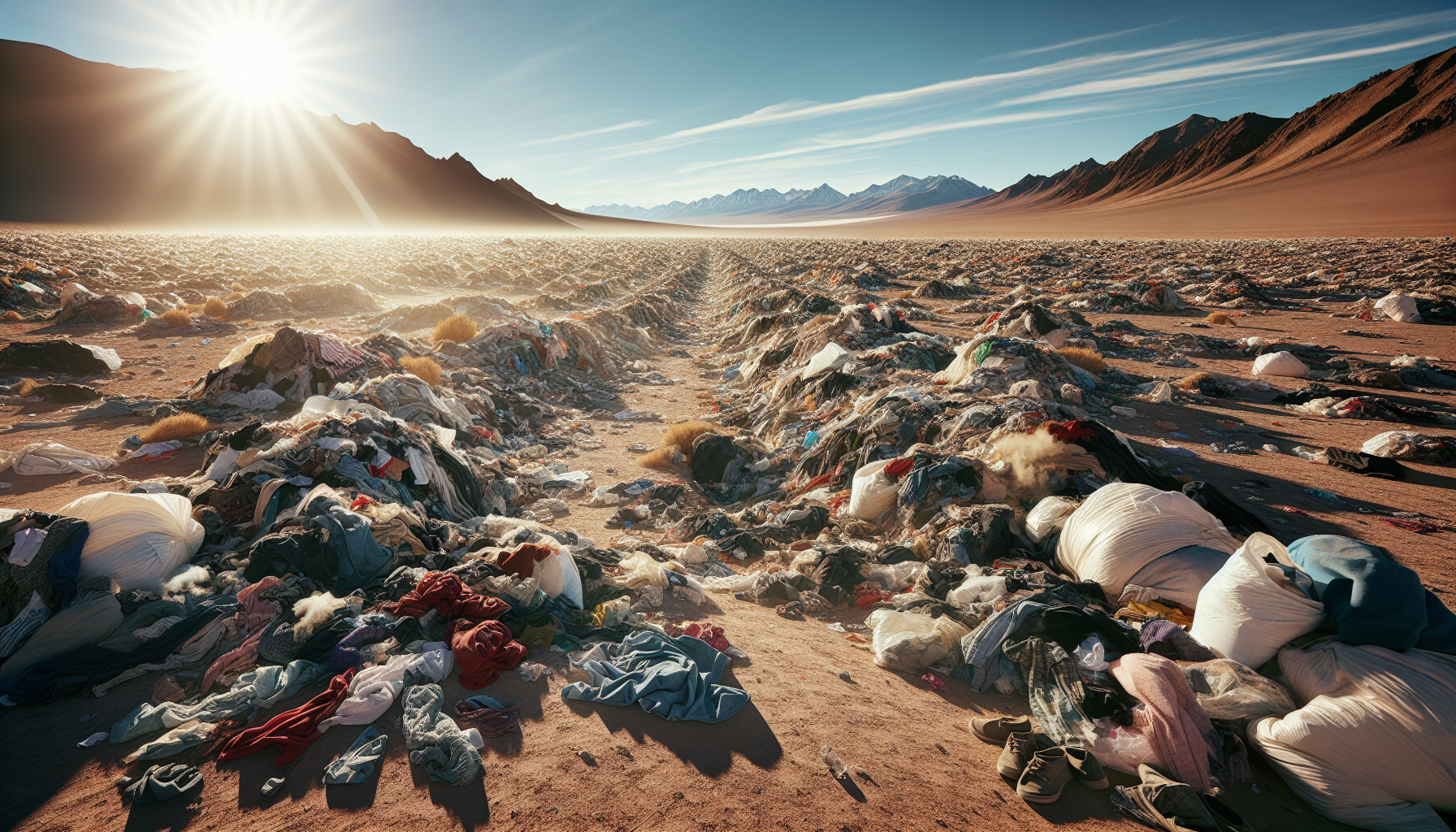
In a significant development, discarded clothing from multiple countries is accumulating in a desert region of South America. This phenomenon underscores the growing issue of global textile waste management and the environmental impact of fast fashion. The influx of used garments to this arid area raises concerns about pollution and the sustainability of current recycling practices. Many of these clothes, intended for recycling or reuse, ultimately contribute to landfill overflow in vulnerable ecosystems.
Meanwhile, the textile industry continues to produce vast amounts of clothing, much of which is discarded after minimal use. The export of secondhand clothes to developing regions has long been a practice aimed at extending garment life, but the sheer volume now overwhelms local waste management systems. This situation highlights the need for improved global policies on textile recycling and waste reduction. Environmentalists warn that without intervention, such dumping sites could cause long-term ecological damage.
Notably, this issue reflects broader challenges in balancing consumer demand with environmental responsibility. The accumulation of textile waste in sensitive desert environments serves as a stark reminder of the hidden costs of global consumption patterns. Efforts to promote sustainable fashion, circular economy models, and better waste handling are increasingly urgent. Addressing these concerns requires coordinated action from governments, industries, and consumers worldwide to mitigate the environmental footprint of discarded clothing.
