

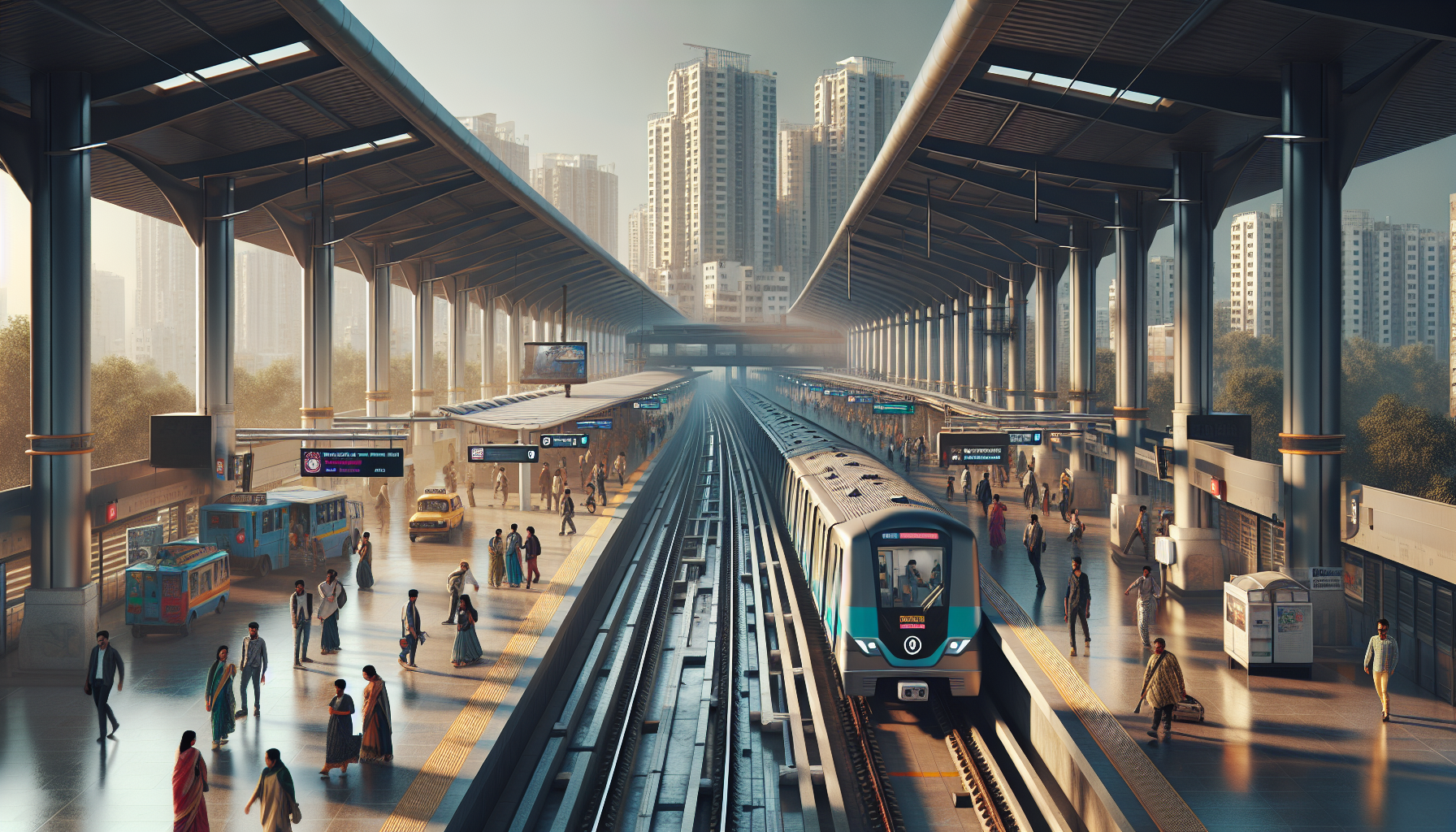
India has poured billions of dollars into expanding its metro rail networks across major cities, aiming to modernize urban transportation and reduce traffic congestion. Despite this significant investment, the expected surge in daily commuters has not materialized as anticipated. Experts highlight that inadequate last-mile connectivity options, such as feeder services and pedestrian pathways, continue to hinder easy access to metro stations. Additionally, the relatively high fare structure discourages many potential users, limiting the system’s overall appeal.
In a significant development, urban planners emphasize that without addressing these critical issues, metro ridership growth will remain sluggish. The lack of seamless integration with other modes of transport means many commuters still rely on private vehicles or informal transit options. This gap undermines the environmental and economic benefits that metro systems are designed to deliver. Furthermore, affordability remains a key barrier for lower-income groups, restricting equitable access to public transit.
Meanwhile, policymakers face mounting pressure to enhance last-mile connectivity through improved bus services, cycle tracks, and pedestrian-friendly infrastructure. Subsidizing fares or introducing flexible pricing models could also encourage wider adoption. The success of metro projects is crucial for India’s broader goals of sustainable urban development and reducing pollution in its rapidly growing cities. Without swift and coordinated action, the substantial investments risk falling short of their transformative potential.
