

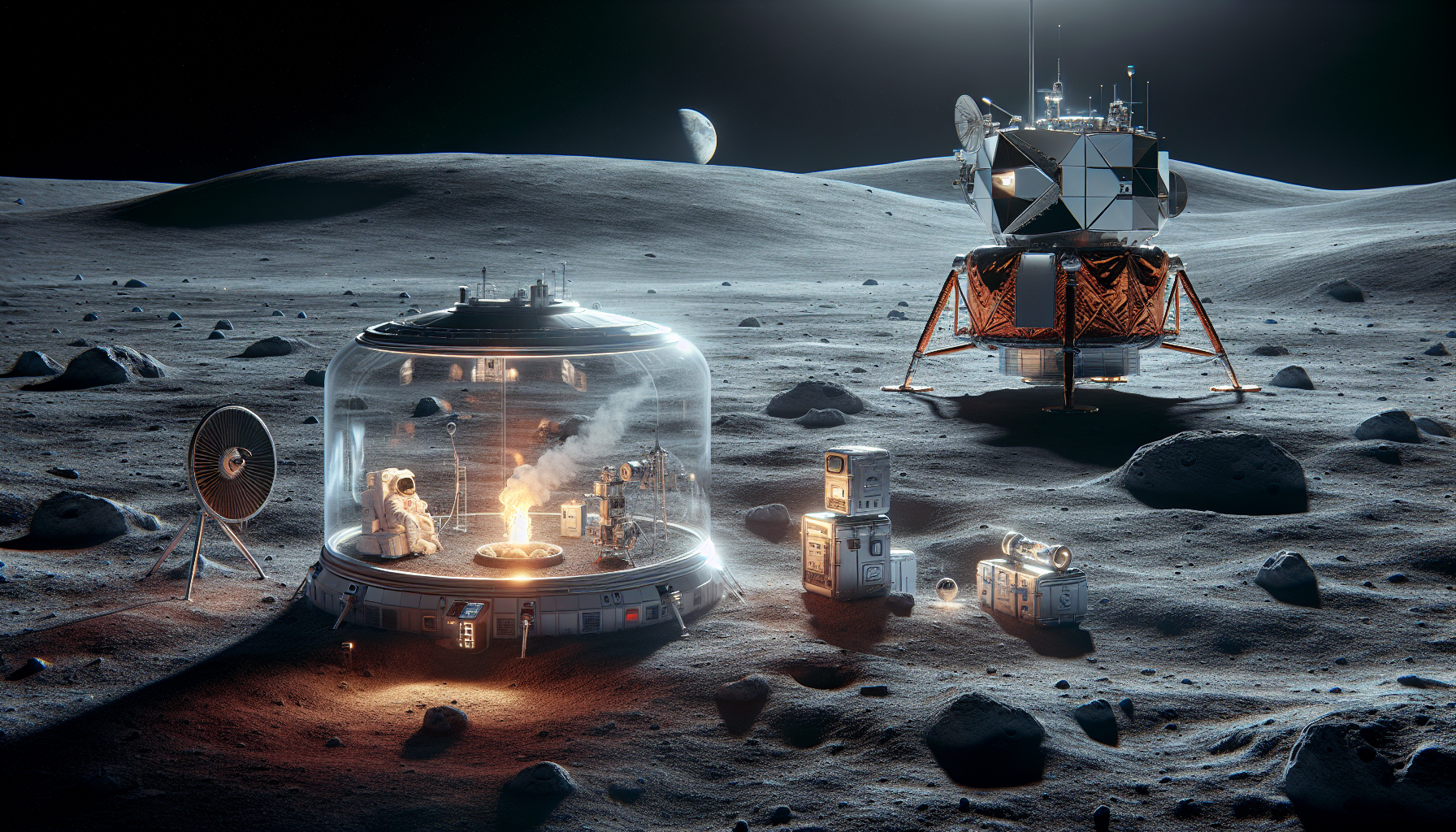
NASA is preparing to carry out a pioneering experiment by igniting a fire on the lunar surface. This test aims to analyze how fire behaves in the Moon’s unique environment, which lacks an atmosphere and has low gravity. Understanding combustion under these conditions is crucial for future long-duration lunar missions, where fire safety will be a major concern. The experiment represents a significant step in ensuring astronaut safety and developing fire mitigation strategies for extraterrestrial habitats.
In a significant development for space exploration, this test will provide valuable data on flame dynamics in an environment vastly different from Earth. The Moon’s vacuum and reduced gravity affect how fire spreads and consumes fuel, which could impact the design of life support and emergency systems in lunar bases. This research could also influence fire safety protocols for missions to Mars and other celestial bodies. NASA’s initiative underscores the importance of addressing environmental hazards beyond Earth to protect human explorers.
Meanwhile, the experiment highlights NASA’s commitment to advancing scientific knowledge and preparing for sustainable human presence on the Moon. By simulating fire scenarios, engineers can better equip astronauts with tools and procedures to handle emergencies. The findings will contribute to safer space habitats and inform international standards for off-world living. This historic test marks a milestone in space safety research, paving the way for more ambitious exploration missions in the coming decades.
