

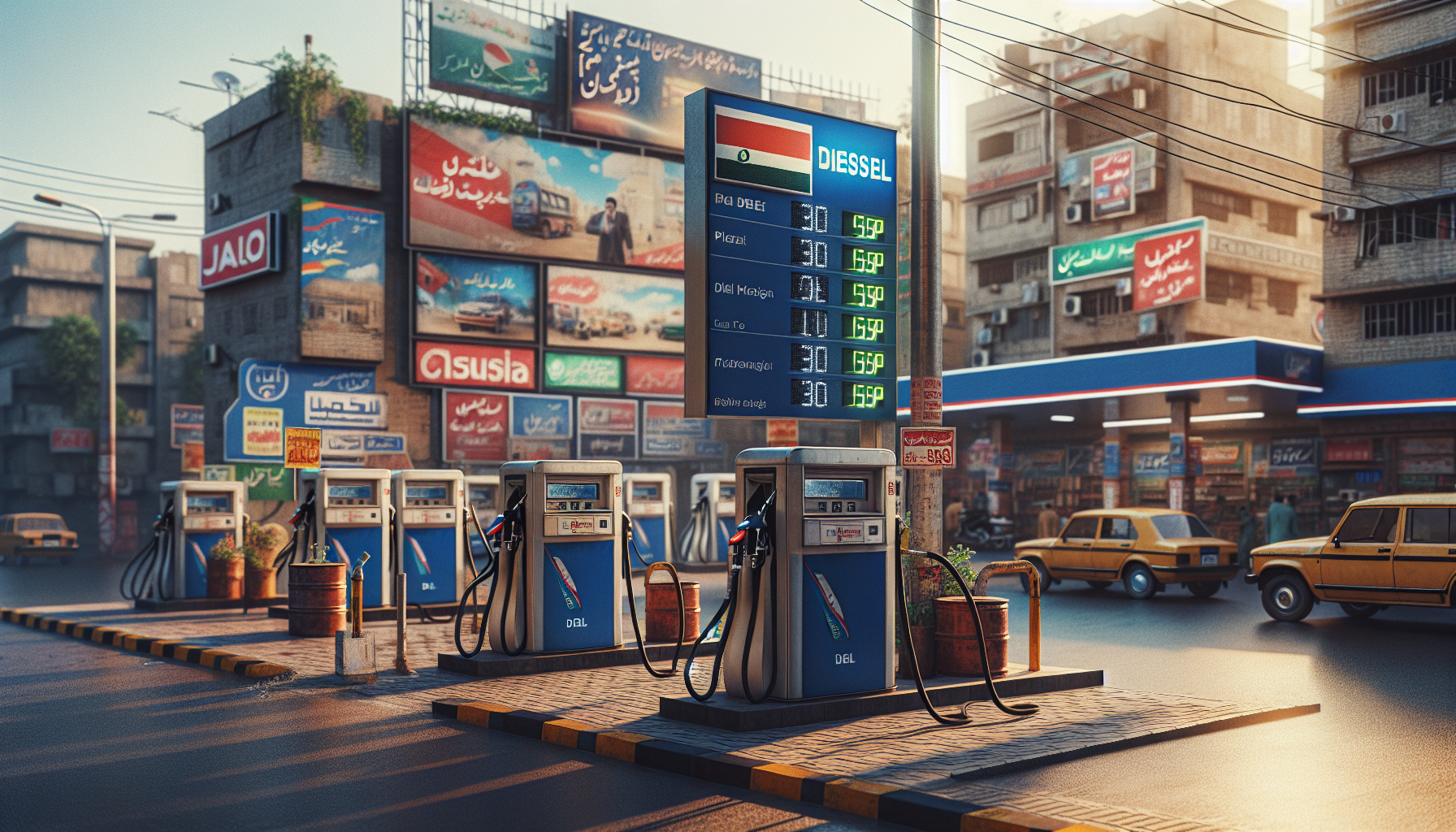
On April 17, 2026, Pakistan implemented a notable reduction in diesel prices, marking a significant move in the country’s energy sector. This price adjustment is expected to alleviate the financial burden on consumers and businesses that rely heavily on diesel fuel for transportation and industrial activities. The decision comes amid ongoing efforts to control inflation and stabilize the economy, which has faced challenges due to fluctuating global oil prices and domestic fiscal pressures.
Diesel is a critical fuel in Pakistan’s economy, powering everything from agricultural machinery to freight transport, making its cost a key factor in overall production expenses. By lowering diesel prices, the government aims to reduce the cost of goods and services, potentially curbing inflationary trends that affect everyday consumers. This measure also reflects the government’s responsiveness to public concerns about rising fuel costs and their impact on livelihoods.
In a broader context, the diesel price cut may influence Pakistan’s trade balance by affecting transportation costs and export competitiveness. Meanwhile, it highlights the government’s strategic approach to energy pricing policies amid global market volatility. The reduction is likely to be welcomed by various sectors, including logistics, agriculture, and manufacturing, which are integral to Pakistan’s economic growth and development.
