

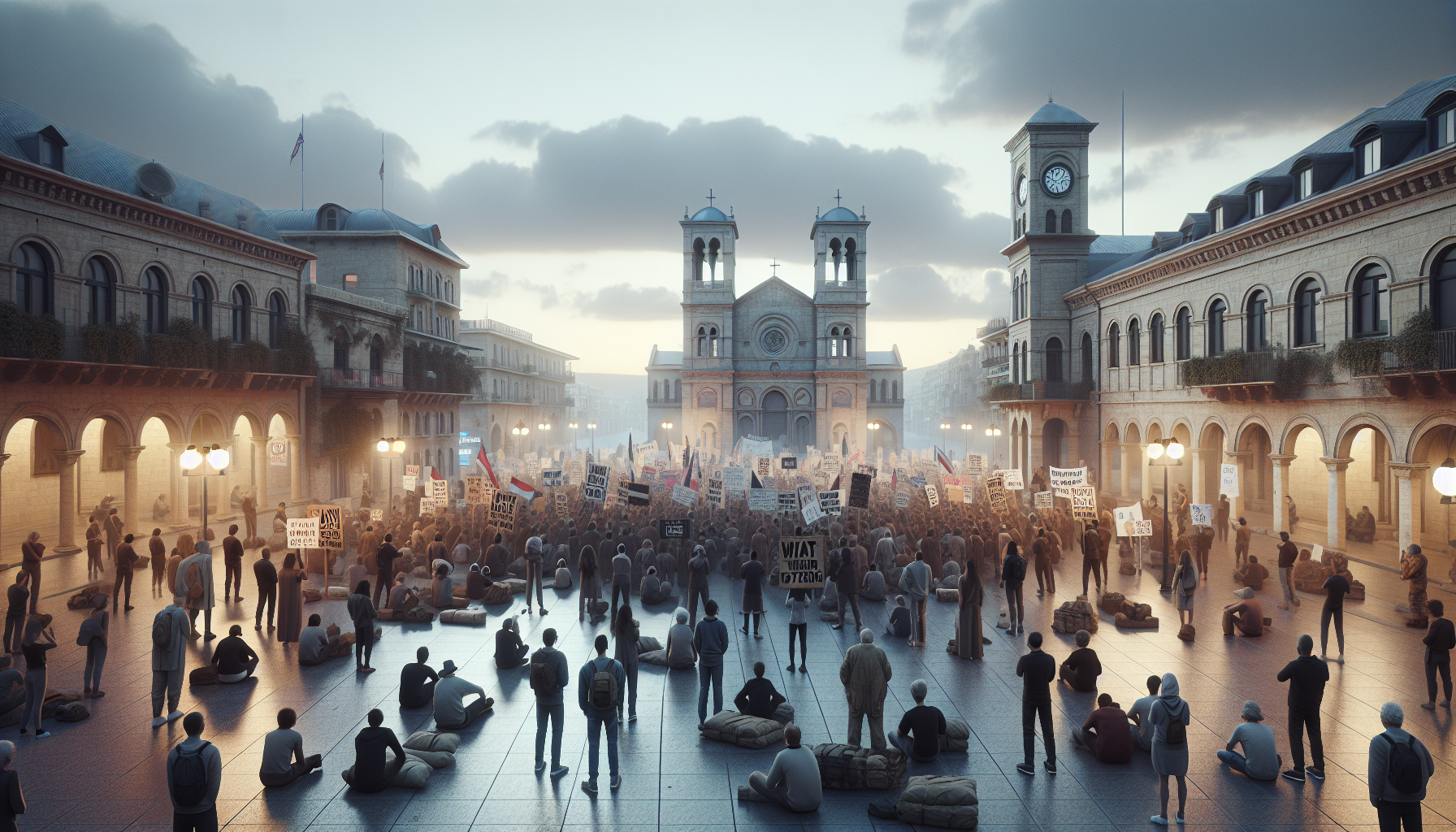
Anti-war protests in Western nations have been notably less vigorous regarding the conflict involving Iran, especially when compared to the widespread demonstrations supporting Gaza and Ukraine. This subdued response stems from a combination of public exhaustion after years of global conflicts, apprehension about escalating tensions, and a growing sense of disillusionment with the effectiveness of protests. Many citizens appear hesitant to engage actively, reflecting a complex mix of political and social factors influencing public sentiment.
Historically, Western societies have mobilized quickly against conflicts perceived as immediate threats or humanitarian crises, as seen in the robust support for Ukraine following Russia’s invasion and the widespread outcry over Gaza’s humanitarian situation. However, the Iran issue presents a more intricate geopolitical challenge, with fears of broader regional instability and nuclear implications tempering public activism. This dynamic has led to a comparatively muted protest movement, highlighting the difficulties in rallying mass support for conflicts perceived as distant or complicated.
In a significant development, this trend underscores the evolving nature of public engagement with international conflicts, where protest fatigue and skepticism about political outcomes play crucial roles. The restrained demonstrations also reflect concerns about potential repercussions and the effectiveness of diplomatic versus grassroots approaches. As global tensions persist, understanding these factors is essential for policymakers and activists aiming to shape international responses and public opinion.
