

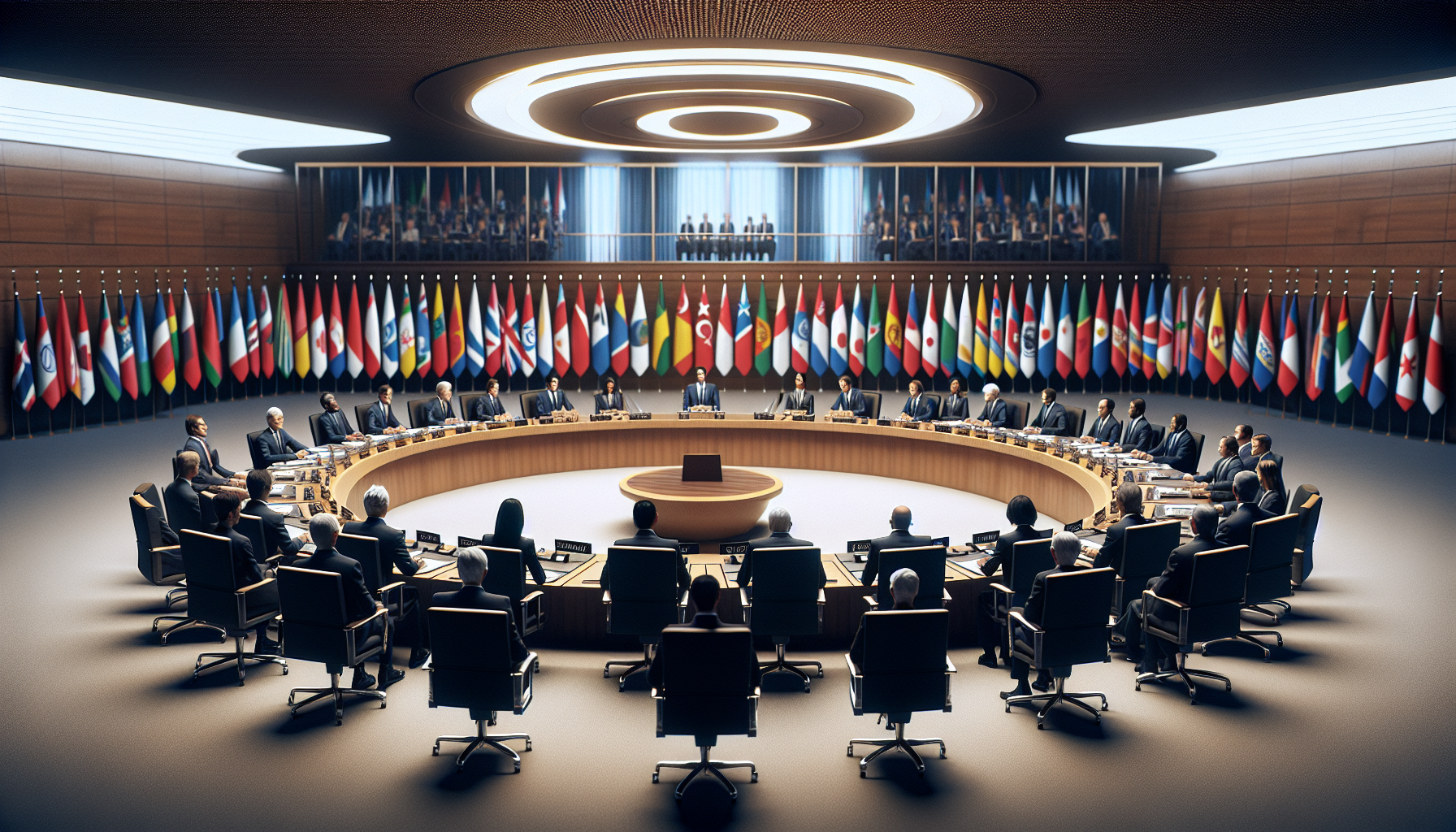
Pakistan has delivered a sharp critique of the United Nations Security Council’s structure, calling for the complete elimination or significant limitation of the veto power. Speaking at a resumed session of the Intergovernmental Negotiations (IGN) on Security Council reform, Pakistan’s Permanent Representative, Ambassador Asim Iftikhar Ahmad, emphasized that the current system has rendered the 15-member Council ineffective in addressing critical global conflicts.
He identified the veto as a key factor causing “global decision-making paralysis,” often blocking timely international responses to urgent crises. This, he argued, undermines the Council’s ability to fulfill its mandate of maintaining international peace and security.
In advocating for a more democratic and representative Council, Pakistan firmly rejects any expansion of permanent membership. Ambassador Ahmad explicitly stated that Islamabad would not endorse the addition of new permanent seats, especially for countries seeking to join the exclusive group with their own veto rights.
He warned that increasing the number of permanent members would deepen the Council’s dysfunction and further alienate the majority of UN member states. Instead, Pakistan proposes boosting the number of non-permanent, elected seats to better reflect the diverse interests of today’s world rather than the power structures established in 1945.
Addressing the veto issue, the Ambassador’s comments reflected widespread frustration over the Council’s recent failures to act decisively on humanitarian emergencies, including the crisis in Gaza. Pakistan views the veto as an outdated and undemocratic tool that conflicts with the UN Charter’s principle of sovereign equality among nations.
By curbing the veto or raising the political consequences of its use through a broader base of elected members, Pakistan believes the Council can become more accountable and effective. Ambassador Ahmad cautioned that without these fundamental reforms, the Security Council risks losing its credibility as the foremost institution responsible for global peace and security.
