

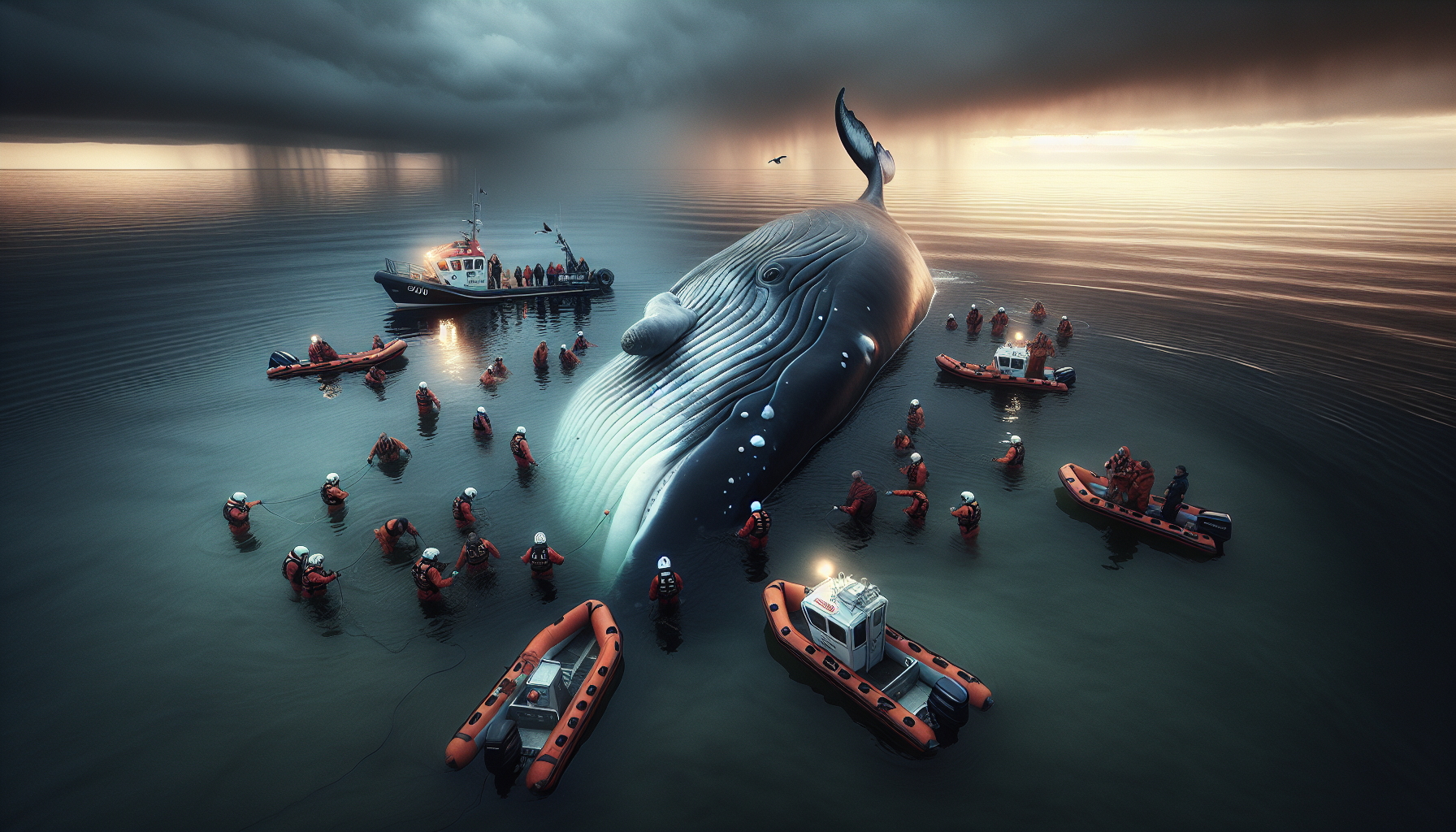
Rescue teams have intensified their efforts to save Timmy, a whale that has been stranded in the Baltic Sea for several weeks. Despite numerous attempts to free the distressed animal, previous methods have failed to secure its release. In a significant development, rescuers are now employing air cushions to provide additional support and facilitate the whale’s movement back to deeper waters. This innovative approach aims to reduce stress on Timmy while increasing the chances of a successful rescue.
The prolonged stranding of Timmy has drawn considerable attention from marine biologists and environmentalists, highlighting the challenges involved in marine mammal rescue operations. The Baltic Sea’s unique ecosystem and shallow waters complicate efforts to navigate and assist large marine animals. Timmy’s condition has raised concerns about the impact of environmental factors and human activity on marine life in the region. Experts emphasize the importance of swift and effective intervention to prevent further deterioration of the whale’s health.
Meanwhile, the rescue operation underscores the broader significance of protecting marine biodiversity and responding to wildlife emergencies. The use of air cushions represents a novel technique in marine rescue, potentially setting a precedent for future interventions involving stranded whales and other large sea creatures. The outcome of this mission will be closely monitored by conservation groups and the public, reflecting a growing commitment to safeguarding vulnerable species in their natural habitats.
