

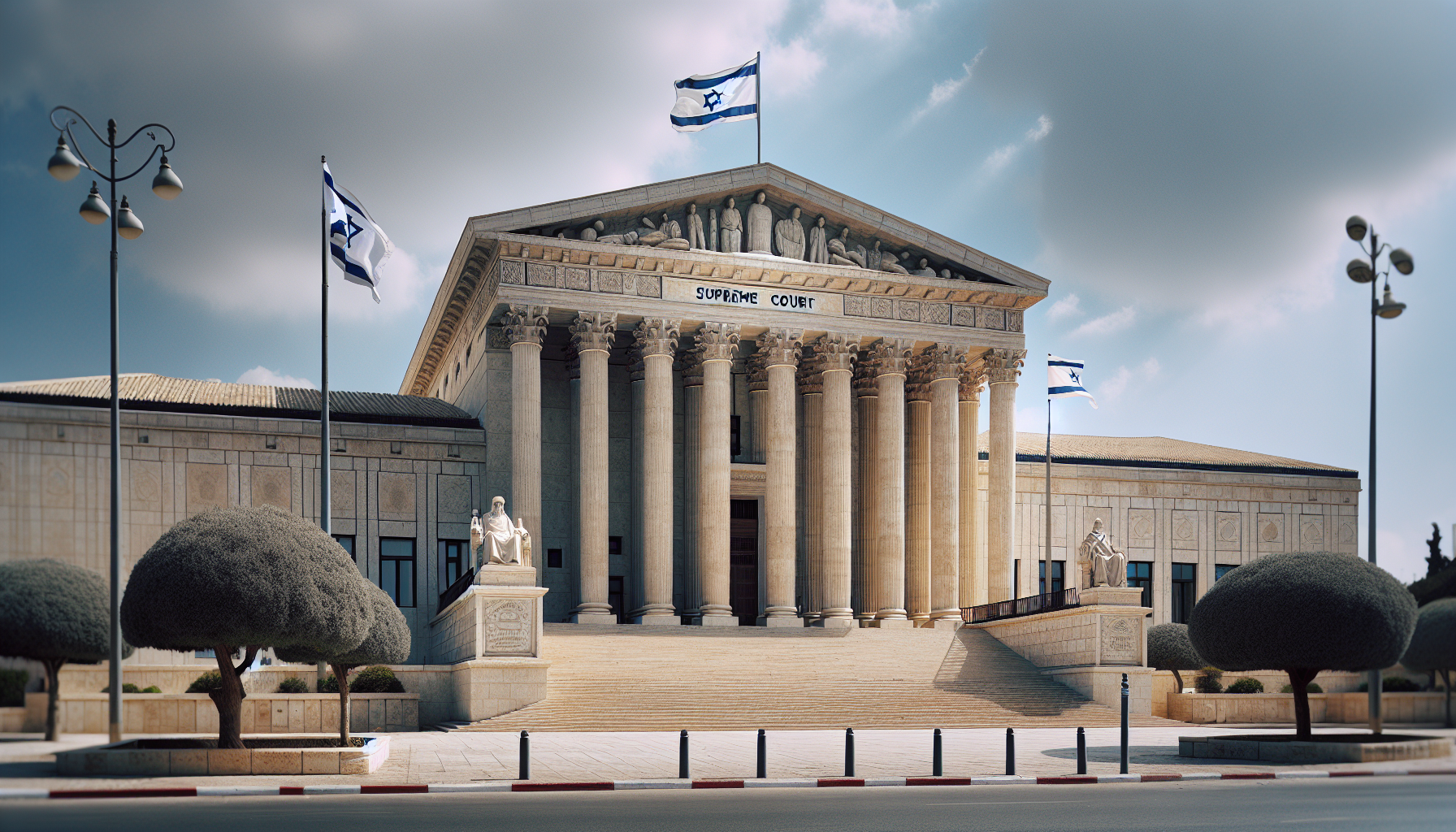
Israel’s Supreme Court has commenced hearings on petitions aimed at removing a far-right minister from office. This legal challenge highlights ongoing political friction within the Israeli government, reflecting broader societal debates over the role of far-right figures in governance. The court’s decision could have significant implications for the balance of power and the future direction of Israeli politics.
Notably, the petitions come at a time when Israel faces heightened internal divisions and external pressures, making the judiciary’s role increasingly pivotal. The involvement of the Supreme Court underscores the legal mechanisms available to address political disputes in Israel’s democratic framework. Meanwhile, supporters and opponents of the minister closely watch the proceedings, anticipating a ruling that may either reinforce or challenge the current administration’s composition.
In a significant development, the court’s ruling will likely influence public confidence in the judicial system and the government’s legitimacy. It also sets a precedent for how far-right political actors are treated within Israel’s legal and political landscape. The outcome may affect future coalition dynamics and the broader discourse on democracy and minority rights in the country.
