

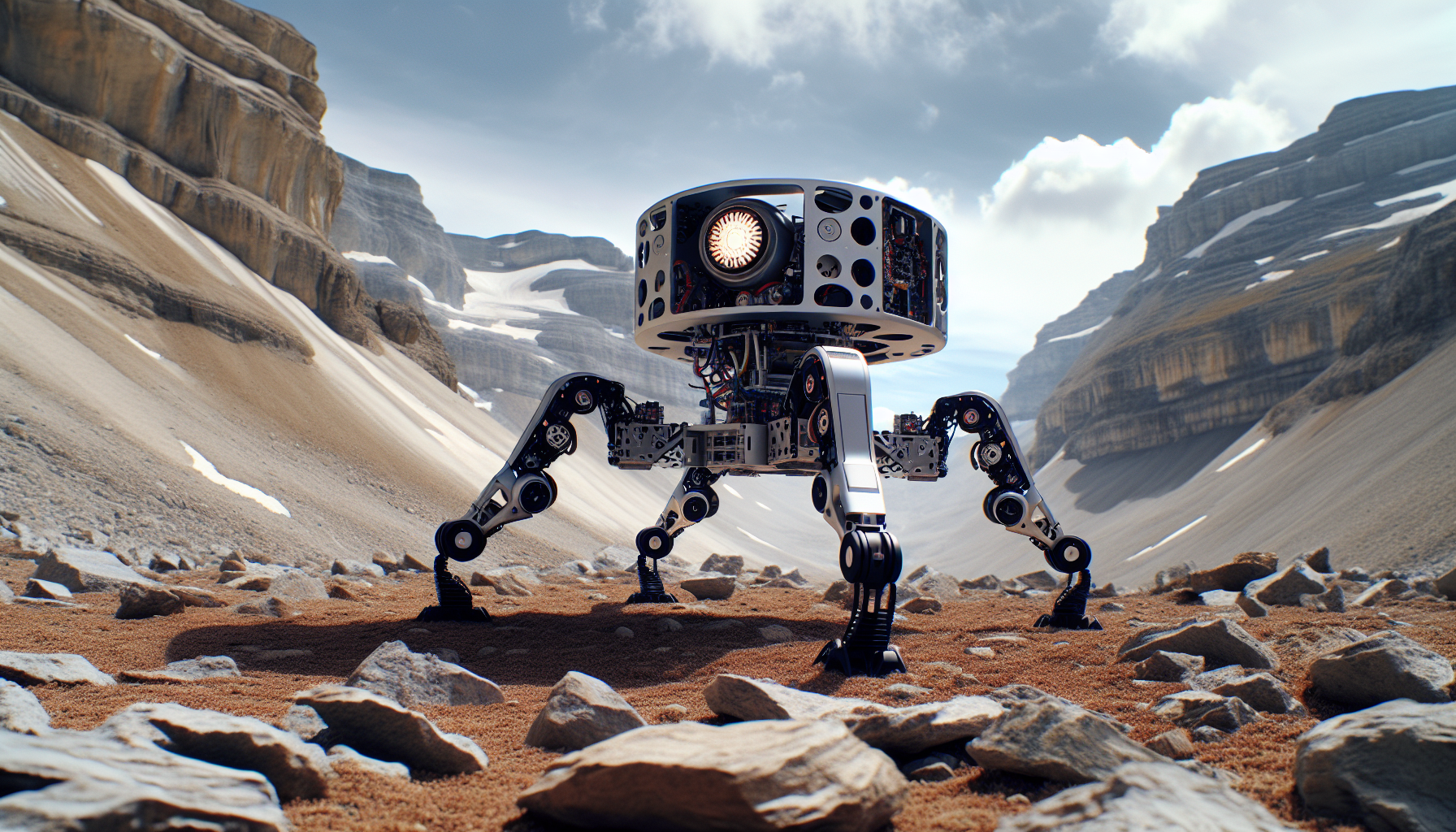
Swiss researchers have initiated trials of the ANYmal robot to assess its potential for autonomous operations in Mars-like environments. This cutting-edge quadruped robot is designed to navigate challenging terrains without human intervention, a critical feature for extraterrestrial exploration. The tests simulate Martian conditions to ensure the robot can perform scientific tasks and mobility functions independently. Such advancements are vital as space agencies aim to deploy robotic explorers to Mars for extended missions.
In a significant development, the ANYmal robot’s autonomous capabilities are being scrutinized to determine its reliability in harsh, remote settings similar to those found on Mars. The robot’s ability to adapt to unpredictable terrain and perform complex maneuvers could revolutionize how robotic missions are conducted on the Red Planet. This research aligns with global efforts to enhance robotic autonomy, reducing the need for constant human control and enabling more efficient exploration.
Meanwhile, the success of these simulations could pave the way for deploying the ANYmal robot in actual Mars missions, contributing to scientific discovery and planetary research. The integration of such robots could dramatically increase the scope and safety of extraterrestrial exploration. As space exploration technology evolves, autonomous robots like ANYmal represent a crucial step toward sustainable and effective interplanetary missions.
