

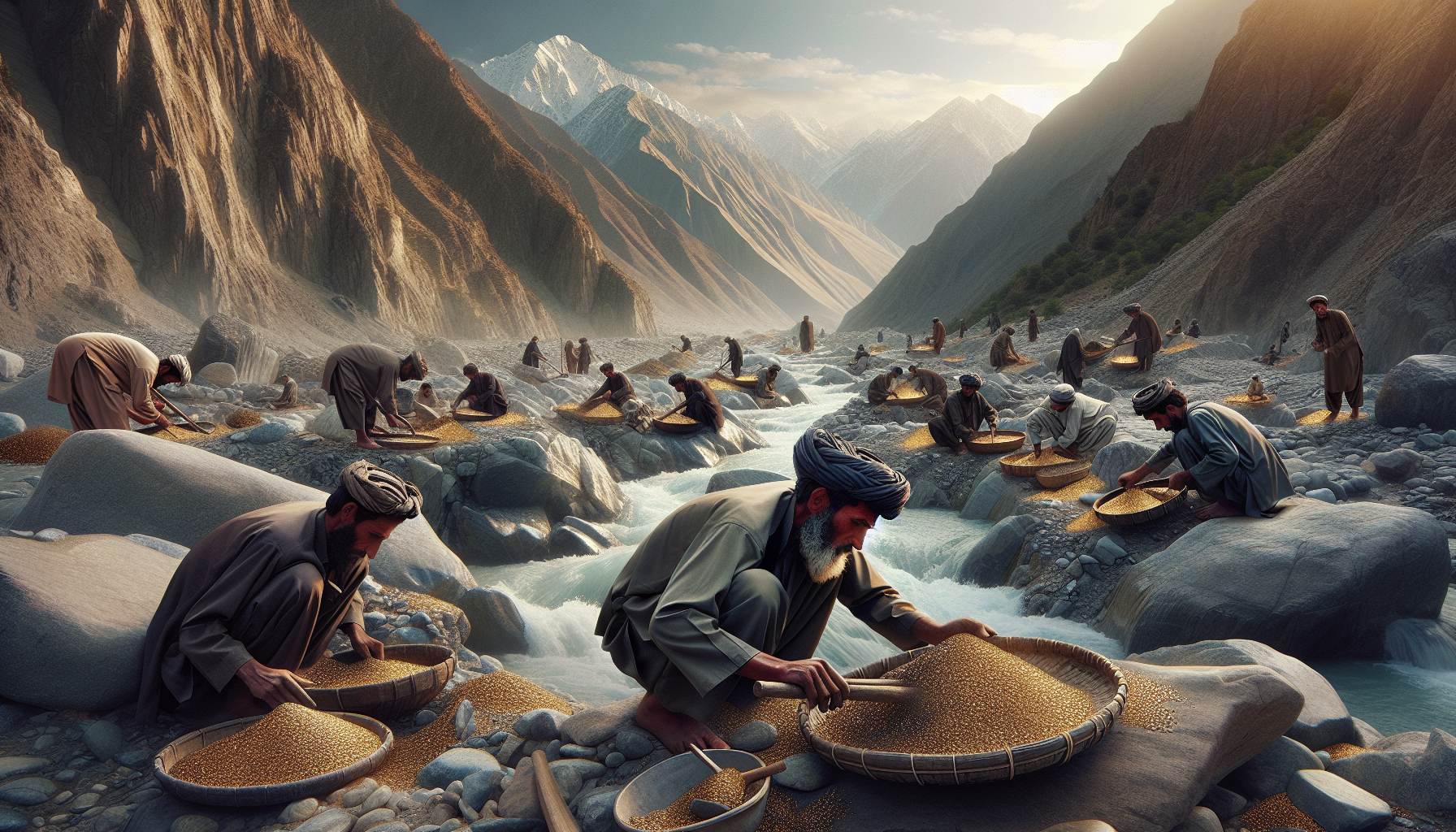
In the remote and rugged terrain of the Hindu Kush mountains, Afghan villagers have increasingly turned to gold-panning as a means to sustain their livelihoods. This traditional practice involves sifting through river sediments to extract tiny particles of gold dust, providing a crucial source of income in an area with few economic alternatives. The region’s harsh geography and ongoing instability have severely limited access to formal employment, pushing locals toward this labor-intensive activity.
Gold-panning in Afghanistan is not only a survival strategy but also reflects the broader economic struggles faced by rural communities. With agriculture often hindered by difficult climatic conditions and conflict disrupting trade and infrastructure, villagers rely on natural resources to support their families. Meanwhile, the informal nature of gold-panning means that earnings are unpredictable and often insufficient, underscoring the precariousness of their situation.
In a significant development, this reliance on artisanal gold extraction highlights the urgent need for sustainable economic initiatives in Afghanistan’s mountainous regions. Enhancing access to education, infrastructure, and alternative livelihoods could reduce dependence on such risky and low-yield activities. Notably, the gold-panning efforts also raise environmental concerns, as unregulated mining can lead to ecological degradation, further complicating the prospects for long-term community resilience.
