

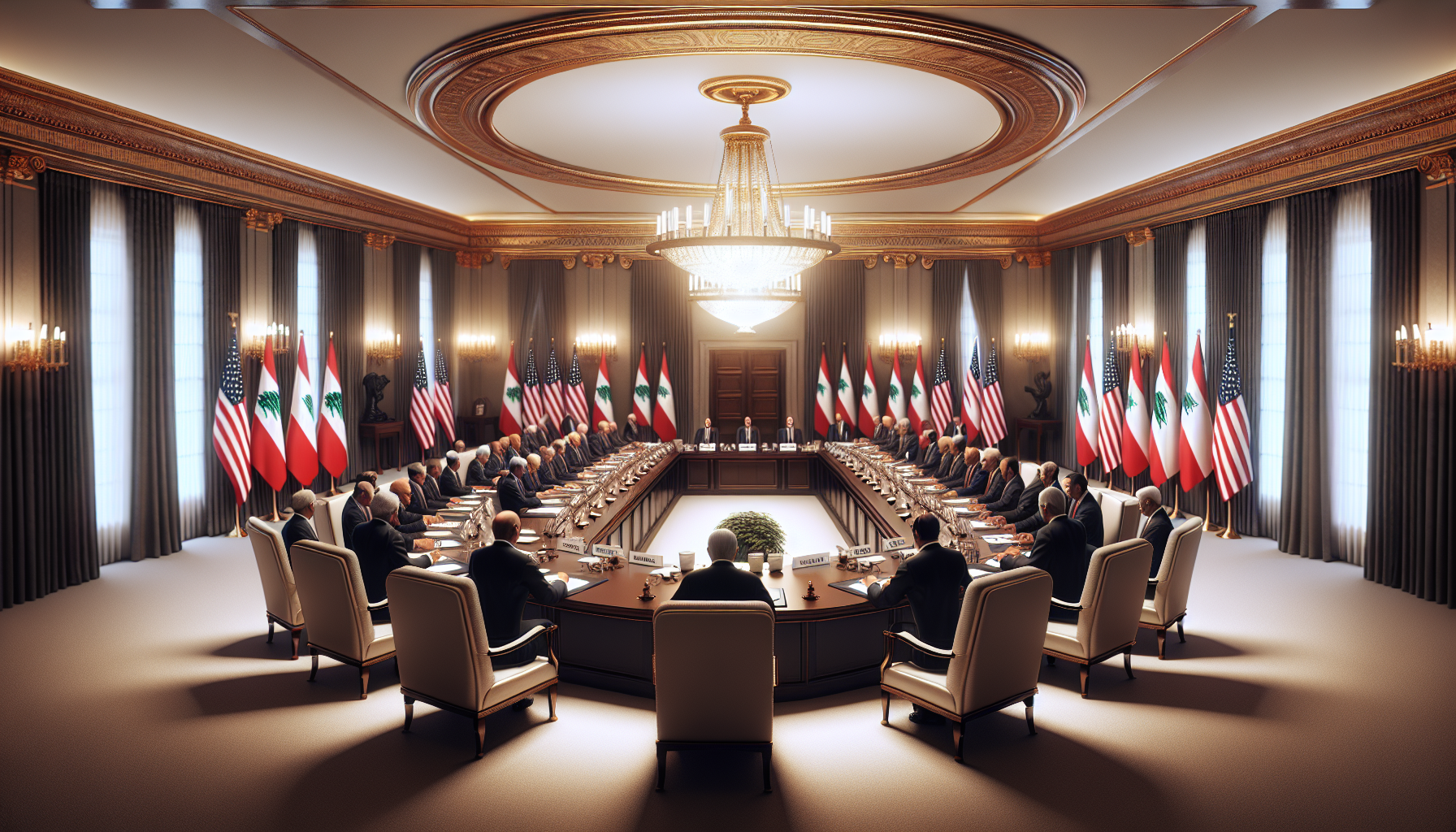
Lebanese and Israeli representatives are set to convene in Washington on Tuesday for US-mediated discussions aimed at resolving the ongoing war in Lebanon. However, the likelihood of reaching an agreement remains slim. Naim Qassem, the leader of the pro-Iran Hezbollah group engaged in combat with Israel, urged that the talks be canceled before they even commence, labeling them as “futile.”
Lebanon was drawn into the broader Iran-related conflict on March 2 following Hezbollah’s attack on Israel. Since then, Israeli military actions—including a particularly severe strike on Beirut on April 8—have resulted in over 2,000 deaths and displaced more than one million people, despite international appeals for a ceasefire. Israeli ground forces have also launched an invasion into southern Lebanon.
The meeting, facilitated by Secretary of State Marco Rubio, will bring together the Israeli and Lebanese ambassadors to Washington alongside the US ambassador to Beirut. A State Department official described the talks as “open, direct, high-level diplomatic discussions—the first of their kind since 1993—brokered by the United States.” The official added that the dialogue aims to address the long-term security of Israel’s northern border and support Lebanon’s efforts to regain full sovereignty over its territory.
Despite this, the two parties remain deeply divided. Israeli government spokeswoman Shosh Bedrosian emphasized that the dialogue’s goal is to disarm Hezbollah, remove the group from Lebanon, and establish peaceful relations between the two nations. She made clear that Israel will not negotiate a ceasefire with Hezbollah, which continues to launch indiscriminate attacks against Israeli civilians.
On the Lebanese side, President Joseph Aoun expressed hope that the Washington talks would lead to a ceasefire agreement in Lebanon and pave the way for direct negotiations between Lebanon and Israel.
Meanwhile, US diplomats have faced challenges in recent days as the Lebanon conflict threatens to complicate ongoing talks with Iran, which recently stalled in Pakistan. The Trump administration insists on Hezbollah’s disarmament while also advocating for Lebanon’s territorial integrity and sovereignty, alongside Israel’s security rights—positions that are difficult to reconcile.
A former Israeli defense official, speaking anonymously, remarked that it would require “a great deal of imagination and optimism” to believe the issues between Israel and Lebanon could be resolved in Tuesday’s Washington meeting, noting that expectations remain low. The official predicted that reaching an agreement will be very challenging and suggested Israel may establish a buffer zone in the north similar to the one in Gaza.
Hezbollah entered the regional conflict on March 2 in retaliation for the death of Iranian Supreme Leader Ali Khamenei, who was killed on February 28 during the initial Israeli-American offensive. In response, Israel launched extensive and deadly air strikes across Lebanon, followed by a ground offensive in the country’s south.
