

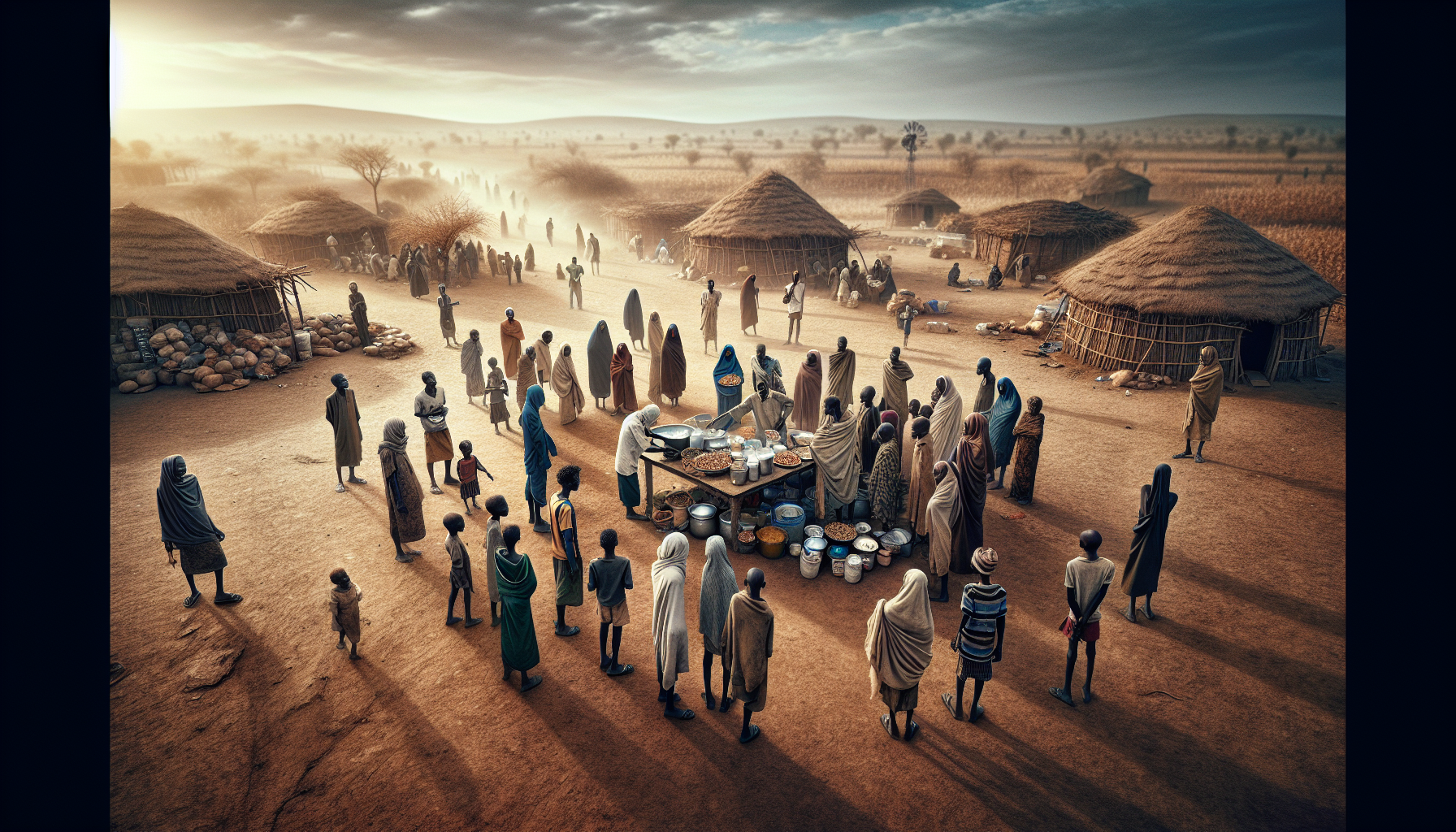
Millions of Sudanese are currently surviving on just one meal each day as the nation’s food crisis intensifies, threatening to expand further. This alarming situation was highlighted in a report released Monday by several humanitarian organizations.
The conflict between the Sudanese army and the paramilitary Rapid Support Forces (RSF), now entering its third year on Wednesday, has triggered severe hunger and displaced millions, creating one of the largest humanitarian emergencies worldwide.
The report, compiled by Action Against Hunger, CARE International, the International Rescue Committee, Mercy Corps, and the Norwegian Refugee Council, reveals that in the hardest-hit regions—North Darfur and South Kordofan—millions of families have access to only one meal daily. Many endure entire days without food, resorting to consuming leaves and animal feed to survive.
Meanwhile, the Sudanese government, aligned with the army, denies the presence of famine, and the RSF rejects responsibility for the dire conditions in areas it controls. Nevertheless, 61.7% of Sudan’s population—approximately 28.9 million people—face acute food insecurity, as outlined in the 2026 Humanitarian Needs and Response Plan.
Notably, the United Nations has documented widespread atrocities and ethnically motivated violence throughout the country. In November, famine conditions were officially confirmed for the first time in al-Fashir and Kadugli. Further assessments in February by the UN-backed Integrated Food Security Phase Classification indicated that famine thresholds for acute malnutrition were exceeded in Um Baru, where the rate of severely malnourished children under five nearly doubled the famine benchmark, as well as in Kernoi.
The report draws on interviews with farmers, traders, and humanitarian workers, illustrating how the ongoing war is pushing communities toward famine. This is attributed to disrupted agricultural activities and the deliberate use of starvation as a tactic of war, including targeted destruction of farms and markets.
Communal kitchens are struggling to meet the escalating demand, while significant reductions in donor funding are hampering aid organizations’ capacity to respond effectively. Women and girls are disproportionately impacted, facing heightened risks of rape and harassment when accessing fields, markets, or water sources. Female-headed households are three times more likely to suffer from food insecurity compared to those led by men.
