

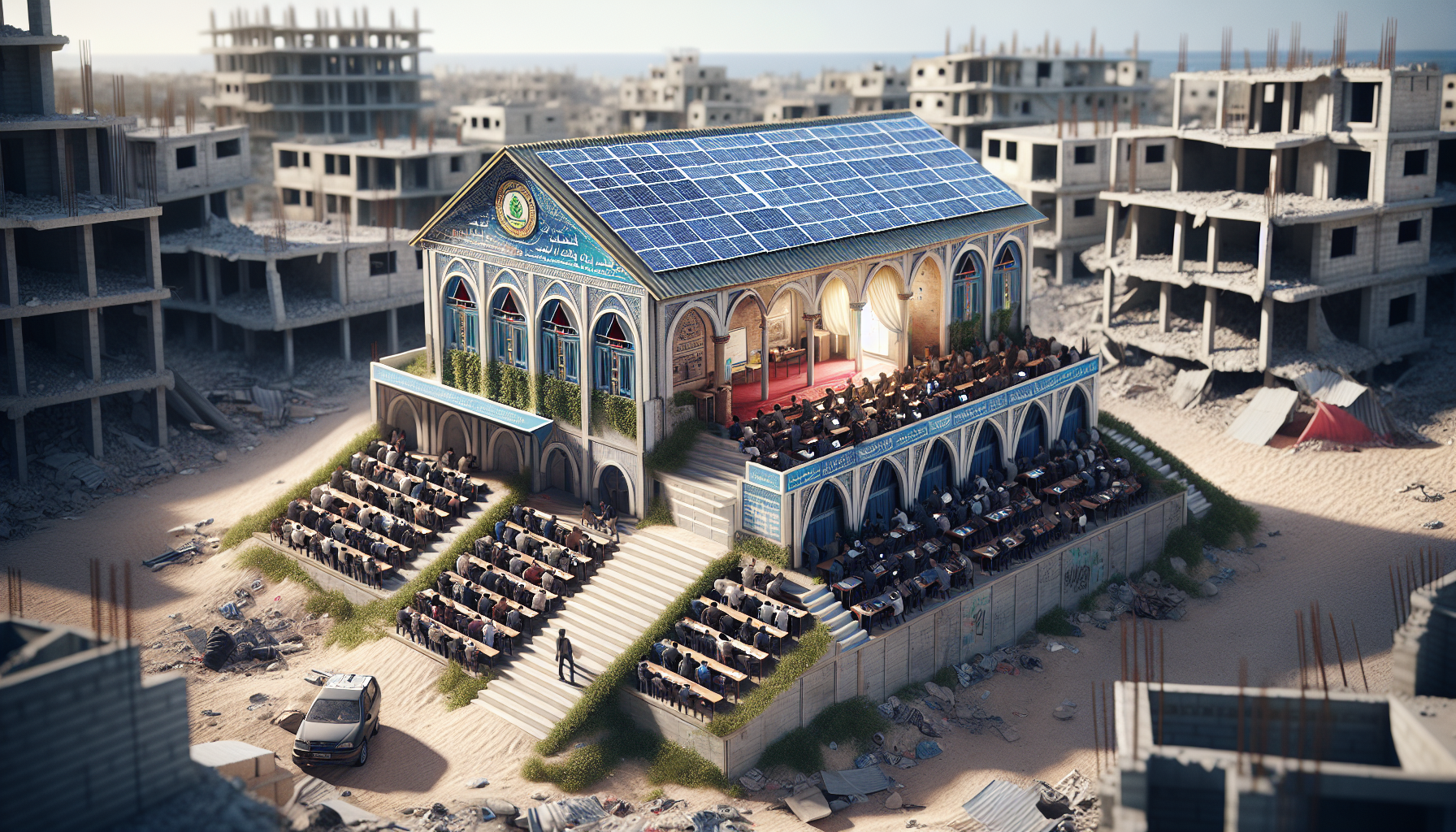
In the aftermath of ongoing conflict and severe resource shortages, a makeshift university powered by solar energy has emerged in Gaza, offering a crucial lifeline for students striving to continue their education. This innovative setup addresses the challenges posed by frequent power outages and damaged infrastructure, enabling academic activities to persist despite the harsh conditions. The initiative reflects the resilience of Gaza’s youth and educators determined to sustain learning amid adversity.
Notably, the use of solar power not only ensures a reliable energy supply but also symbolizes a sustainable approach to overcoming infrastructural deficits in the region. The university’s halls, though temporary, provide a structured environment where students can engage in lectures, discussions, and research, fostering intellectual growth despite the surrounding turmoil. This development highlights the importance of adaptive educational solutions in conflict zones.
Meanwhile, the establishment of this solar-powered academic facility has broader implications for Gaza’s future, as it helps preserve the continuity of higher education and empowers a generation that might otherwise face interrupted studies. By maintaining access to education, the initiative contributes to long-term social and economic recovery prospects. It also serves as a model for other regions grappling with similar challenges, demonstrating how innovation and determination can sustain critical services during crises.
