

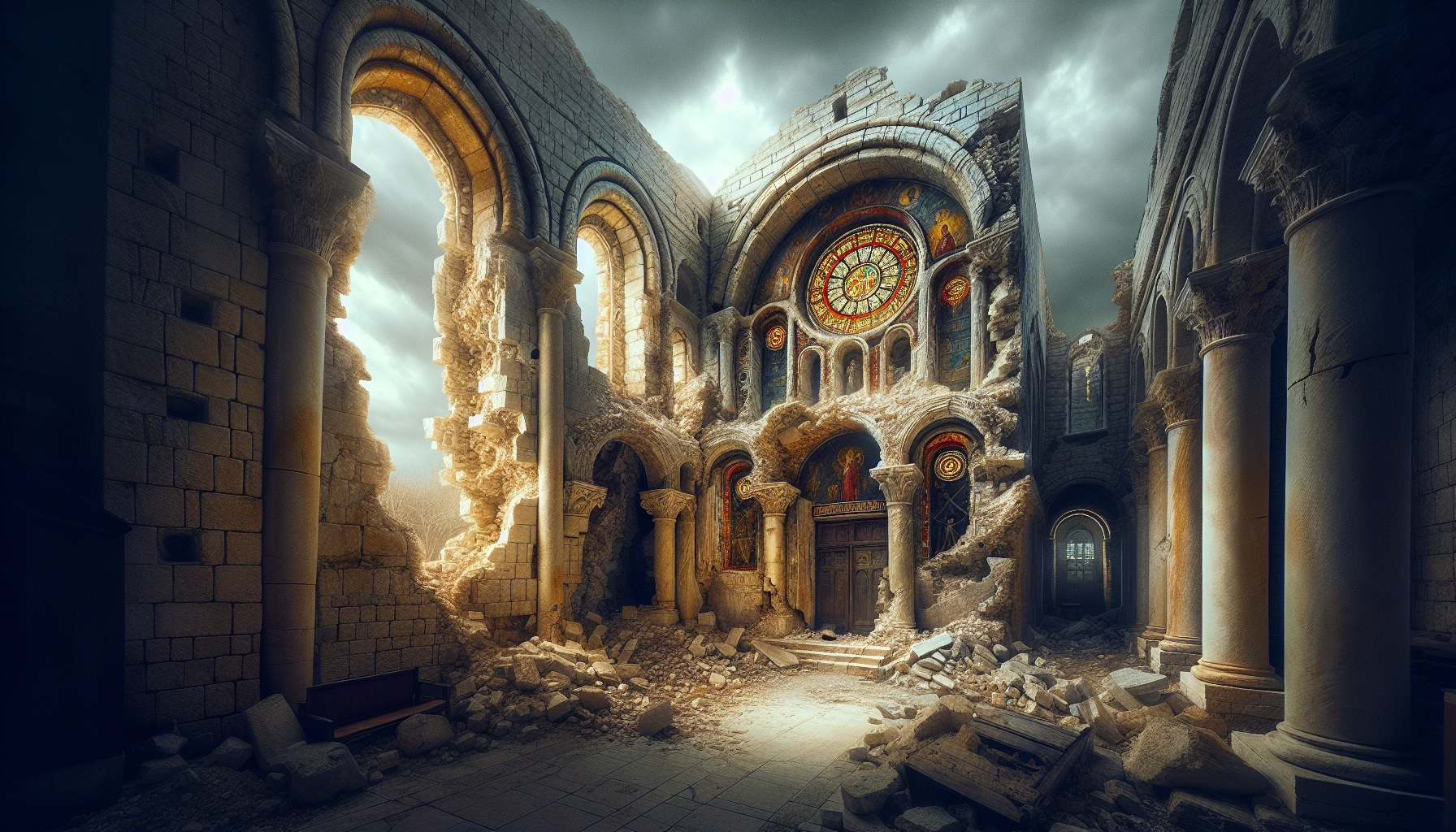
In a significant development amid ongoing hostilities, Hezbollah launched a series of rocket attacks targeting northern Israel. Among the sites hit was a historic Byzantine church in Nahariya, estimated to be around 1,500 years old. This ancient religious structure, a symbol of the region’s rich cultural and religious heritage, sustained notable damage from the barrage. The attack underscores the vulnerability of cultural landmarks in conflict zones and raises concerns about the preservation of historical sites amid escalating violence.
Hezbollah, a Lebanese militant group, has frequently engaged in cross-border attacks against Israel, contributing to the protracted conflict between the two sides. The targeting of civilian and cultural sites marks a troubling escalation, as it not only threatens lives but also endangers irreplaceable historical monuments. Nahariya, located near the Lebanese border, has often been a flashpoint in these confrontations, reflecting the broader geopolitical tensions in the region.
Meanwhile, the damage to the Byzantine church has drawn international attention to the cultural costs of the conflict. Preservationists and religious communities have expressed alarm over the destruction of such ancient heritage. The incident highlights the urgent need for measures to protect cultural landmarks in conflict zones and serves as a reminder of the broader human and historical toll of ongoing hostilities in the Middle East.
