

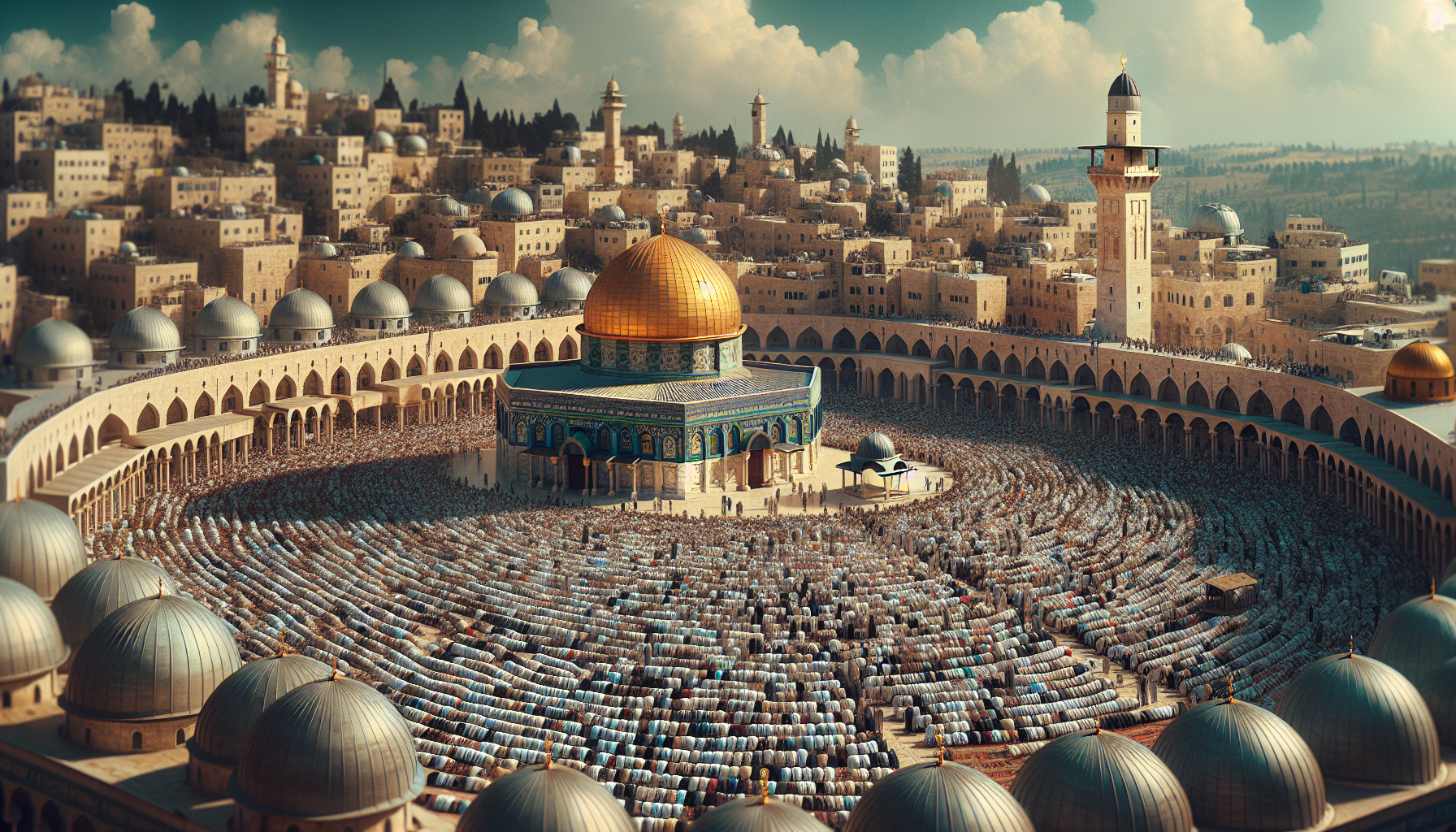
Thousands of Muslims gathered to perform Friday prayers at the Al-Aqsa Mosque, which reopened after being closed for 40 days by Israeli authorities. The mosque, one of Islam’s holiest sites, had been inaccessible during this period, causing distress among worshippers. The reopening has been welcomed as a crucial step in restoring religious access and easing tensions in the region. This event highlights the mosque’s central role in the spiritual lives of Muslims worldwide.
Al-Aqsa Mosque, located in East Jerusalem, holds profound religious and historical significance, being the third holiest site in Islam. Its closure had sparked widespread concern and protests, reflecting the broader Israeli-Palestinian conflict over control and access to sacred spaces. The resumption of prayers is seen as a positive development amid ongoing disputes and political sensitivities surrounding the area. It underscores the importance of religious freedom and the need for peaceful coexistence in this contested region.
Meanwhile, the reopening could influence the dynamics of the Israeli-Palestinian conflict, as access to holy sites often becomes a flashpoint for tensions. The ability of worshippers to pray at Al-Aqsa without restrictions may help reduce immediate unrest, though underlying political issues remain unresolved. This development also draws international attention to the status of Jerusalem and the rights of its diverse communities. The event serves as a reminder of the mosque’s enduring significance and the complexities involved in maintaining peace in the area.
