

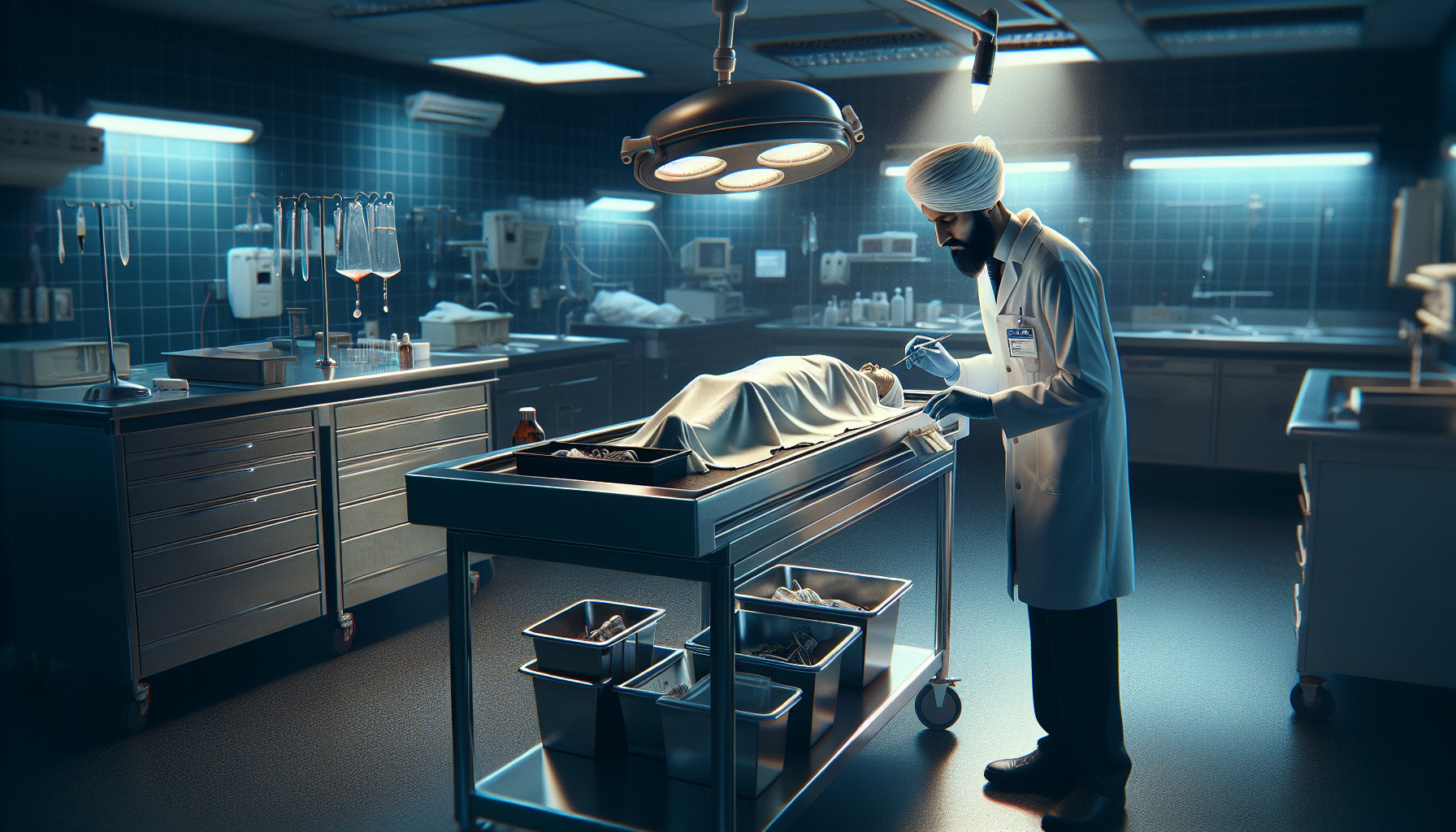
Dr. Rohina Hasan, a distinguished forensic specialist and retired police surgeon from Karachi, reflects on a career marked by thousands of autopsies and harrowing cases that reveal the untold stories of the deceased. Her experiences range from the brutal Safoora Goth massacre to disturbing incidents of incest and domestic violence, highlighting the resilience required to uncover truth within a flawed justice system.
Dr. Hasan begins by emphasizing the overwhelming volume of her work, stating that the number of autopsies she conducted is beyond count. In a society where justice often seems out of reach, she committed herself to absolute honesty in her reports and testimonies.
Recalling the 10th Muharram blast on M.A. Jinnah Road, she describes the horrific scene of carnage, including a woman found with a piece of bread on her chest, beneath which was a fatal chest wound. This vivid memory underscores the brutal reality she faced regularly.
One particularly distressing case involved a father in Liaquatabad who abused his three daughters. When the eldest became pregnant, he attempted to discredit their claims by labeling them as deceitful. However, DNA testing using the baby’s amniotic fluid confirmed his guilt beyond doubt.
Dr. Hasan also performed the autopsy on the mother of Asma Nawab, a teenager who gained notoriety for murdering her parents and brother. She recalls confronting Asma at age 16, questioning her motives. Two decades later, she witnessed Asma’s release from prison, noting the visible toll of years behind bars.
In another tragic case, a young girl named Fauzia was admitted to Civil Hospital in septic shock. While her family suspected a fever, Dr. Hasan uncovered evidence of severe torture and sexual abuse by Fauzia’s brother-in-law. Despite his attempts to evade identification, forensic evidence secured a 14-year prison sentence.
One of the most macabre stories involves a woman who killed and dismembered her husband after he allegedly cast an evil eye on her daughter from a previous marriage. Dr. Hasan describes discovering the body parts cooked in large pots, with the woman calmly justifying her actions as deserved punishment.
Dr. Hasan highlights that abuse transcends social classes, recounting a case where a prominent banker was proven guilty of abusing his daughter despite intense courtroom pressure. She then revisits the Safoora Goth massacre, sharing a survivor’s account of hiding under a seat while militants executed passengers at close range. The girl’s father shielded her with a shawl as his blood dripped onto her.
Describing a suicide bombing at a mosque on I.I. Chundrigar Road, Dr. Hasan recalls a severely burned man who approached her, uttered “Judgment Day has come,” and then collapsed. The hospital was overwhelmed, with victims treated on the floor to maintain intravenous lines.
The narrative concludes with the Baldia Town factory fire, where victims’ bodies were so severely burned they resembled charcoal. Dr. Hasan details the painstaking process of extracting live tissue from charred bones to perform DNA tests, enabling families to reclaim their loved ones’ remains.
In a significant development, Dr. Hasan’s career exemplifies the immense burden borne by forensic professionals in Pakistan. Through her experiences, the deep-rooted violence in society is laid bare, alongside the crucial role of those who ensure the dead’s stories are heard and justice pursued.
