

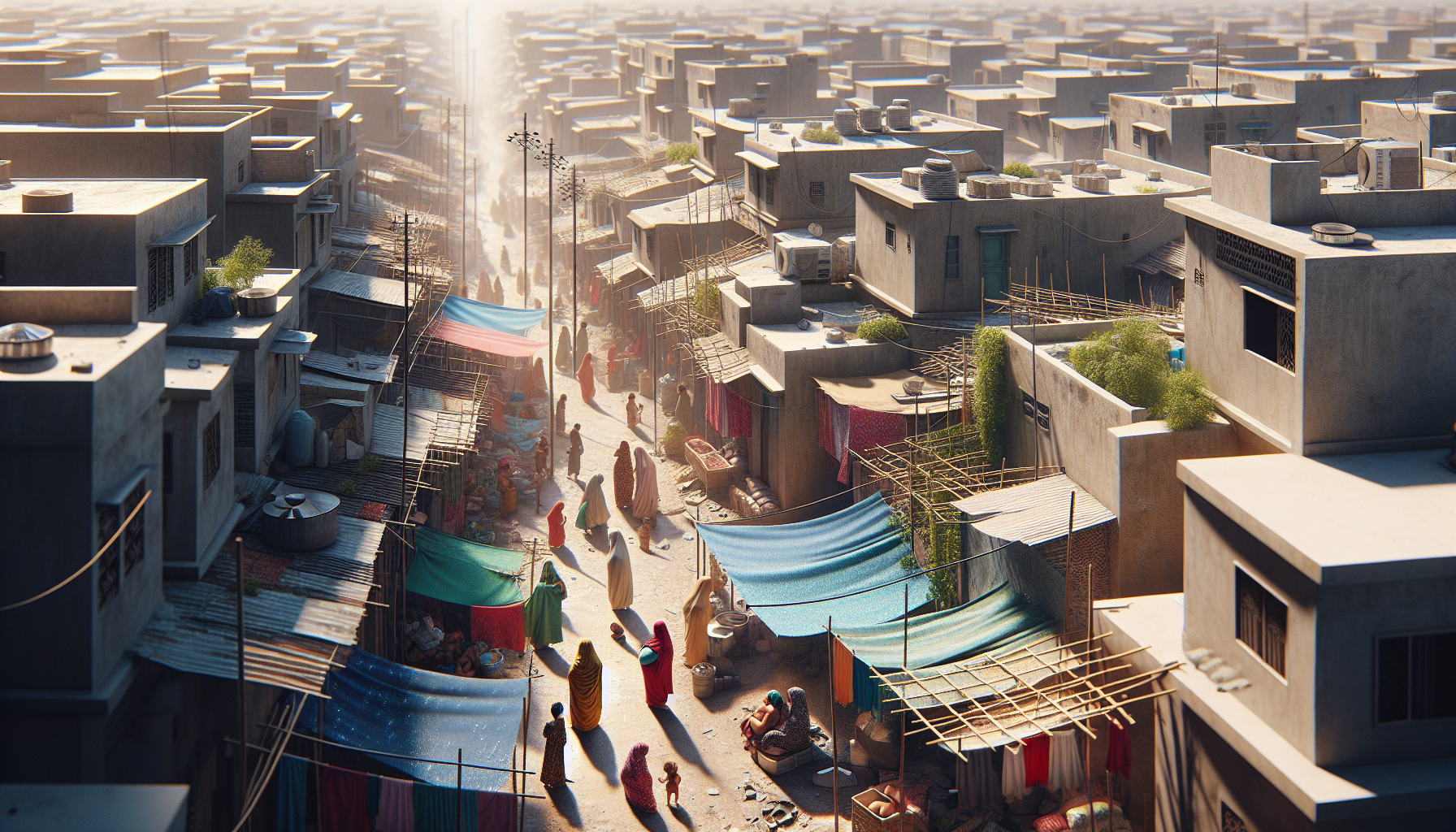
As spring arrived in Karachi, the city’s mornings warmed from chilly to mild, yet Bilal Colony, an eastern neighborhood, was already experiencing significantly higher temperatures than other parts of the city. This area, characterized by densely packed, poorly ventilated homes, dusty streets, and minimal greenery, lies behind factories and car showrooms in one of Karachi’s largest industrial zones. By afternoon, temperatures there felt several degrees hotter than nearby neighborhoods.
Naseem, a resident of Bilal Colony who was pregnant last spring, recalls the oppressive heat inside her two-storey home shared with eight others. She describes feeling dizzy and unable to eat, craving ice she could not access due to frequent power outages. Such experiences underscore the growing evidence that pregnant women are among the most vulnerable to heat stress physiologically.
Pakistan regularly faces temperatures exceeding 40°C during spring and summer, with millions lacking dependable electricity and healthcare access. This heat adds to the challenges in a country with one of the world’s highest maternal mortality ratios—186 deaths per 100,000 live births in 2019. Neonatal mortality remains alarming as well, with 38 deaths per 1,000 live births in 2023, compared to 17 and 18 per 1,000 in India and Bangladesh respectively, per World Health Organization data.
Despite these figures, Pakistan and many other low- and middle-income countries have scarce data on how heat affects mothers and newborns, leaving the nation largely absent from global research on maternal and neonatal mortality linked to heat exposure. Darshnika Lakhoo, a research clinician at Wits Planetary Health Research, emphasizes that this lack of evidence leads to underestimating the global impact of heat on pregnant women and hinders their prioritization in policy-making.
For instance, Sindh province’s disaster management authority has heatwave protocols but no specific measures for pregnant women. These plans rely on infrastructure that often fails, such as temporary cooling shelters, SMS and social media alerts—despite many women lacking mobile phone access—and cooling facilities dependent on erratic electricity supply. This gap is not unique to Pakistan; a recent study found that one-third of state heat action plans in India omit recommendations for pregnant or lactating women.
In a significant development, a World Weather Attribution study revealed that the 2022 heatwave across Pakistan and India was made approximately 30 times more likely by climate change, with such extreme events expected to increase in frequency. This urgency calls for immediate action rather than waiting for country-specific studies. Amelia Wesselink, a research assistant professor at Boston University School of Public Health, advocates using high-quality research from similar regions as a basis for interventions, while recognizing that solutions must be tailored to local contexts.
Understanding local experiences with heat is crucial. Wesselink stresses the importance of engaging pregnant women directly to learn when and where they struggle to stay cool and what support would be most beneficial. Since 2024, Jai Das, a paediatrics research associate professor at Aga Khan University, has been addressing these knowledge gaps in Karachi. He co-authored a 2026 study linking 9-13% of low birth weight cases in Pakistan to heat exposure and is leading a pioneering study assessing extreme heat’s effects on maternal, fetal, and newborn health in Karachi and Sindh province. To date, his team has enrolled 1,200 women, aiming for 6,000 by year-end, measuring biomarkers associated with heat stress during pregnancy to clarify the biological pathways involved.
Identifying effective interventions is a key challenge. South Africa’s National Heat Health Action Guidelines recognize pregnant women as a vulnerable group needing priority support, recommending community health workers assist during heat extremes. In India, cities like Surat, Bhubaneswar, and Rajkot have implemented measures such as relocating maternity wards away from the hottest hospital areas and educating new mothers about heat stress before discharge.
Gregory Wellenius, director of the Center for Climate and Health at Boston University, notes that pregnant women in low-income countries face greater heat-related health risks due to higher exposure, limited healthcare access, and fewer cooling options. A systematic review published in November 2025 by Lakhoo and colleagues found significantly increased risks of preterm birth linked to heat in these regions. Many standard heat interventions assume reliable electricity, formal workplaces, and universal phone access, which are often unavailable to women in low-income settings. Wellenius highlights the need for targeted, low-tech solutions that utilize local community resources and fit the specific environment.
Since August 2025, researchers, engineers, and scientists at Aga Khan University have been piloting affordable cooling strategies in over 3,000 households across Karachi’s Bilal Colony, Garden West, and Matiari village in Sindh. These efforts focus on pregnant women, children, and marginalized groups. Interventions include installing canvas canopies to shade roofs and create outdoor spaces where women observing purdah can sit comfortably, wind-catcher ducts to channel airflow into cramped homes, solar reflective paint to reduce heat absorption, and bamboo stilts with vines to cool narrow streets and communal areas.
Anjum Naqvi, the project’s assistant manager, reports observing a 3-4°C drop in indoor temperatures where these measures were implemented. He emphasizes the urgency of this work, as heat exposure has been linked to increased risks of preterm birth, low birth weight, gestational diabetes, congenital heart defects, and cardiovascular complications during labor. The focus on Bilal Colony stems from its particularly severe conditions, highlighted by events in 2015 that underscored the community’s vulnerability to extreme heat.
