

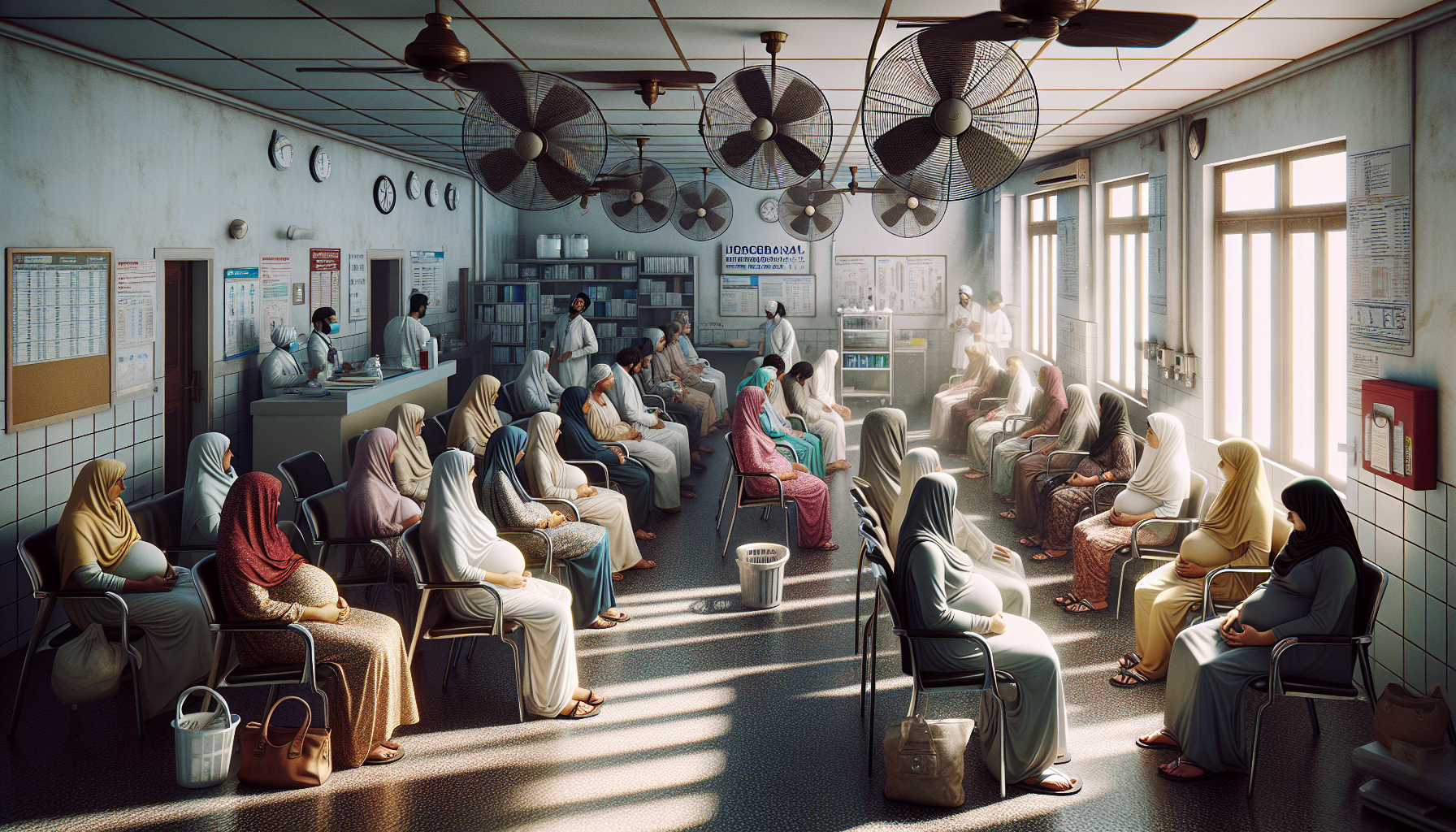
Inside the gynecology clinic of Karachi’s largest public hospital, the atmosphere felt stiflingly hot. At 9:30 a.m. on a late February Friday, the windowless waiting area was already crowded with women competing for seats, calling nurses, and waiting for ultrasounds. Among them was Asiya, 21, pregnant with her third child due in May, when temperatures often exceed 38°C and humidity surpasses 70%, making the heat nearly unbearable. As the room’s temperature climbed, Asiya experienced nausea and dizziness. She described her body as feeling heavy and expressed concern that the extreme heat might affect her baby’s health.
Residing in Lyari, one of Karachi’s most densely populated neighborhoods characterized by narrow alleys and minimal greenery, Asiya’s home suffers from poor ventilation and limited cooling options. The intense summer heat is worsened by power outages lasting up to 12 hours daily, disabling fans and other cooling devices. Reflecting on her previous pregnancy two years ago, she recalled taking multiple showers daily to cool down, as she sensed her baby was in distress. Although evenings in Karachi tend to be cooler, with temperatures dropping to around 25°C aided by a sea breeze, Asiya’s modest attire, including a veil and a heavy abaya, limits her relief outdoors. Additionally, her husband restricts her from standing near windows to avoid heat exposure.
Karachi, home to over 20 million people, is expected to experience a significant temperature rise in coming years, with increases of 2 to 7°C beyond global warming projections. In 2024, the city recorded temperatures above 40°C combined with high humidity, pushing conditions to the edge of human tolerance. The urban heat island effect further elevates city temperatures compared to surrounding rural areas, contributing to health issues such as heatstroke, respiratory and cardiovascular diseases, mental health challenges, and fatalities.
The city exemplifies the complex challenges of urban heat and pregnancy. With high humidity, scarce tree cover, and over half the population living in densely packed informal settlements, Karachi faces compounded risks. High fertility rates and low contraceptive use among women coincide with often inadequate antenatal care. Emerging research links extreme heat to increased risks of complications during pregnancy, including preterm births, low birth weights, and stillbirths. These dangers disproportionately affect women in low- and middle-income settings who lack access to cooling technologies like fans or air conditioners.
Rubina Hussain, a gynecologist affiliated with Ziauddin University in Karachi, highlighted the disproportionate impact of heat on pregnant women and newborns. She noted that these women are more susceptible to dehydration-related complications, urinary tract infections, and serious kidney infections such as pyelonephritis. Karachi’s stark inequalities exacerbate these issues: wealthier residents have access to generators and solar power to maintain air conditioning during frequent power outages, while poorer communities endure up to 22 hours without electricity during summer load shedding. Moreover, public healthcare remains insufficient; a 2020 provincial ombudsman report pointed out that Karachi has not established a new public hospital since 1974, and the quality of existing services has eroded public trust.
Pregnancy adds an additional layer of vulnerability. Savera, 19, who gave birth last July, recounted an incident two weeks postpartum when her baby’s body temperature rose on a hot afternoon. With no electricity in her poorly ventilated 400-square-foot apartment, she tried fanning him and then wrapped him in a damp towel to cool him down, a method later criticized by a doctor for risking pneumonia. Her lack of alternatives underscores the challenges faced by many in similar conditions.
Grassroots organizations have stepped in to address these gaps. Neha Mankani, a midwife running the nonprofit Mama Baby Fund, operates a clinic on Baba Island, a 0.15 square kilometer settlement off Karachi’s coast and one of the world’s most densely populated islands. She has observed alarming rates of second-trimester pregnancy losses, along with increasing cases of hypertension, respiratory illnesses, and neurological problems among newborns. Nearly every second child born there exhibits some health issues.
Baba Island residents confront extreme heat, with “feels like” temperatures reaching 48°C on some summer days, compounded by lack of running water, limited electricity, and minimal tree cover. Rising sea levels cause frequent flooding, fostering waterborne and skin diseases. Women bear a disproportionate heat burden, often cooking over open flames in cramped, unventilated spaces without fans. Mankani’s clinic serves as a vital refuge, offering shelter under fans, clean water, and maternal and newborn care.
Since 2022, Mankani has distributed Summer Care Packages containing breathable cotton clothing, cloth diapers, damp washcloths, spray bottles for misting, rehydration salts, and plastic hand fans to women on the island. While such initiatives fill critical voids left by inadequate official support, they remain insufficient. A 2024 Amnesty International assessment of Pakistan’s healthcare system criticized its failure to meet the needs of vulnerable populations, especially young children and the elderly, noting that many heatwave and flood victims could have been saved with timely medical intervention and preventive measures. As climate-related disasters intensify, this gap between demand and provision is expected to widen.
Last month, Mankani participated in a panel discussion in Karachi on women and children’s health amid climate change. During the event, an audience member praised the resilience of Baba Island’s women facing systemic inequalities and climate impacts. Mankani challenged this notion, questioning why vulnerable communities are expected to be resilient instead of addressing the conditions forcing them into such roles. Her remarks brought the room to a thoughtful silence, underscoring the urgent need for systemic change rather than reliance on resilience as a virtue.
