

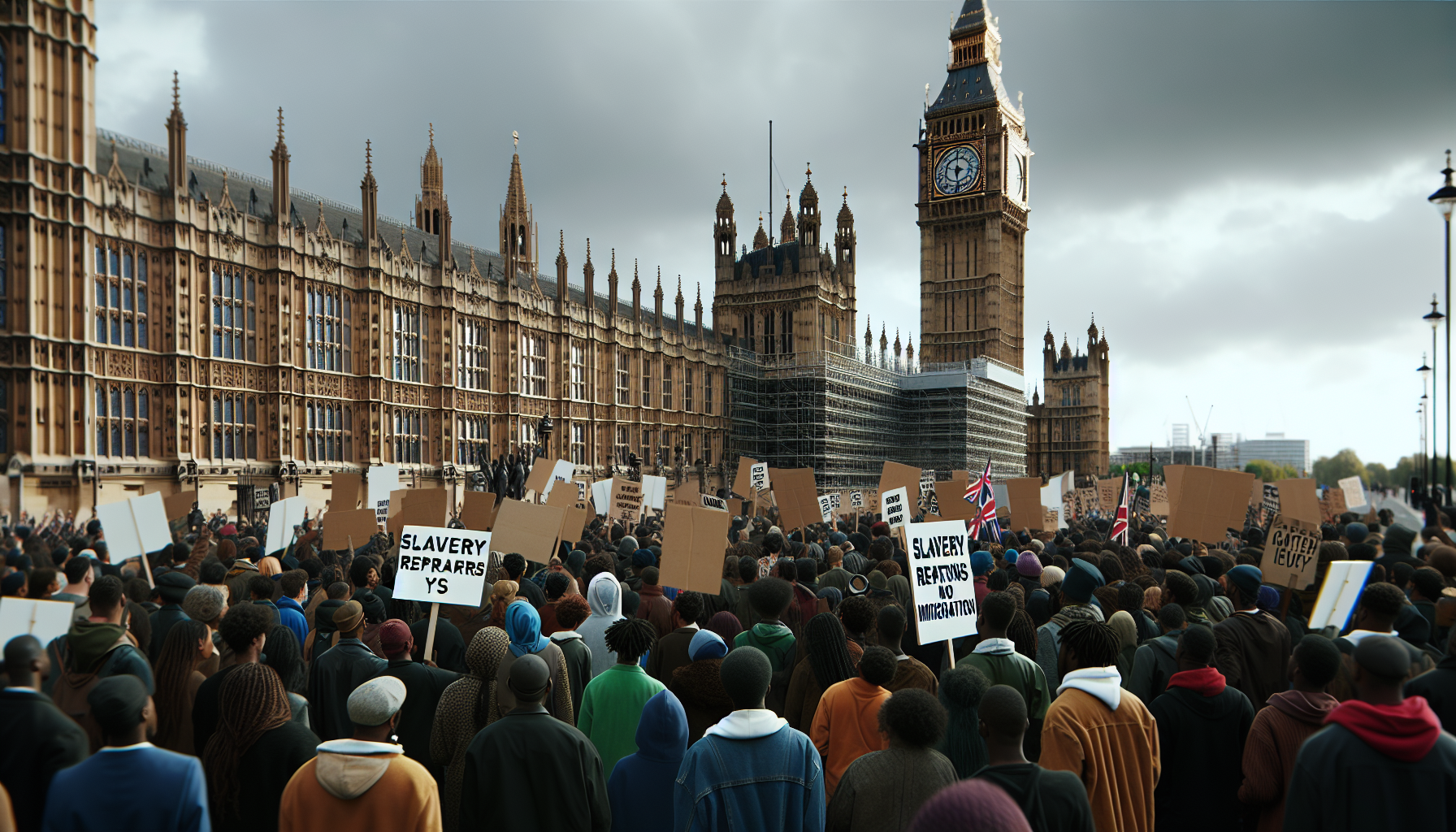
Nigel Farage’s Reform UK announced on Tuesday a proposal to refuse visas to individuals from countries demanding reparations for transatlantic slavery. This policy was promptly denounced by the Caribbean reparations commission as perpetuating a “legacy of toxic racism.”
The anti-immigration, populist party, which currently holds eight national parliamentary seats and leads opinion polls ahead of the next UK election expected by 2029, stated it would block visa applications from any nation pressing for slavery reparations. These countries include Commonwealth members from Britain’s former empire, such as Ghana and Jamaica.
Zia Yusuf, Reform UK’s policy chief for home affairs, described the calls for reparations as “insulting,” arguing they disregard Britain’s significant sacrifices as the first major power to abolish slavery and enforce its prohibition.
Meanwhile, the Caribbean Community (CARICOM), the African Union, and various Latin American countries have advocated for reparations not only to address historical injustices but also to confront their enduring effects, including racial inequalities and economic underdevelopment. Demands for formal apologies, financial compensation, and the restitution of stolen artifacts have intensified in recent years, though opposition to these demands has also grown.
Several Western leaders have resisted engaging in reparations discussions, contending that contemporary governments and institutions should not be held accountable for historical actions. British Prime Minister Keir Starmer expressed a preference to “look forward” rather than engage in “endless discussions about reparations on the past.”
In a significant development, Hilary Beckles, chair of the CARICOM-backed reparations commission, urged Reform UK to reconsider its position, describing the policy as “tragic” and highlighting that those seeking justice would be unfairly punished. Beckles remarked, “Punishing the victims again aligns with those at the time of emancipation who opposed the freedom of African people.” He further emphasized that the “legacy of toxic racism remains so strong that Black people are still viewed as undeserving of reparations.”
Reform UK has not issued an immediate response to requests for comment. Notably, last month the United Nations adopted a resolution initiated by Ghana that declared transatlantic slavery the “gravest crime against humanity” and called for reparations, with former colonial powers, including Britain, abstaining from the vote.
