

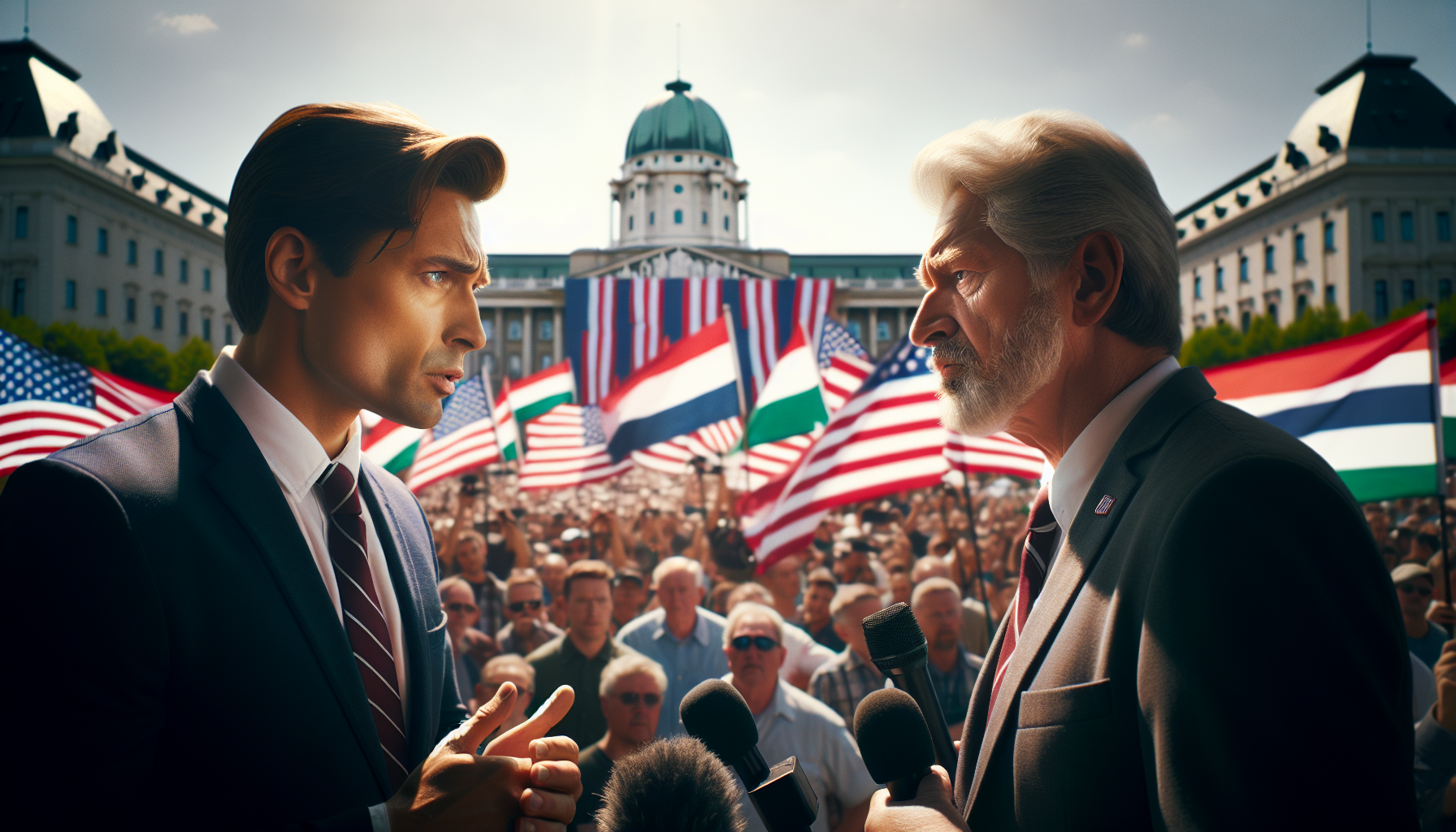
US Vice President JD Vance sharply criticized what he described as unacceptable interference by the European Union in Hungary’s upcoming election, while openly supporting Prime Minister Viktor Orban just days before the vote. Vance’s visit to Budapest, ahead of Sunday’s election, highlighted the importance former President Donald Trump places on Orban’s potential reelection. Independent polls suggest Orban faces a challenging contest and may lose.
This rare public endorsement by a sitting US official breaks with previous administrations’ norms of refraining from overt involvement in foreign elections, especially for a leader who maintains close ties with Russian President Vladimir Putin. It remains uncertain whether Vance’s backing will bolster Orban’s chances. However, the visit reinforced Vance’s increasingly familiar role of criticizing Brussels amid growing transatlantic strains related to Trump’s policies on Iran, Ukraine, NATO, and Greenland.
At a press conference, Vance condemned the EU’s actions during the campaign as among the worst examples of foreign election interference he had witnessed. He accused EU bureaucrats in Brussels of attempting to undermine Hungary’s economy, reduce its energy independence, and increase costs for Hungarian consumers, all due to their opposition to Orban.
Since Russia’s invasion of Ukraine, the EU has sought to significantly reduce reliance on Russian oil and gas, a move Hungary has resisted. A European Commission spokesperson countered that returning to Russian energy imports would be a strategic error given Russia’s ongoing war in Ukraine. The spokesperson emphasized that elections should be decided solely by citizens without external influence.
Vance has previously faced criticism in Europe, notably for a 2025 speech in Munich where he accused several European governments of suppressing free speech and failing to manage immigration effectively.
Meanwhile, Orban’s main challenger, Peter Magyar of the centre-right Tisza party, warned against foreign interference in Hungary’s election. Magyar, favored by independent pollsters to defeat Orban, asserted that Hungarian history is shaped domestically, not in Washington, Moscow, or Brussels.
During a campaign rally, Vance joined Orban as the US national anthem was performed. He also called Trump from the stage, securing an endorsement for Orban, whom Trump praised for doing “a fantastic job.” Vance described their alliance as a form of “moral cooperation” and urged Hungarians to decide their future free from external pressures.
Orban, seeking reelection after 16 years in power, praised what he termed a “golden age” in US-Hungary relations under Trump. At times, Vance appeared more optimistic about Orban’s prospects than the prime minister himself, who seemed to acknowledge the possibility of defeat during a joint press conference.
Orban’s “illiberal democracy” shares key elements with Trump-era policies, including strict immigration controls, rejection of liberal norms, skepticism toward global institutions, and criticism of media and civil society. He was the first European leader to endorse Trump in 2016.
Orban has clashed with the EU over multiple issues, particularly regarding Ukraine. He has refused to supply weapons to Ukraine, blocked a €90 billion EU loan package to Kyiv, and stated that Ukraine should never join the EU. He has accused both the EU and Ukraine of attempting to interfere in Hungary’s election and claimed Ukraine aims to disrupt Hungary’s energy supplies, allegations Kyiv denies.
Vance also alleged that elements within Ukrainian intelligence were trying to influence both US and Hungarian elections, though he did not provide evidence. European officials and some governments have criticized Hungary for undermining democratic norms and restricting nongovernmental organizations. Despite the war in Ukraine, Orban has maintained friendly relations with Moscow, emphasizing the necessity of Russian energy for Hungary.
