

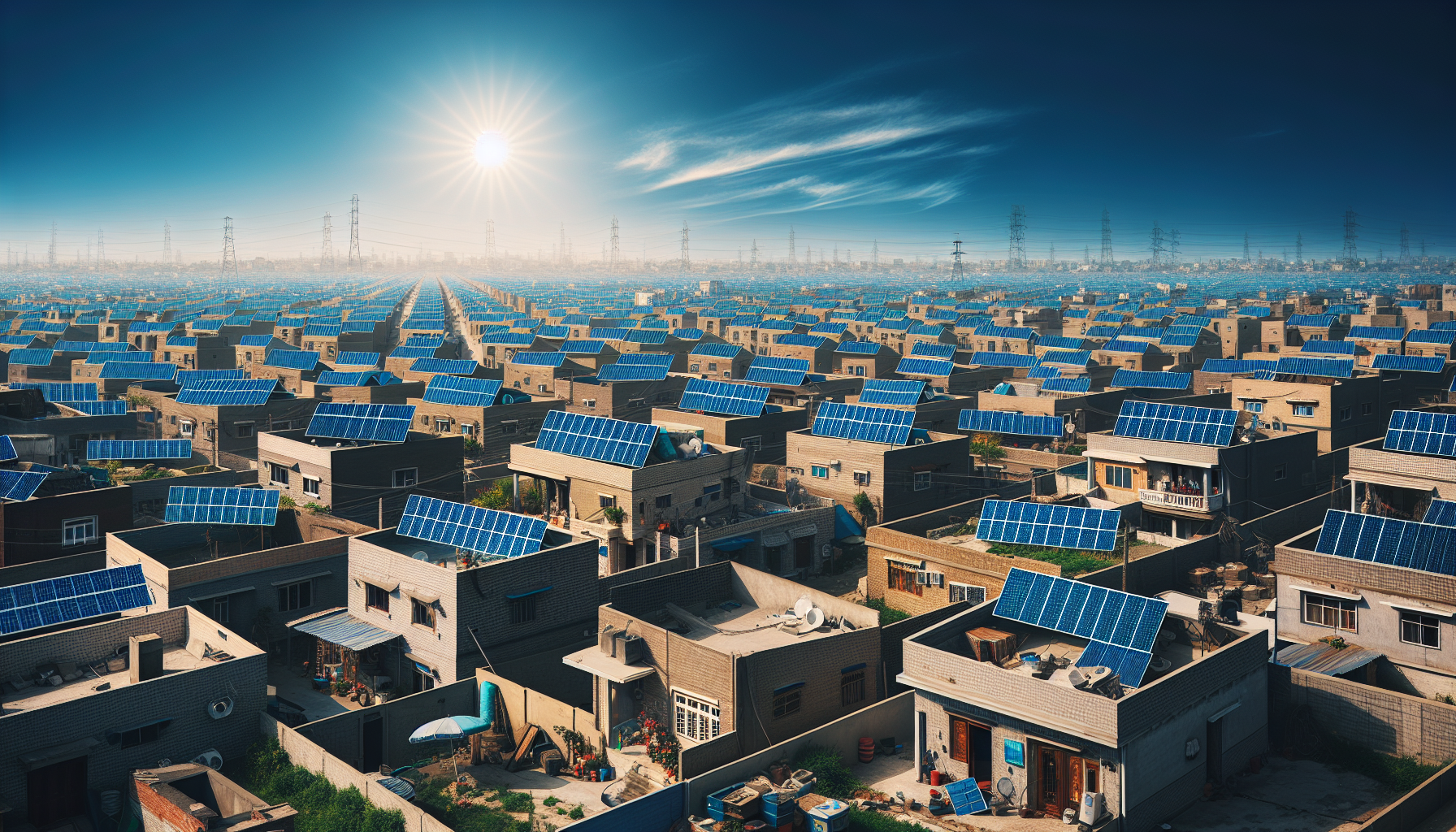
Pakistan has witnessed a significant rise in solar energy adoption, with approximately one in four households now equipped with solar panels. This shift towards renewable energy sources is a crucial development as the country faces increasing energy challenges linked to the ongoing conflict in Iran. The widespread use of solar power is providing a buffer for millions of families against power shortages and rising electricity costs.
Historically, Pakistan has struggled with energy supply issues, often relying on imported fuels and facing frequent outages. The recent geopolitical tensions in the region, particularly the war in Iran, have exacerbated these problems by disrupting fuel supplies and increasing prices. The expansion of solar energy infrastructure offers a more resilient and sustainable alternative, reducing dependence on unstable external energy sources.
In a significant development for Pakistan’s energy security, the solar boom not only supports household energy needs but also contributes to broader environmental goals by lowering carbon emissions. This trend is likely to encourage further investment in renewable energy technologies, fostering long-term economic stability and energy independence. Meanwhile, the growing solar market is creating new job opportunities and promoting technological innovation within the country.
