

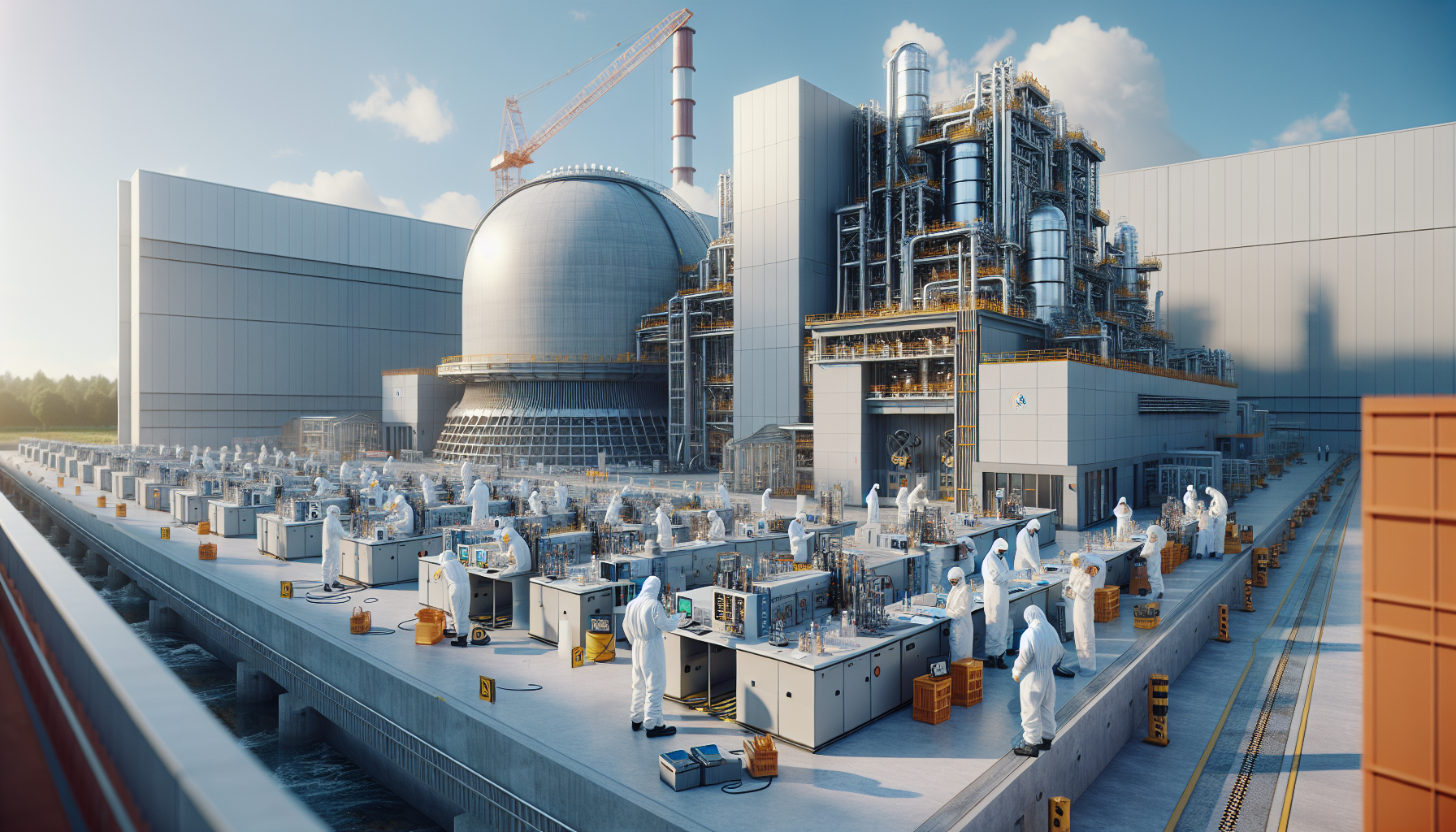
India has taken a significant step toward producing its own nuclear fuel after its domestically designed Prototype Fast Breeder Reactor (PFBR) at Kalpakkam achieved a controlled nuclear reaction, known as criticality. This milestone is crucial before the reactor can begin generating electricity.
As the world’s most populous nation and the third-largest emitter of greenhouse gases, India has set ambitious goals to increase its nuclear power capacity from the current eight gigawatts to 100 gigawatts by 2047. Prime Minister Narendra Modi announced the reactor’s attainment of criticality, the point at which a self-sustaining nuclear chain reaction is initiated.
Modi described this achievement as a defining moment in India’s civil nuclear journey, marking progress in the second stage of its nuclear program. He highlighted that the advanced reactor is capable of producing more fuel than it consumes, showcasing the country’s scientific expertise and engineering strength.
In a significant development, Modi emphasized that this advancement represents a decisive move toward utilizing India’s abundant thorium reserves, which hold promise as a future nuclear fuel source. Although the reactor is not yet producing electricity for the national grid, this will occur in subsequent phases once it reaches full power operation.
Meanwhile, this progress comes amid global energy uncertainties, including the ongoing conflict in the Middle East, which has raised concerns about disruptions in fuel supplies. Despite India’s current heavy reliance on coal, the country has committed to achieving net-zero carbon emissions by 2070, making nuclear energy a key component of its clean energy strategy.
