

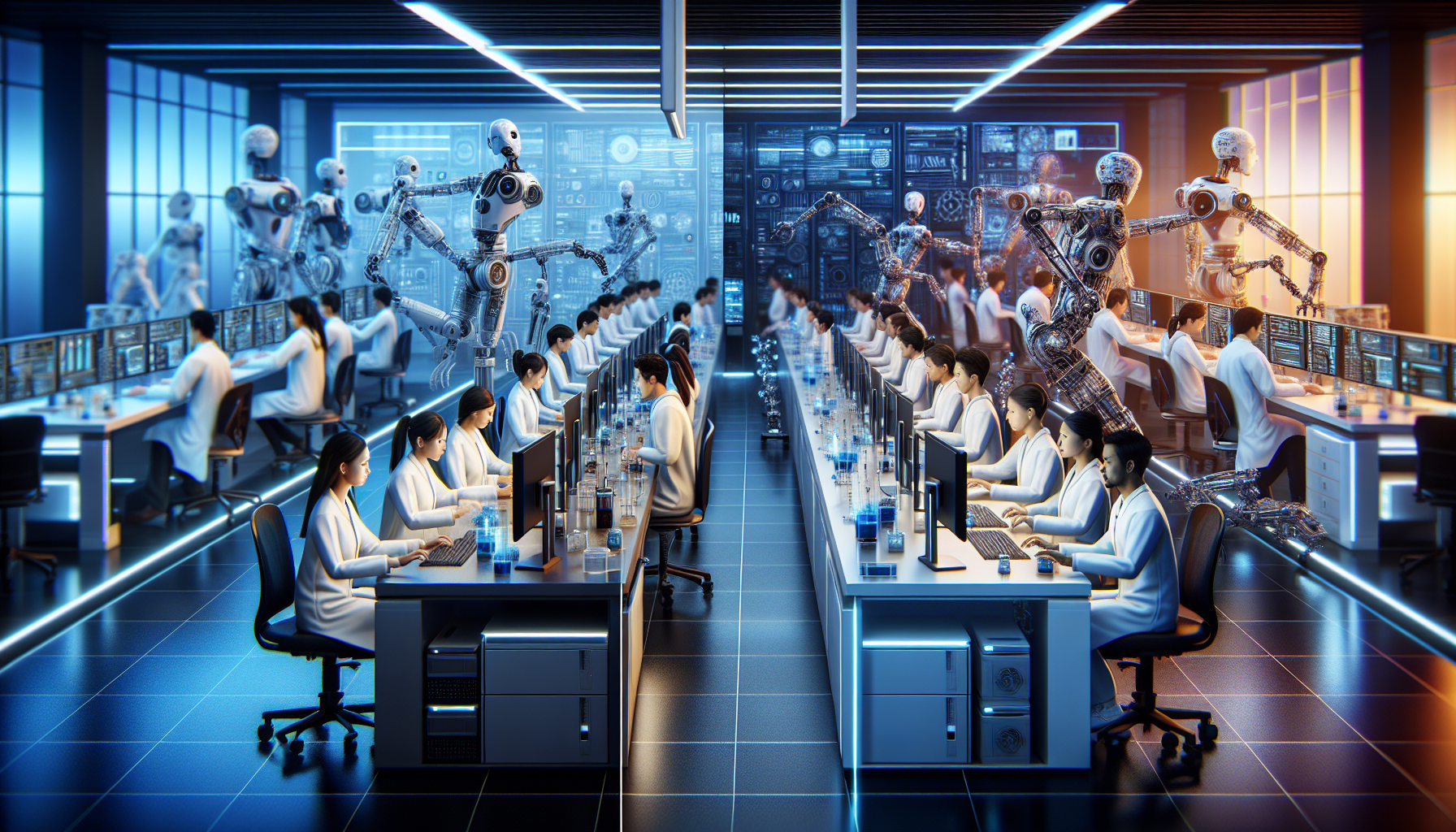
The global race for artificial intelligence supremacy is currently marked by China and the United States excelling in distinct areas of the technology. China has made significant strides in certain AI applications, while the US continues to dominate others, reflecting differing strategic focuses and strengths. This competition is not only technological but also geopolitical, as both nations aim to prevent the other from gaining a decisive advantage in AI capabilities.
Meanwhile, the rivalry is intensifying as each side invests heavily in research, development, and deployment of AI technologies, seeking to secure economic and military benefits. The stakes are high, given AI’s potential to transform industries, national security, and global influence. Both countries are also wary of allowing their competitor to monopolize critical AI advancements, which could shift the balance of power.
In a significant development, experts suggest that the nature of this competition may evolve further due to rapid technological breakthroughs and changing policy landscapes. The dynamic environment means that leadership in AI is not fixed, and either China or the US could pull ahead as new innovations emerge. This ongoing contest underscores the importance of AI as a strategic asset in the 21st century.
