

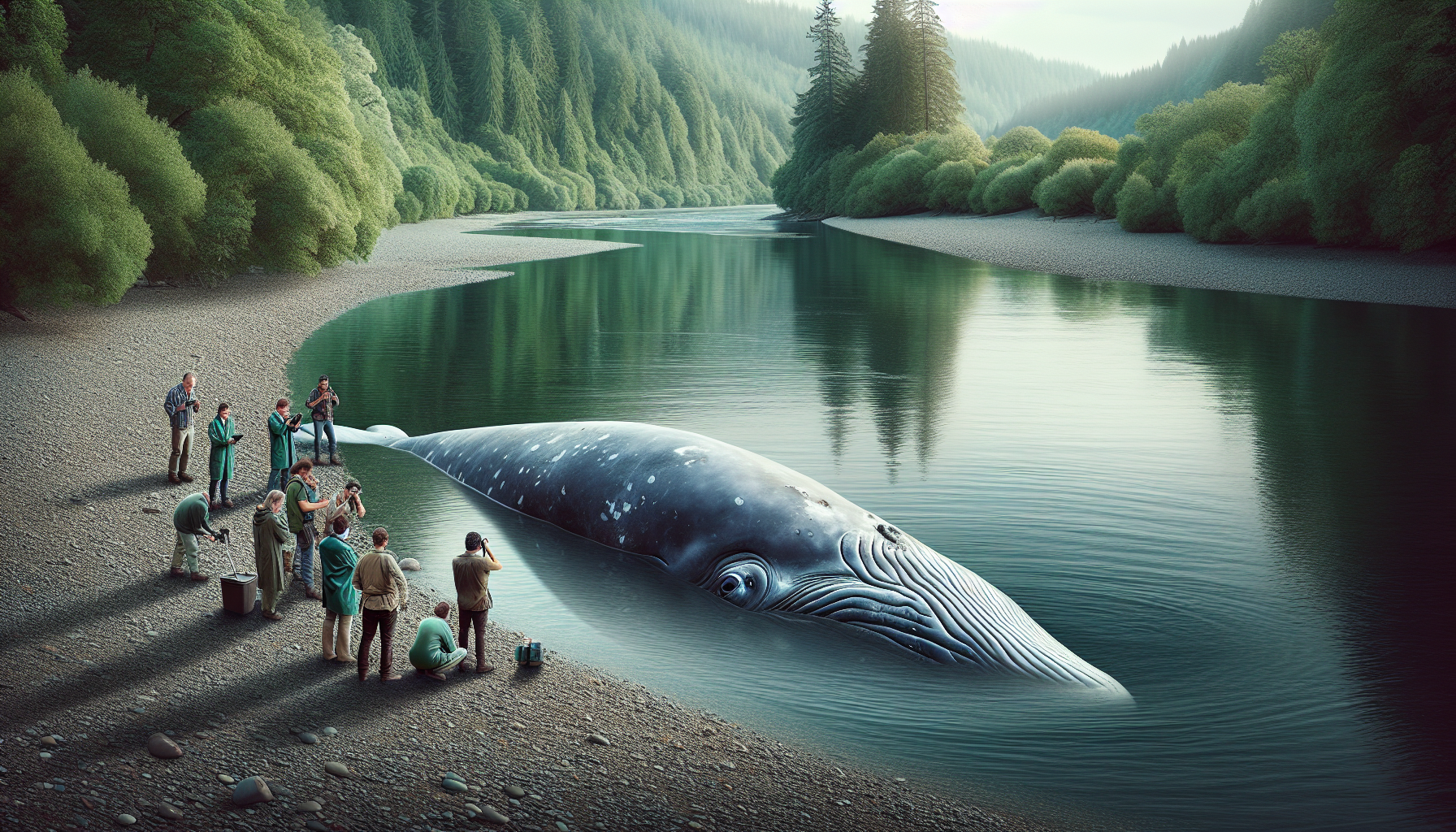
A young gray whale, known as Willapa Willy, tragically died after venturing far inland by swimming up a river in Washington state. This unusual behavior drew significant attention from marine biologists and local authorities, who monitored the whale’s movements closely. Experts believe that the whale’s journey upriver was likely motivated by hunger, as it may have been searching for food in unfamiliar territory. Such incidents are rare and highlight the challenges marine mammals face in their natural habitats.
Gray whales typically migrate along coastal waters, feeding primarily on small crustaceans found on the ocean floor. The decision by Willapa Willy to swim into a freshwater river environment represents a significant deviation from normal behavior, often signaling distress or disorientation. This event underscores the impact of environmental changes and food scarcity on marine wildlife, prompting further study into the factors influencing such atypical movements.
In a significant development for conservation efforts, the death of Willapa Willy has sparked renewed discussions about the health of marine ecosystems in the Pacific Northwest. Authorities and researchers are now focusing on monitoring whale populations and their habitats to prevent similar occurrences. The incident serves as a poignant reminder of the delicate balance within marine environments and the importance of protecting these species from the pressures of environmental stressors.
