

The Middle East edges closer to a broader conflict following a daring American commando operation inside Iran, as Tehran asserts it has destroyed multiple US aircraft. This development comes amid President Donald Trump’s stern ultimatum concerning the blockade of the Strait of Hormuz.
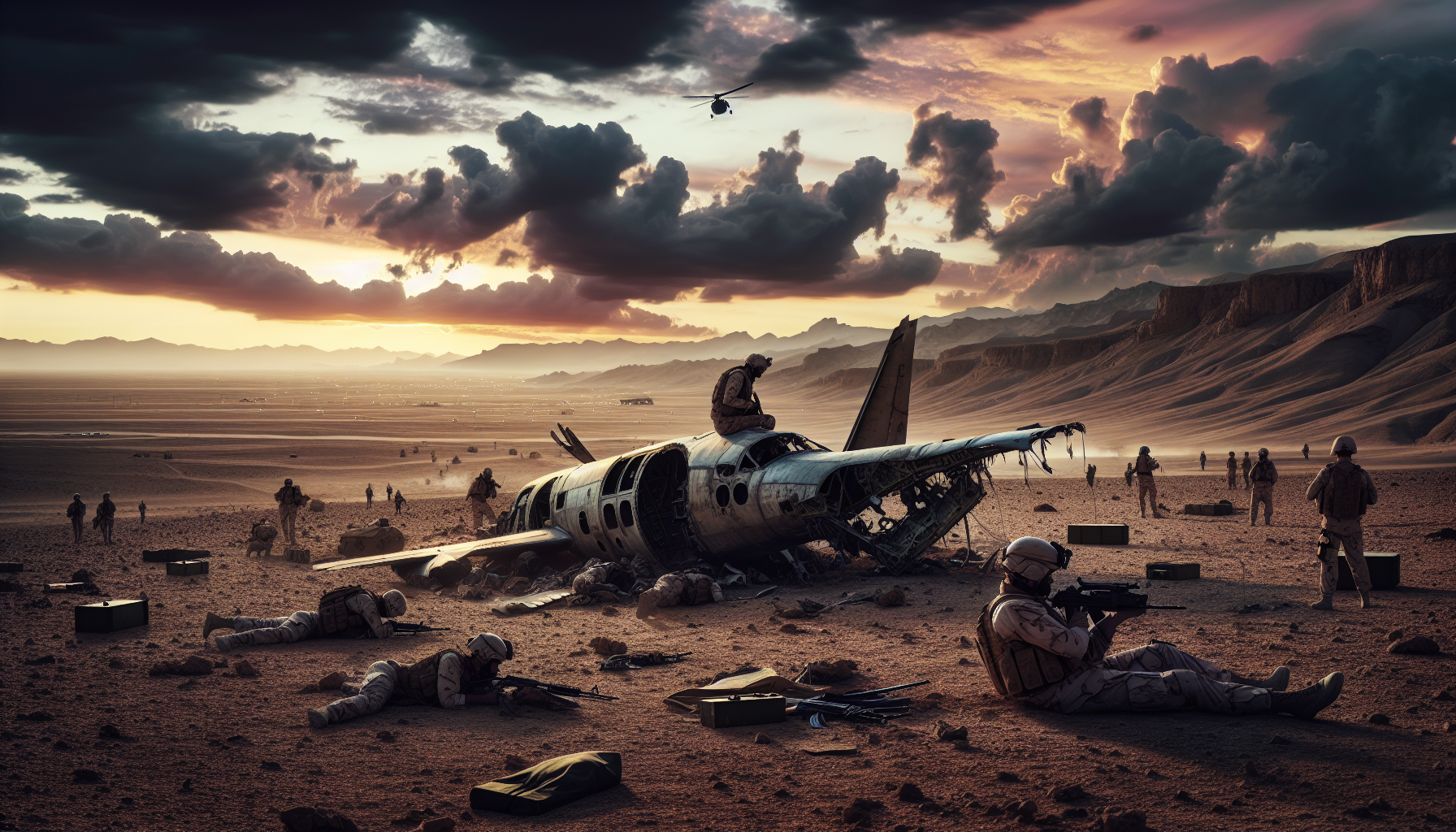
The Islamic Revolutionary Guard Corps (IRGC) declared on Sunday that its forces successfully targeted and eliminated two American C-130 transport planes along with two Black Hawk helicopters in southern Isfahan province. Iranian state television aired footage showing the charred remains of the downed aircraft, which were intercepted during a mission to rescue a US F-15 pilot who was shot down behind enemy lines last week.
Meanwhile, the Pentagon acknowledged experiencing “technical malfunctions” affecting two transport aircraft involved in the extraction. However, it emphasized that all personnel were safely evacuated, preventing a potential hostage crisis that had threatened to escalate the five-week-old conflict.
In a significant development, President Trump intensified his rhetoric, issuing a harsh ultimatum via social media. He warned Iran that if the Strait of Hormuz—a vital route for global oil shipments—is not reopened by Tuesday, the Iranian leadership would be “living in Hell.” This warning coincides with a surge in crude oil prices nearing $120 per barrel. Trump also threatened to shift military focus toward Iran’s civilian infrastructure, specifically mentioning power plants and bridges.
Tehran strongly condemned these threats. Foreign Ministry spokesman Esmaeil Baghaei described them as “incitement for war crimes,” while critics in Washington questioned the legality of targeting non-military sites. This escalation reflects a broader regional conflict, with Iranian forces claiming to have shot down two MQ-9 Reaper drones and several Israeli Hermes 900 UAVs in retaliation for recent airstrikes.
Additionally, Iran has expanded its military actions to neighboring Gulf countries, launching missile and drone attacks on energy and desalination facilities in Kuwait, Bahrain, and the UAE. Despite calls for a ceasefire from China and Russia, with Sergey Lavrov urging the US to abandon its “language of ultimatums,” Tehran remains defiant.
Iranian officials have indicated that the Strait of Hormuz will only be reopened if transit revenues are redirected to compensate for war damages, a demand likely to be rejected by Western nations. As the region braces for Tuesday’s deadline, tensions continue to escalate with no immediate resolution in sight.
