

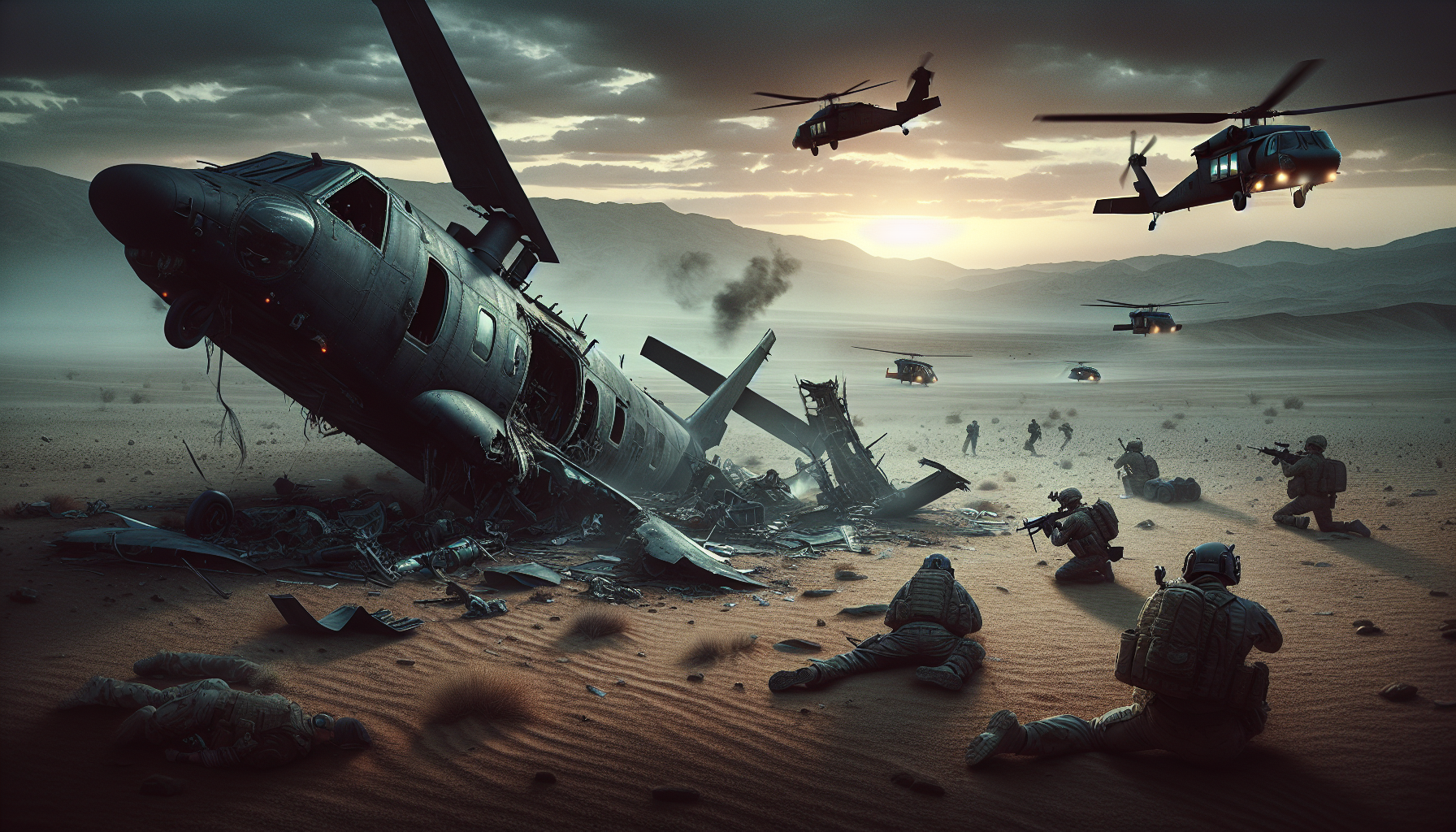
The search intensified on Saturday for a missing American pilot following the downing of two U.S. warplanes over Iran and the Gulf, underscoring the ongoing hazards faced by U.S. and allied aircraft as the conflict enters its sixth week. While two other airmen were successfully rescued, Tehran has vowed to either capture or kill the surviving pilot, escalating tensions for Washington amid a protracted war with no resolution in sight.
The incidents involved a two-seat F-15E and an A-10 Warthog. Despite assertions from President Donald Trump and Defense Secretary Pete Hegseth that U.S. forces retain full air superiority, the presence of a U.S. service member evading capture in Iran significantly raises the stakes. Public support for the conflict in the United States remains low, further complicating the situation.
Iranian forces shot down the two-seat F-15E, while the A-10 pilot ejected after the aircraft was hit near Kuwait. Two Black Hawk helicopters dispatched to locate the missing pilot came under fire but managed to leave Iranian airspace without casualties. The status of the downed crews has not been fully revealed.
The Revolutionary Guard Corps is conducting extensive operations near the A-10 crash site. Meanwhile, local authorities have offered rewards for capturing or neutralizing “hostile enemy forces.” Iran, which has endured weeks of U.S. and Israeli air strikes since February 28, celebrated the downed aircraft. Parliament Speaker Mohammad Baqer Qalibaf noted on social media that the U.S. campaign has shifted from regime change to a “hunt for pilots.”
President Trump has been closely following the rescue efforts from the White House. Pentagon and U.S. Central Command officials have not issued immediate comments. Diplomatic efforts led by Pakistan to broker a ceasefire appear stalled, with Tehran reportedly unwilling to engage U.S. officials in Islamabad in the coming days.
Since hostilities began, thousands have died, global energy markets have been disrupted, and the conflict threatens significant long-term economic damage. Central Command reports 13 U.S. service members killed and over 300 wounded.
Meanwhile, the war has expanded beyond Iran’s borders, with drone and missile attacks targeting Israel and Gulf allies. Authorities in Dubai reported debris striking two buildings without casualties. The U.S. embassy in Beirut issued a warning urging American citizens to leave Lebanon due to potential threats from Iran-aligned groups to universities.
Israel has simultaneously targeted Hezbollah infrastructure in Beirut following attacks on its territory, reflecting the broader regional escalation. Iran struck a power and water facility in Kuwait after President Trump threatened to target Iranian bridges and electricity infrastructure, exposing the vulnerability of Gulf states reliant on desalination for drinking water.
Trump posted images of smoke and destruction at the B1 bridge connecting Tehran and Karaj, warning of further attacks on bridges and power plants. Drone strikes also hit a Red Crescent warehouse in southern Iran, while Kuwait Petroleum reported drone attacks on its Mina al-Ahmadi refinery. Additional interceptions occurred in Saudi Arabia and Abu Dhabi, with missile debris falling near Israel’s Haifa oil port.
Global oil markets reacted sharply, with U.S. crude prices surging 11% on Thursday following Trump’s warnings of continued attacks. The president has not provided a clear timeline for ending U.S. operations in the region. As the conflict continues, the fate of the missing U.S. pilot and escalating regional instability highlight the precarious position of American forces in the Gulf.
