

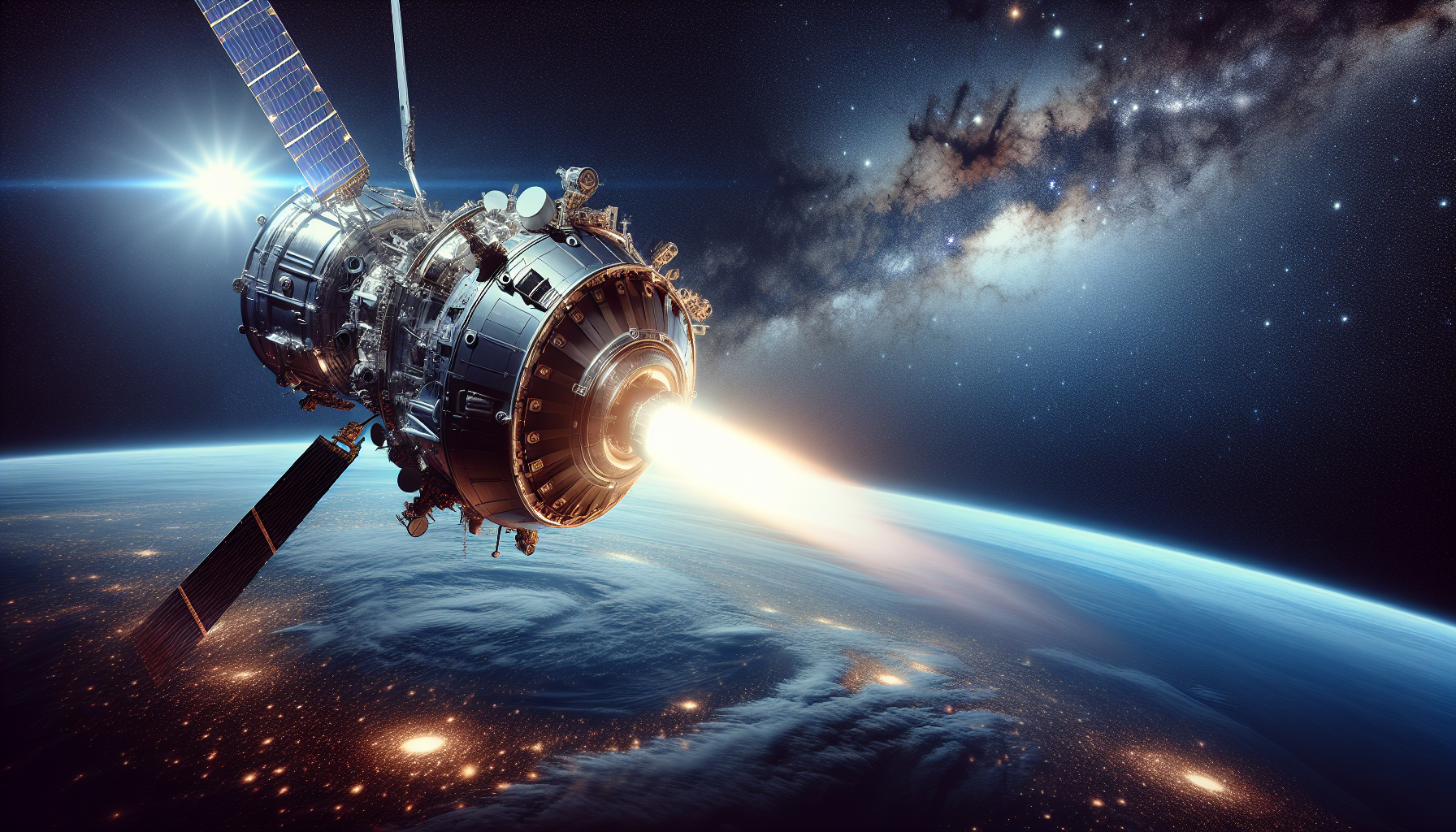
The Artemis II mission marked a significant milestone as the Orion capsule successfully ignited its engines to break free from Earth’s gravitational hold. This maneuver is a crucial step in the spacecraft’s journey toward the moon, showcasing the capabilities of NASA’s latest deep space exploration technology. The mission aims to pave the way for future human lunar landings by testing critical systems in a real space environment.
Notably, Artemis II follows the uncrewed Artemis I mission, which validated the Space Launch System and Orion spacecraft’s performance. This mission will carry astronauts around the moon, demonstrating life-support and navigation systems essential for sustained human presence beyond Earth. The success of this engine burn highlights the progress made in NASA’s Artemis program, which seeks to establish a sustainable human presence on the lunar surface by the end of the decade.
In a significant development for space exploration, the departure from Earth orbit signals the beginning of the capsule’s transit to lunar orbit, where it will conduct various tests and maneuvers. The Artemis program is seen as a cornerstone for future missions to Mars and beyond, making this engine firing a pivotal moment in expanding humanity’s reach into the solar system. The mission’s progress continues to inspire international collaboration and technological innovation in space travel.
