

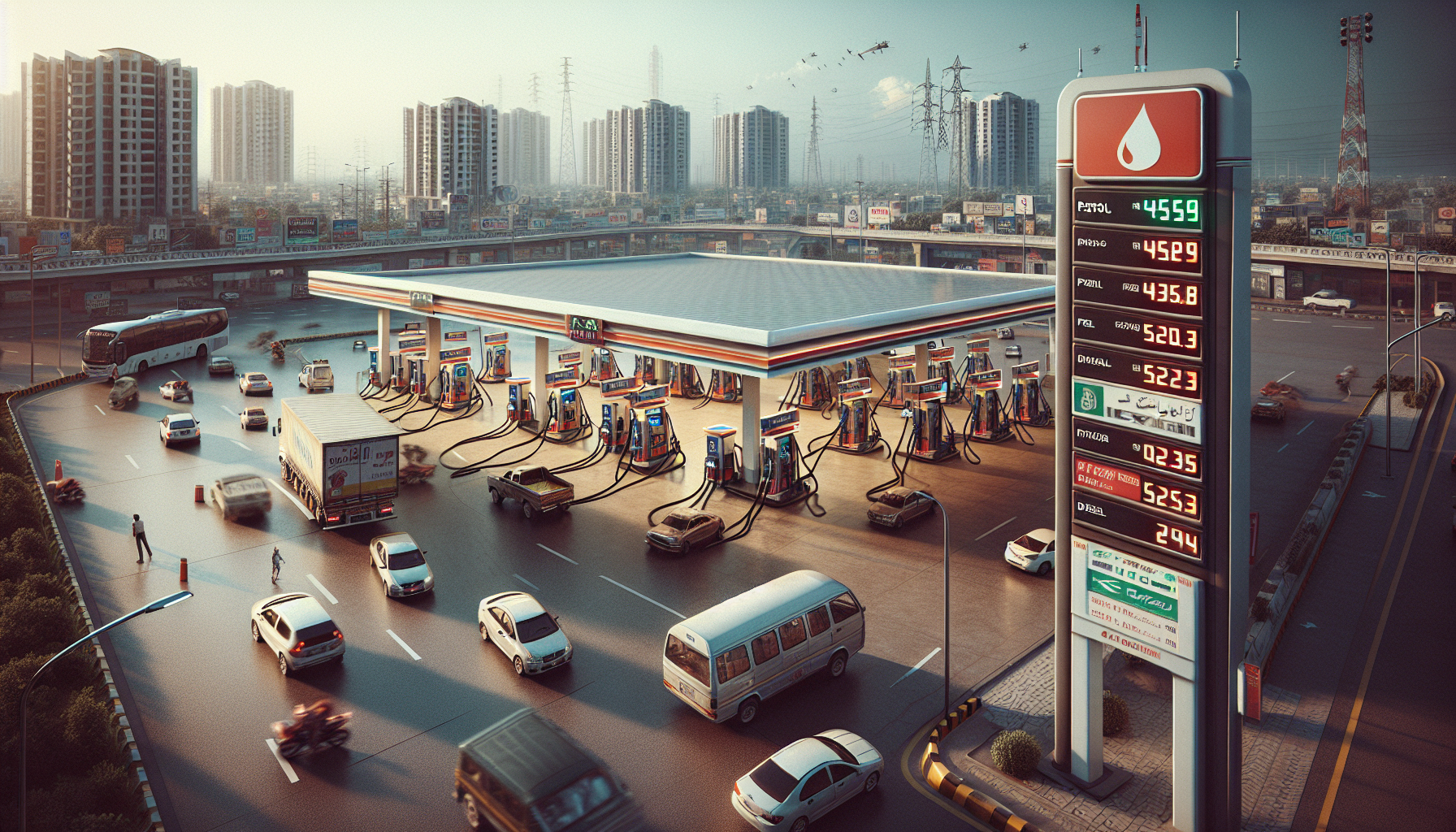
Pakistan’s petrol prices have reached an unprecedented high of Rs458.41 per liter as of April 3, 2026, while diesel prices have also climbed sharply to Rs520.35 per liter. This steep increase of Rs137.23 per liter for petrol has significantly impacted millions of commuters, motorbike riders, and small businesses across the country.
Breaking down the petrol price reveals that the ex-refinery cost, which includes import and refining expenses, accounts for Rs271.27 per liter or roughly 59% of the retail price. This base price is heavily influenced by global crude oil rates and the exchange rate, with about 80% of Pakistan’s fuel being imported.
In a significant development, the Petroleum Levy (PL), the primary government tax on petrol, has been raised to Rs160.61 per liter, constituting approximately 35% of the total price. This represents an increase of Rs55.24 from the previous Rs105.37 and is a major source of government revenue. Additional levies and margins, including the Climate Support Levy of Rs2.50, Inland Freight Equalization Margin (IFEM), Oil Marketing Companies’ margin, and dealer commissions, add around Rs26.53 or 6% to the price. Notably, no General Sales Tax (GST) is applied on petrol, keeping it at 0% to avoid further price hikes.
The total government take from taxes and levies on petrol exceeds Rs163 per liter, making up roughly 35-36% of the pump price. This marks a record high tax burden on fuel in Pakistan.
The government justifies the elevated Petroleum Levy as a necessary measure to meet budgetary targets amid soaring global oil prices and constraints on subsidies imposed by IMF agreements. The PL funds various government expenditures, including infrastructure projects, subsidies in other sectors, and debt servicing. Meanwhile, the PL on diesel has been reduced to zero, except for a Rs2.50 climate charge, to alleviate costs for transport and agriculture sectors.
Since March 1, 2026, the government has absorbed Rs129 billion in global price shocks before partially passing the burden onto consumers. To mitigate the impact on vulnerable groups, targeted subsidies have been introduced, such as a Rs100 per liter subsidy for motorcyclists (limited to 20 liters per month for three months), along with support for small farmers, trucks carrying essential goods, and public transportation.
The real-world effect on ordinary Pakistanis is substantial. For example, a motorbike rider filling a 10-liter tank now pays over Rs1,600 more than a month ago, with a significant portion attributed to taxes. This increase also affects rickshaw drivers, delivery riders, and middle-class commuters, driving up daily transportation costs and contributing to inflation in fares, food prices, and goods movement.
The Petroleum Levy generates significant revenue for the government, as daily petrol consumption runs into hundreds of thousands of tons. Each Rs1 increase in the PL translates into tens of millions of rupees in daily government income.
Looking ahead, the next fuel price revision is expected in mid-April 2026. Changes in global oil prices and the rupee-dollar exchange rate will continue to influence the ex-refinery price component. For the most current updates, official notifications from the Petroleum Division and OGRA should be monitored. Prices remain largely uniform across Pakistan, with only minor regional variations due to freight costs.
