

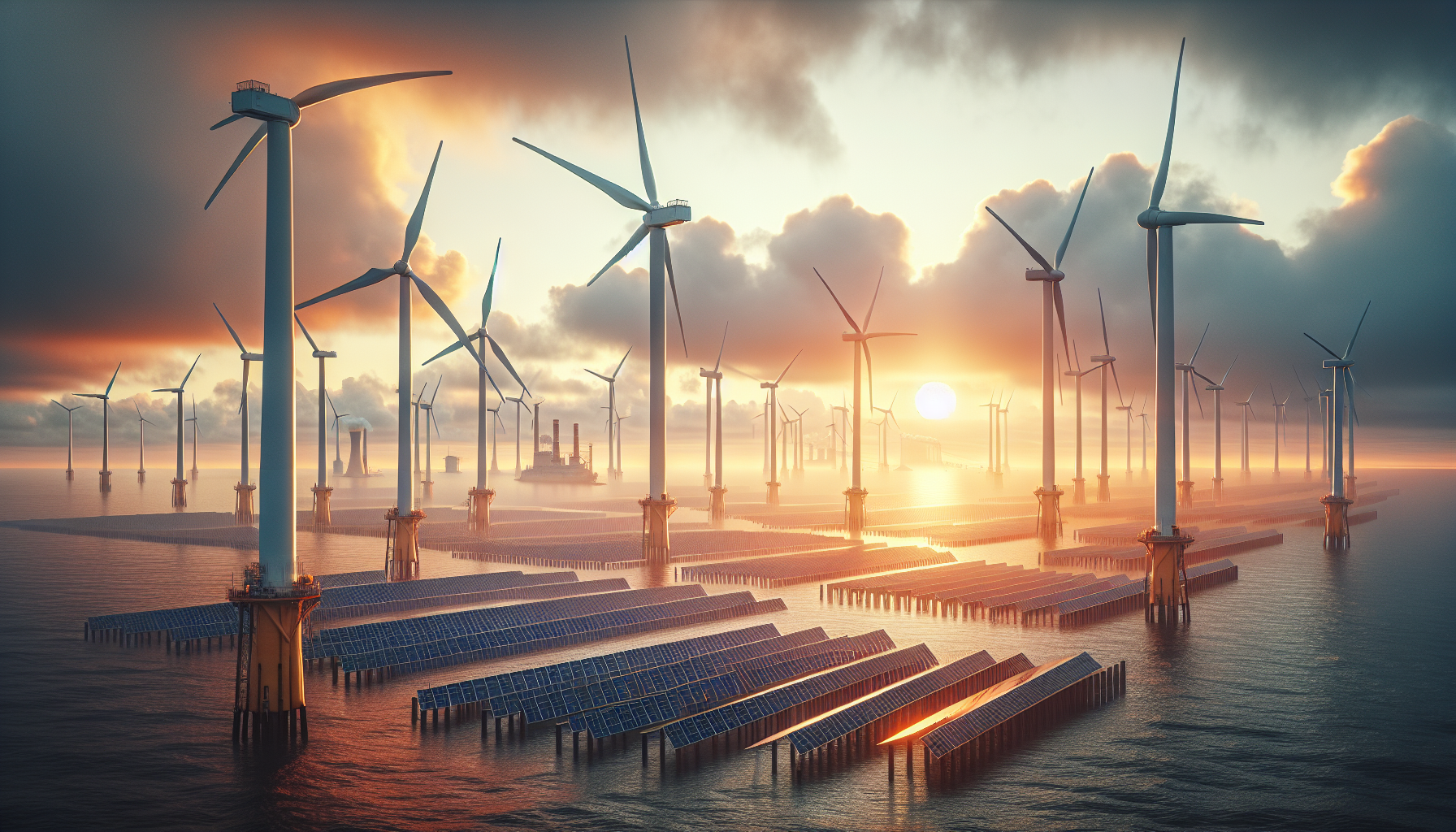
In 2025, renewable energy sources such as wind and solar accounted for a record 52.5% of Britain’s electricity generation, marking a significant milestone in the country’s energy transition. This achievement was revealed through government data released on Thursday, highlighting the growing contribution of clean energy despite a simultaneous rise in fossil fuel consumption.
Britain aims to largely decarbonise its electricity sector by 2030, a goal that demands a substantial expansion of renewable power capacity. In 2025, renewable generation reached an unprecedented 152.5 terawatt hours, representing a 5.7% increase compared to 2024. This growth was primarily driven by record outputs from offshore wind, solar, and bioenergy, figures from the Department for Energy Security and Net Zero.
Meanwhile, gas-fired power generation also rose by 4.7%, becoming the largest single source of electricity and supplying 31.5% of the total output. Offshore wind production grew by 6.6% as additional capacity came online. The increase in both gas and renewable energy compensated for a 12% decline in nuclear generation, which dropped to 35.9 terawatt hours due to the decommissioning of older plants and more frequent outages within the aging nuclear fleet.
Notably, 2024 marked the first year in over 140 years without any coal-fired power generation in Britain, following the closure of the last coal plant. Additionally, net electricity imports decreased by 11% from their 2024 peak, falling to 29.7 terawatt hours. Overall electricity demand edged up slightly by 0.2%, reaching 320.2 terawatt hours.
In a significant development, the government also announced that greenhouse gas emissions in Britain declined by 2% in 2025, with emissions from the electricity sector specifically dropping by 1%. This progress underscores the ongoing shift toward cleaner energy sources, even as challenges remain in balancing the energy mix.
