

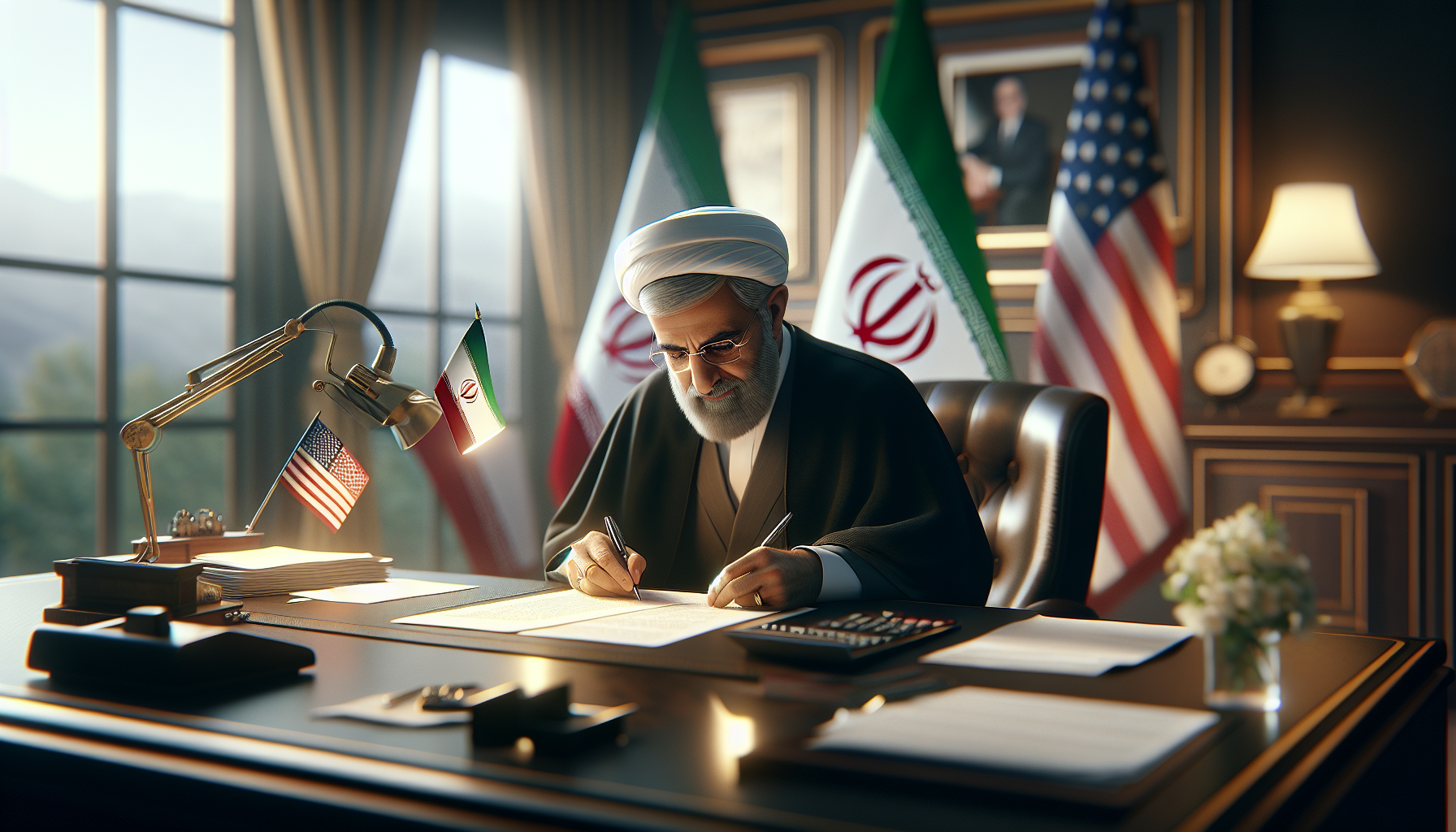
In a letter addressed to the American people, Iranian President Masoud Pezeshkian emphasized that Iran harbors no hostility towards ordinary Americans. He challenged the depiction of Iran as a threat, calling it inconsistent with both historical facts and current realities.
Addressing those seeking truth amid widespread misinformation, Pezeshkian portrayed Iran as a historically peaceful nation. Despite its long history and regional influence, he asserted that Iran has never pursued aggression, expansionism, colonialism, or domination. Instead, it has consistently defended itself against attacks.
The president drew a clear distinction between governments and their citizens, underscoring that the Iranian people do not hold ill will toward Americans or other nations, including those in Europe and neighboring countries. He described this attitude as a deeply ingrained cultural and collective value, rather than a temporary political position.
Further, Pezeshkian argued that the image of Iran as a threat is a constructed narrative driven by the political and economic interests of powerful actors. He explained that the need to fabricate an enemy serves to justify pressure tactics, maintain military dominance, support the arms industry, and control strategic markets. In this context, if no real threat exists, one is invented.
Highlighting the extensive US military presence around Iran, he identified it as the genuine regional danger. He defended Iran’s military posture as strictly defensive, pointing to recent American military actions launched from nearby bases as evidence of the threat posed. Pezeshkian stressed that no nation facing such circumstances would neglect to bolster its defense capabilities.
He described Iran’s military actions as measured responses rooted in legitimate self-defense, not as initiations of war or aggression. The president also recalled historical grievances that have fueled distrust, including US support for the Shah, backing Saddam Hussein during the 1980s, crippling sanctions, and recent unprovoked military actions.
Despite these pressures, Pezeshkian highlighted Iran’s resilience and progress since the 1979 Islamic Revolution. He noted that literacy rates have tripled to over 90%, alongside significant advancements in technology, healthcare, and infrastructure. These achievements, he said, are tangible realities that stand apart from fabricated narratives.
