

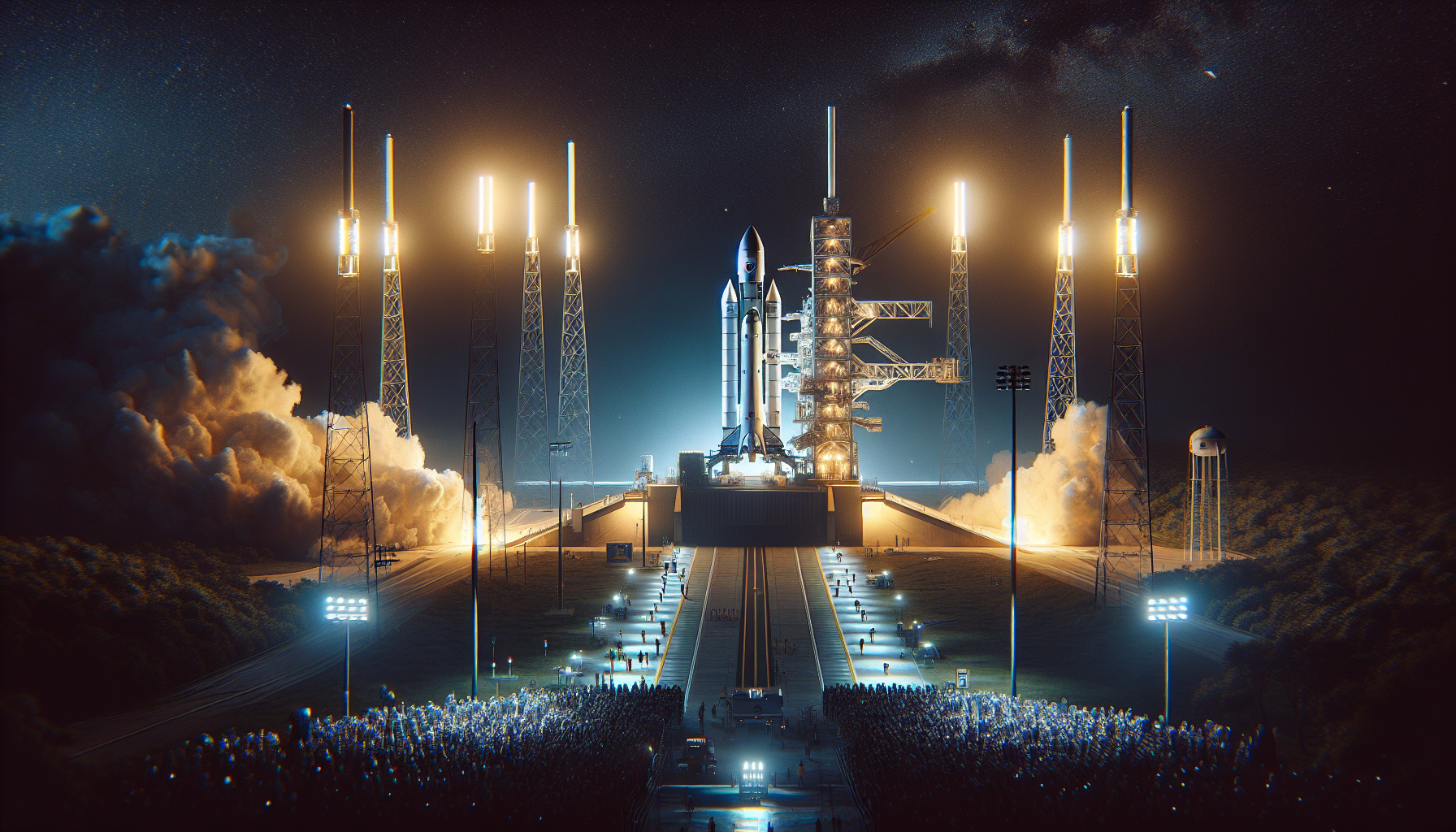
NASA is set to launch Artemis II, a landmark mission sending four astronauts on a journey around the Moon, marking humanity’s first trip that far in over five decades. The launch is scheduled for approximately 6:24 PM Eastern Time on April 1, with viewers in Pakistan able to watch live at 3:24 AM on April 2.
Unlike previous Apollo missions, Artemis II will not involve a lunar landing but will orbit the Moon as a crucial test for future missions aimed at landing astronauts on the lunar surface. This mission is a vital step toward NASA’s broader goal of establishing a sustainable human presence on the Moon and eventually sending crewed missions to Mars.
The crew consists of Commander Reid Wiseman, Victor Glover, Christina Koch, and Jeremy Hansen. Notably, this team includes the first woman, the first Black astronaut, and the first non-American to travel this far into space, highlighting the mission’s historic and diverse nature.
The astronauts will travel aboard the Orion spacecraft, launched by the powerful Space Launch System (SLS), marking the first use of this launch system with a human crew. The mission is expected to last about 10 days, covering more than 250,000 miles from Earth, potentially the farthest distance humans have traveled in space.
During the mission, the crew will live in a confined space, consuming dehydrated food, sleeping in tight quarters, conducting scientific experiments, and using tablets for communication and entertainment. The primary objective is to test life support systems, navigation, and the overall performance of the spacecraft to ensure safety for upcoming missions like Artemis III and Artemis IV.
Despite facing delays caused by technical challenges and extended safety evaluations, Artemis II is now ready for launch. The mission will be streamed live on NASA’s official platforms, including its website and YouTube channel, as well as on various TV apps and social media outlets.
In a significant development, Artemis II represents the first human Moon mission in over 50 years and serves as a critical milestone in NASA’s long-term space exploration strategy, paving the way for future lunar landings and eventual human missions to Mars.
