

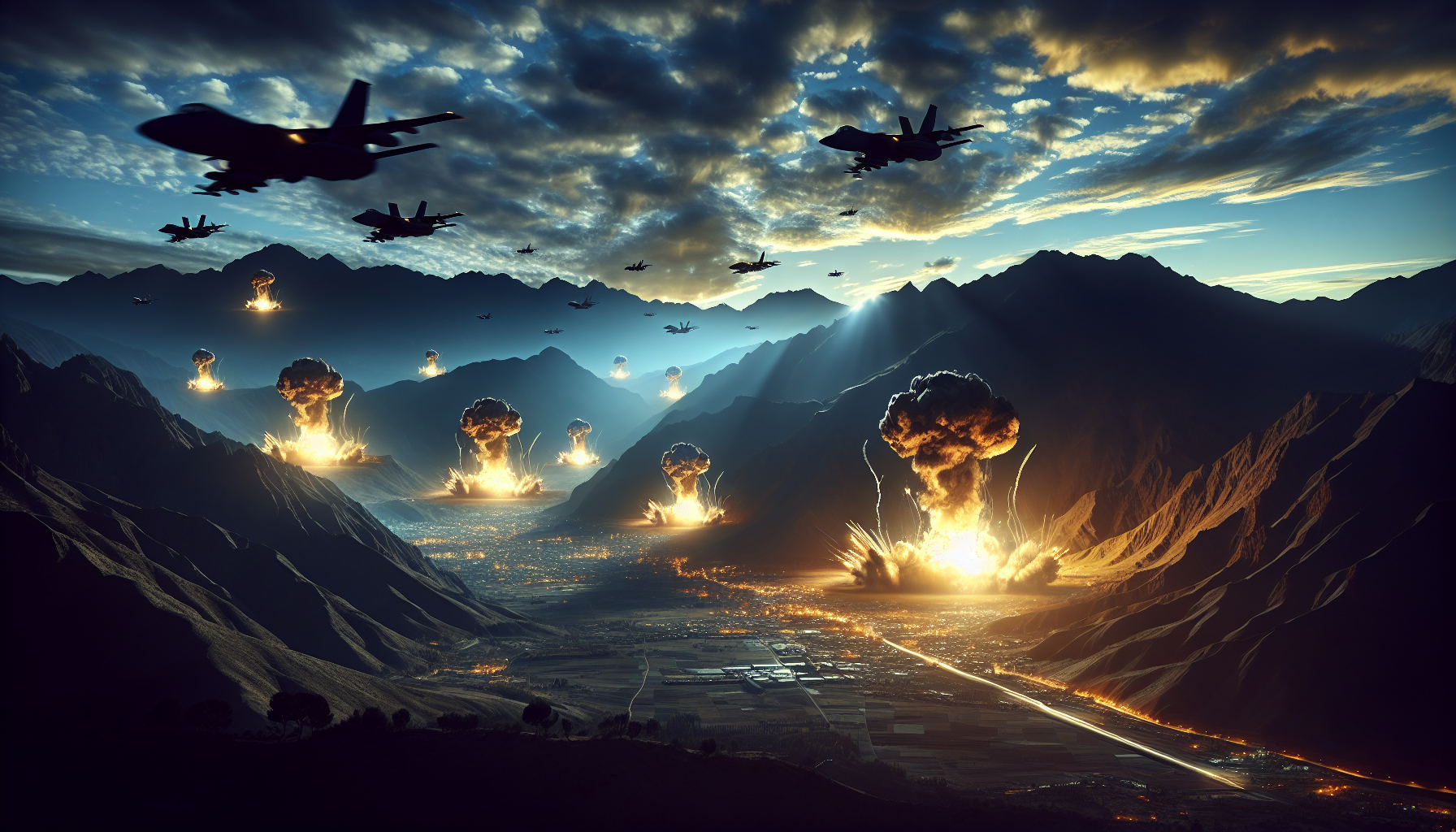
In a significant military operation, US and Israeli forces executed major airstrikes near the mountainous region of Isfahan overnight. These attacks involved the deployment of bunker-buster bombs, which triggered massive secondary explosions, indicating the targeting of fortified underground facilities. The use of such specialized munitions highlights the strategic importance of the site and the intent to neutralize deeply embedded assets.
Meanwhile, Iranian authorities have maintained a stance of defiance despite the escalating military pressure. The region around Isfahan is known for its military and nuclear infrastructure, making it a critical focal point in the ongoing tensions between Iran and Western allies. These strikes underscore the increasing intensity of confrontations in the area, reflecting broader geopolitical struggles.
The impact of these attacks extends beyond immediate military objectives, potentially influencing regional security dynamics and diplomatic negotiations. The destruction caused by the secondary explosions may degrade Iran’s operational capabilities, while also escalating the risk of further retaliatory actions. This development marks a notable escalation in the complex conflict involving Iran, the US, and Israel, with significant implications for Middle Eastern stability.
