

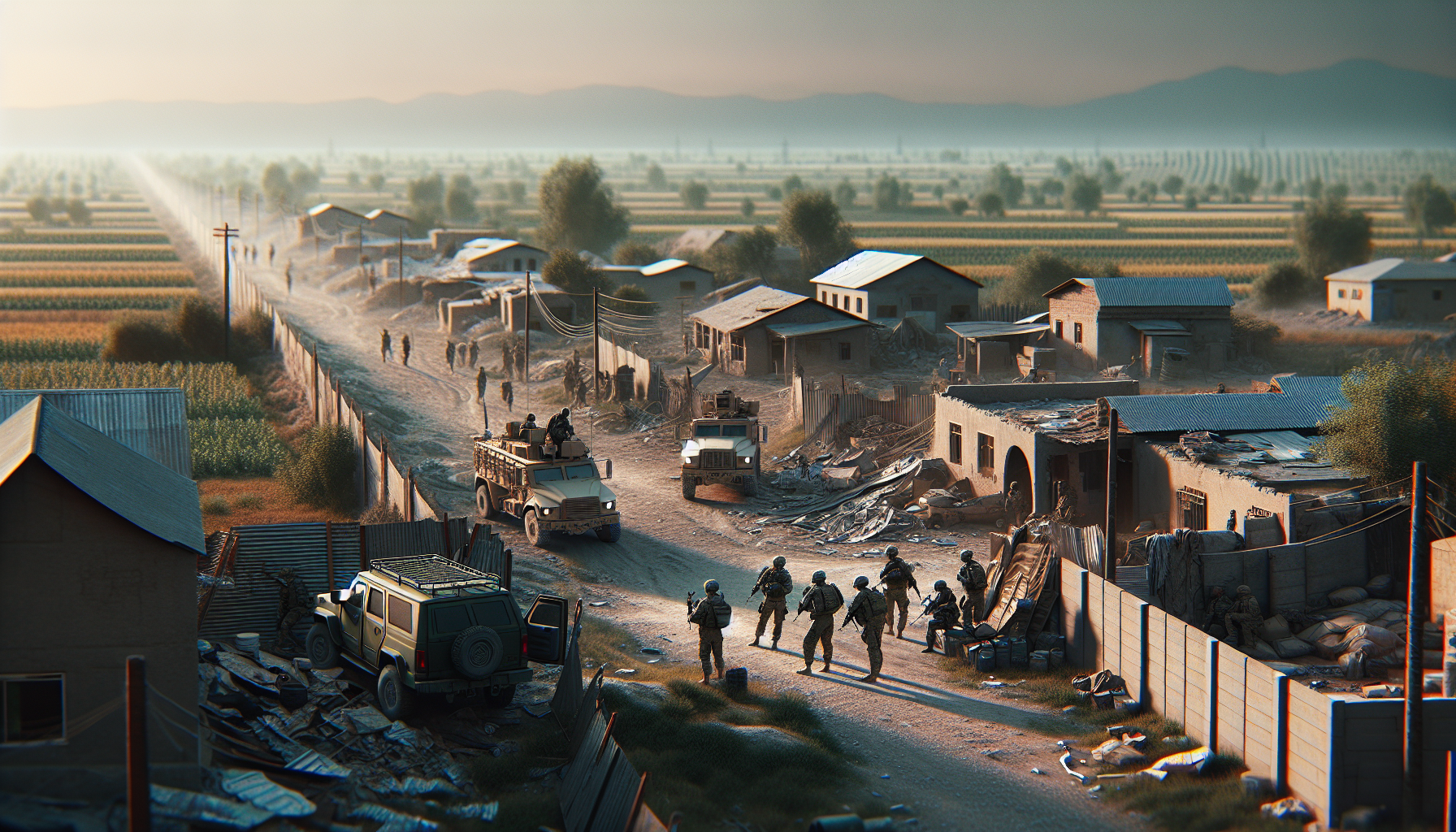
Israel announced on Tuesday its intention to demolish all residences in Lebanese villages near the border as part of a strategy to create a buffer zone. Defence Minister Israel Katz emphasized that displaced inhabitants will not be allowed to return until the region is deemed secure.
Drawing parallels to its Gaza operations, Katz stated that Israel would raze all homes in these border villages and maintain control over a significant area in southern Lebanon extending to the Litani River, as hostilities with the Iran-backed Hezbollah continue.
“Upon completion of the operation, the Israeli military will establish a security zone within Lebanon and maintain control over the entire area up to the Litani River,” Katz explained. He added that all residential structures near the border would be removed to eliminate threats against northern Israel.
Residents displaced by these actions will be prohibited from returning south of the Litani River until Israel’s security concerns are fully addressed. Israeli forces will also target Hezbollah militants and dismantle weapons caches in the region.
Since Israel launched its offensive against Hezbollah on March 2, over 1.2 million people have been displaced in Lebanon, with at least 1,247 fatalities reported by Lebanon’s health ministry. The casualties include 124 children and 52 medical personnel.
Israel stated that the campaign was initiated after Hezbollah fired in support of Iran amid a broader regional conflict. The Israeli military reported that Hezbollah has launched nearly 5,000 drones, rockets, and missiles at Israel since the fighting began.
The proposed buffer zone would stretch to the Litani River, approximately 30 kilometers north of Israel’s border, encompassing nearly ten percent of Lebanese territory. The Israeli military has already ordered evacuations from large parts of southern Lebanon, including Hezbollah strongholds in the south and east, as well as the southern suburbs of Beirut.
Katz further declared that Israel aims to eliminate Hezbollah’s elite Radwan force and destroy all remaining weaponry, while maintaining control over key infrastructure such as bridges spanning the Litani River.
This conflict represents the second major confrontation between Israel and Hezbollah in 2024. In the previous clash, Israel inflicted significant damage on the group, reportedly killing its leader Hassan Nasrallah and thousands of fighters.
Lieutenant Colonel Nadav Shoshani, an Israeli military spokesperson, confirmed that Hezbollah remains a threat and that Israeli forces have recently conducted fresh strikes targeting Hezbollah infrastructure in Beirut’s southern suburbs.
Casualty reports indicate that more than 400 Hezbollah fighters have been killed during the current conflict, while Israel has acknowledged the deaths of 10 of its soldiers.
Founded by Iran’s Revolutionary Guards in 1982, Hezbollah has been engaged in ongoing conflict with Israel, with the latest war further escalating already high tensions in the region.
