

Iran’s Foreign Minister Abbas Araghchi has referred to Saudi Arabia as a “brotherly nation” while renewing Tehran’s demand for the withdrawal of United States military forces from the Middle East. This statement comes amid rising tensions linked to the ongoing conflict involving Washington and its regional allies.
In a social media post, Araghchi emphasized Iran’s respect for the Kingdom and clarified that Tehran does not consider Saudi Arabia an adversary despite recent hostilities in the region. He asserted that Iranian military operations target only what he described as “enemy aggressors” who pose threats to both Arab and Iranian security.
Notably, the Iranian foreign minister highlighted recent military actions, claiming Iranian forces successfully struck critical aerial command infrastructure belonging to their opponents. However, independent verification of these claims remains limited.
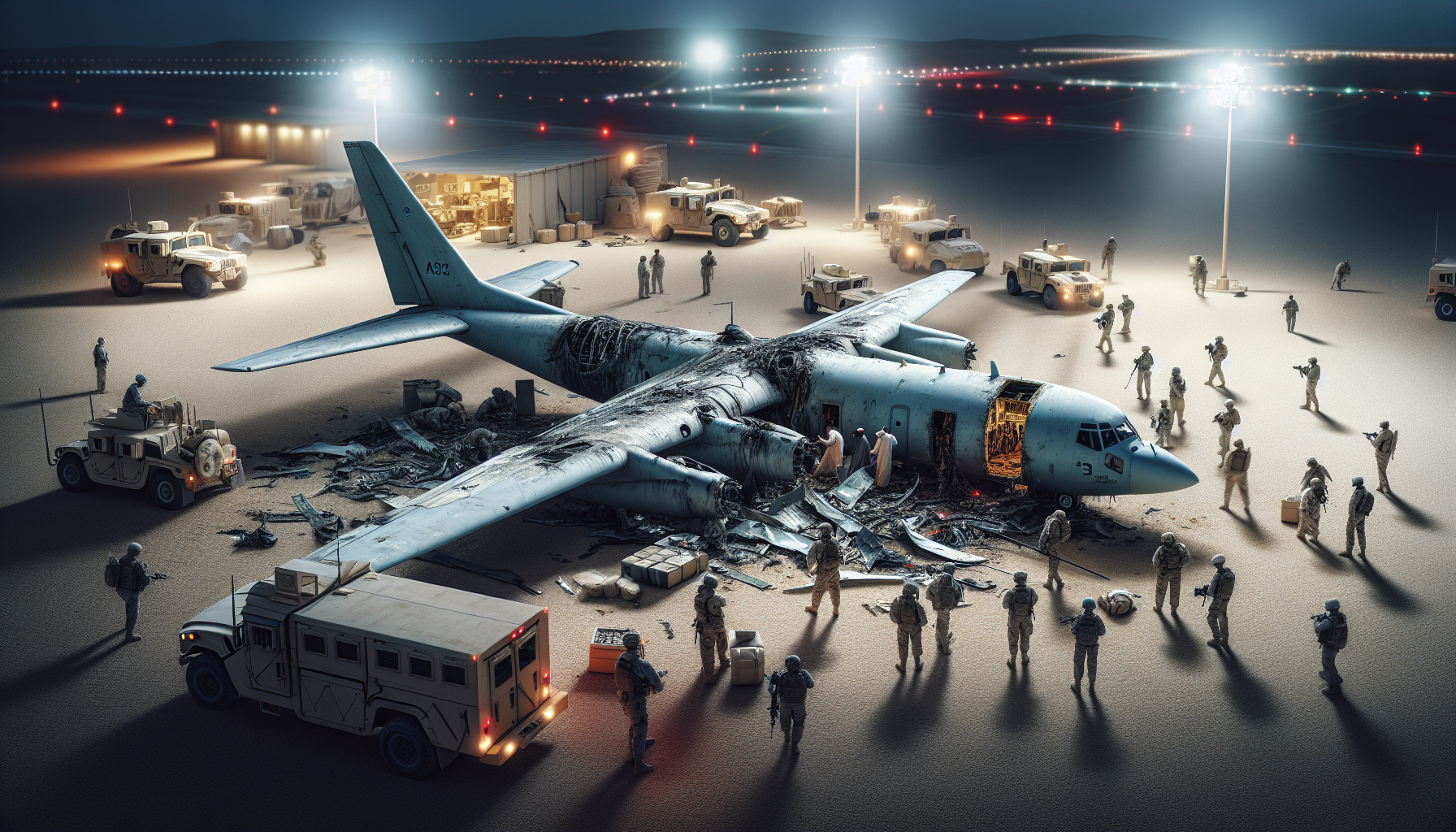
In a significant development, an Iranian strike severely damaged a key United States military surveillance aircraft at a US airbase in Saudi Arabia. Verified images reveal extensive destruction to the rear section of an E-3 Sentry airborne warning and control system (AWACS) plane stationed at Prince Sultan Air Base, located southeast of Riyadh. The photographs show debris scattered around the site and visible damage to the aircraft’s tail.
The attack, which occurred on Friday, also caused injuries to several US service members at the base. Officials confirmed that at least one aircraft was affected, though the full scope of the damage has not been disclosed.
The E-3 Sentry plays a vital role in modern warfare by providing airborne radar surveillance, early warning, and command-and-control functions. Prior to the strike, multiple such aircraft were deployed at the Saudi base as part of broader US military operations in the region.
Security experts warn that the loss or impairment of these high-value assets could significantly reduce the US military’s situational awareness. Each compromised surveillance platform diminishes Washington’s capacity to detect incoming threats such as missiles and drones in an already volatile environment.
Some analysts argue the attack exposes vulnerabilities in US preparedness for a prolonged conflict, pointing out that fixed military installations remain susceptible to increasingly advanced Iranian missile and drone technology. Meanwhile, others advise caution in drawing broad conclusions, noting that the US continues to intercept many incoming threats and maintain operational effectiveness despite challenges.
This incident occurs amid an escalating conflict involving Iran, the United States, and its allies, raising concerns about further escalation. Ukrainian President Volodymyr Zelenskyy has alleged that Russia might be providing intelligence support to Iran, potentially assisting in targeting US assets, though this claim has not been independently confirmed.
While the US military has yet to provide detailed official comments, the attack highlights the growing risks faced by American forces in the region and the difficulties in sustaining operational dominance amid evolving threats.
