

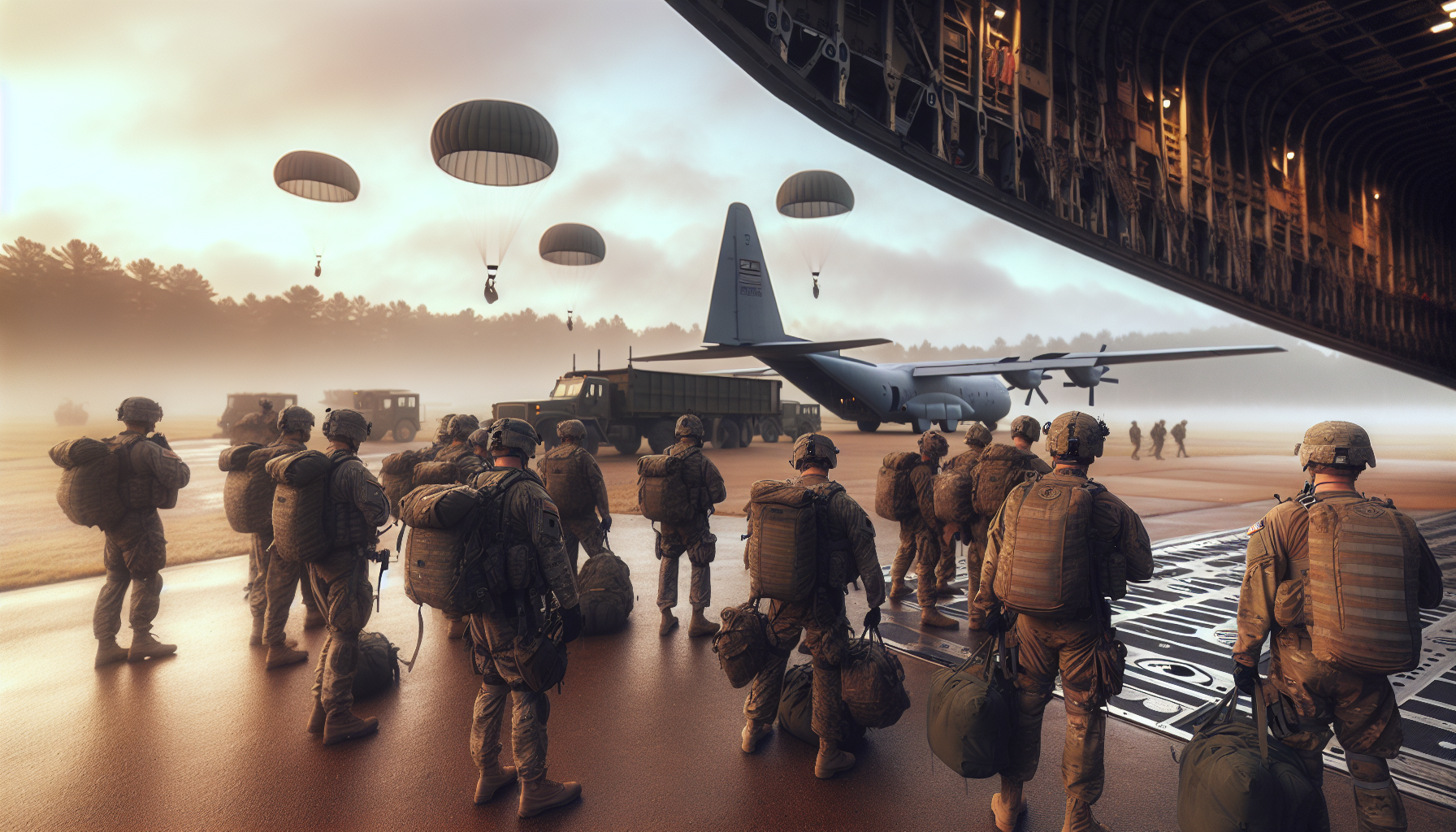
Thousands of soldiers from the U.S. Army’s renowned 82nd Airborne Division have begun deploying to the Middle East, marking a significant escalation in the ongoing conflict with Iran. These troops, stationed at Fort Bragg, North Carolina, join a growing contingent of U.S. forces already in the region, including sailors, Marines, and Special Operations personnel.
Over the recent weekend, approximately 2,500 Marines also arrived, further bolstering the American military presence. While the exact deployment locations of the paratroopers remain undisclosed, the move was anticipated amid rising tensions. The arriving forces comprise elements of the 82nd Airborne Division headquarters, logistical units, support teams, and a brigade combat team.
In a notable development, no final decision has been made to send troops directly into Iran. However, the buildup aims to enhance operational capacity for potential future missions within the region. Discussions within the U.S. administration have explored various strategic options, including a possible operation to seize Kharg Island, a critical hub responsible for 90% of Iran’s oil exports. Such an operation would carry significant risks due to Iran’s missile and drone capabilities targeting the island.
Other contemplated strategies involve deploying ground forces inside Iran to extract highly enriched uranium, a complex mission that could require prolonged troop presence to access deeply buried materials. Additionally, there have been talks about positioning U.S. troops along Iran’s shoreline to secure safe passage for oil tankers through the Strait of Hormuz. While air and naval forces would primarily manage this mission, ground troops might be necessary to ensure security.
President Donald Trump stated on Monday that the U.S. is engaging with a “more reasonable regime” to resolve the conflict but reiterated warnings to Tehran to keep the Strait of Hormuz open. He threatened attacks on Iranian oil wells and power plants if the passage remains blocked.
Deploying U.S. ground forces, even for limited objectives, carries substantial political risks for Trump, especially given the low public support for the campaign against Iran and his previous commitments to avoid new Middle East entanglements. Since the onset of operations on February 28, the U.S. has targeted over 11,000 sites, with more than 300 American troops injured and 13 service members killed during Operation Epic Fury.
