

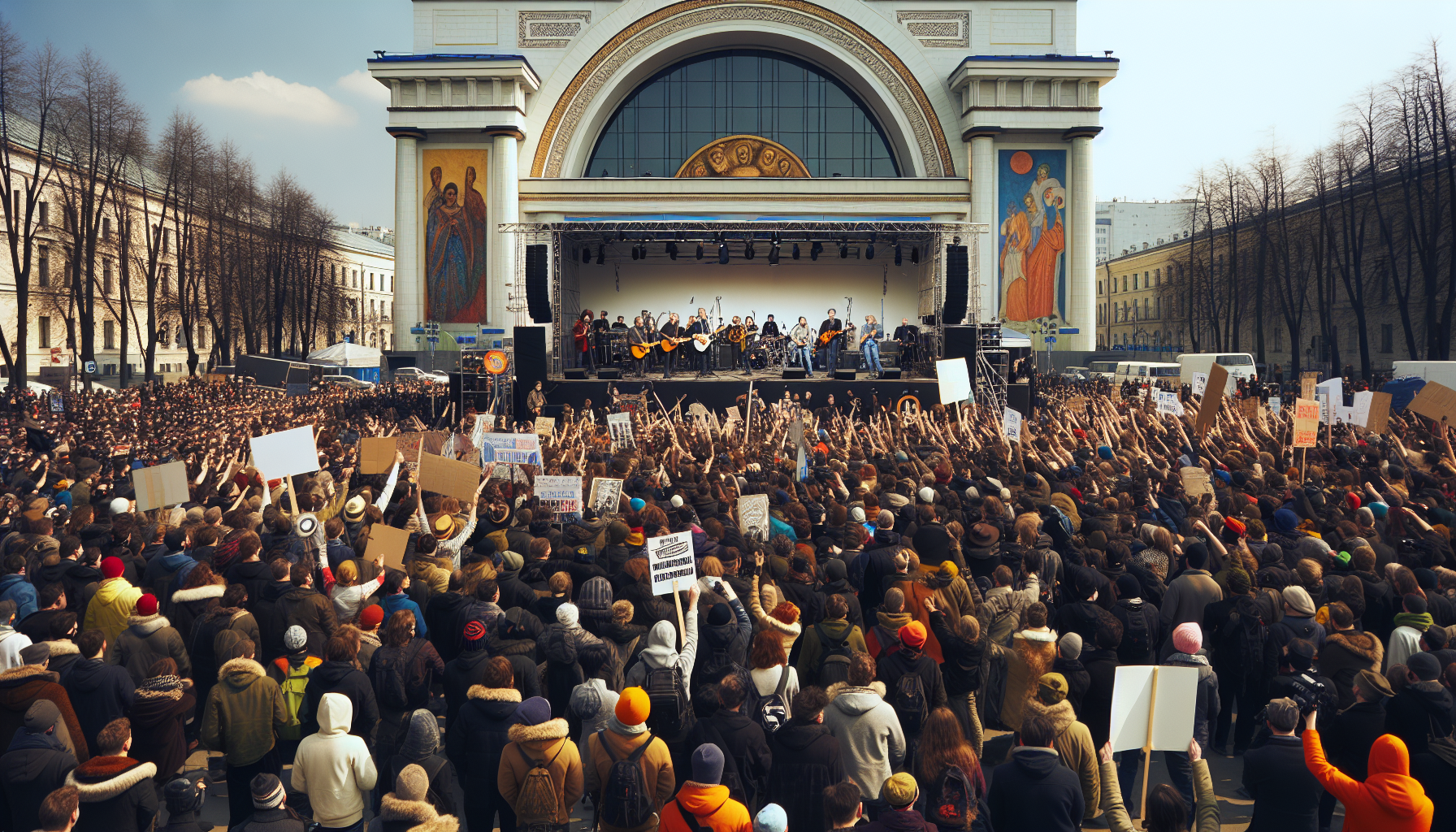
On March 27, Maggie Rogers stood alongside legendary folk singer Joan Baez at a powerful demonstration held at the Kennedy Center, uniting voices against censorship and threats to artistic freedom. The event attracted numerous celebrities and cultural figures dedicated to protecting the First Amendment rights of American artists.
Joan Baez, a prominent figure from the 1960s protest era, addressed the crowd with resolve. She revealed that she had contemplated returning her Kennedy Center Honor in response to controversial changes imposed by the current administration. However, Baez declared firmly, “I realized that would be admitting defeat,” refusing to let the nation’s freedoms be compromised by what she called “a bully and a tyrant.”
Indie-pop artist Maggie Rogers shared a heartfelt reflection on the significance of the Kennedy Center. Growing up near Washington, D.C., Rogers described the venue as a sacred place. “I used to come to the Kennedy Center when I was a kid to see music that opened my world to what it meant to create and to feel,” she told attendees. Her presence underscored the dangers that artistic restrictions pose to both veteran icons and emerging talents.
The event, titled “Artists United for Our Freedoms,” assembled a unique alliance of Hollywood stars and activists. Jane Fonda, Billy Porter, Sam Waterston, and novelist Ann Patchett joined journalists such as former CNN correspondent Jim Acosta on stage. Protesters carried signs with slogans like “We are the Kennedy Center” and “Performing arts are for everyone, not Trump branding.”
Jane Fonda issued a stark warning about government interference in cultural institutions. She cautioned, “The news we receive will become increasingly manufactured if we don’t fight back,” and noted that academic programs and ticket prices could also suffer. Fonda highlighted that the administration’s decision to close the Kennedy Center for two years for “necessary renovations” has already led to at least forty job losses.
The Kennedy Center has emerged as a central battleground in the conflict between government control and artistic expression. The administration has enacted sweeping changes, including leadership replacements and demands for artists to conform to specific ideological views. Rogers commented, “I don’t think it’s the role of any administration to tell someone how to feel, especially when shared feeling is so often what connects us.” She added, “More than anything these days, I feel afraid—and when I feel that way, I make music.”
The rally was organized by the Committee for the First Amendment, revived by Jane Fonda last October after government pressure led to the temporary suspension of Jimmy Kimmel Live!. Speakers detailed how government harassment has extended beyond the Kennedy Center to newsrooms and late-night comedy shows.
This demonstration served as a lead-up to the nationwide “No Kings” protests planned for the following Saturday, where performers including Tom Morello and Bruce Springsteen are expected to perform in defense of democratic principles.
