

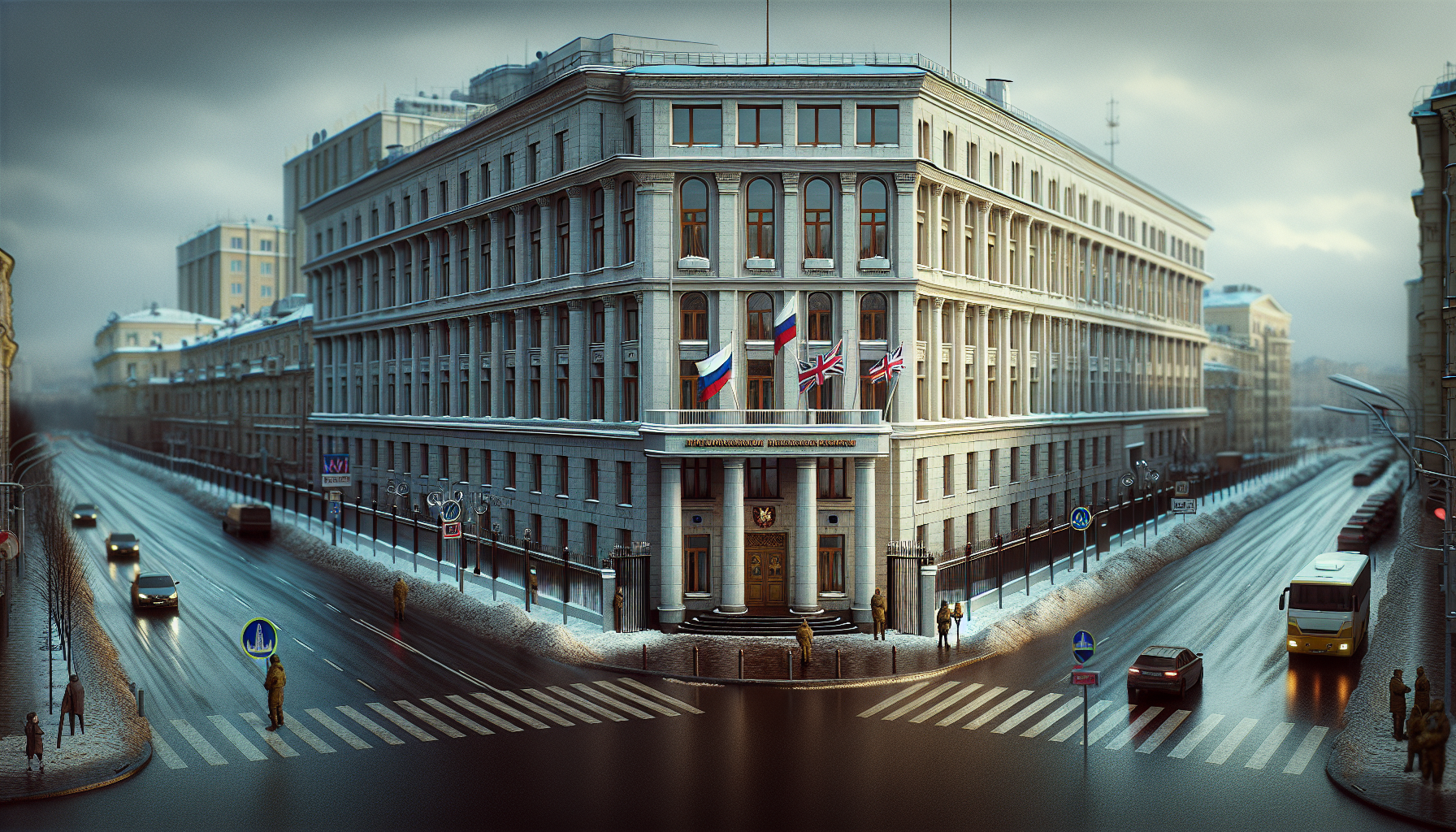
On Monday, Russia expelled a British diplomat accused of engaging in economic espionage, simultaneously warning its citizens against interacting with other embassy personnel. This move was described by the UK as an act of intimidation. The Federal Security Service (FSB), the principal successor to the Soviet-era KGB, stated that second secretary Albertus Gerhardus Janse van Rensburg was involved in intelligence and subversive activities that posed a threat to Russia’s security.
A spokesperson from Britain’s foreign ministry condemned the allegations as entirely unfounded, accusing Moscow of targeting its diplomats with malicious and baseless claims. Amid the ongoing war in Ukraine, Russia has accused Britain of conducting espionage operations aimed at destabilizing the country at levels not seen since the Cold War.
Britain, which provides financial and military support to Ukraine, regards Russia as its most immediate threat and has accused Russian intelligence agencies of orchestrating significant cyberattacks, assassinations, and sabotage across the Western world. Russian state television broadcast footage purportedly showing Janse van Rensburg meeting economic contacts in Moscow restaurants and cross-country skiing near a building identified as a special defense ministry facility.
In a notable development, Russian state media labeled Janse van Rensburg as the 16th British diplomat expelled from Moscow within the past two years. Efforts to reach the diplomat were unsuccessful. The FSB claimed he attempted to acquire sensitive information during informal meetings with Russian economic experts and advised Russian citizens to avoid meetings with British diplomats to prevent negative consequences, including criminal charges.
Meanwhile, as the United States under former President Donald Trump sought to reset relations with Moscow and mediate peace between Russia and Ukraine, Britain has been portrayed as Russia’s primary adversary. State television frequently depicts the UK, often referred to as “Perfidious Albion,” as orchestrating covert efforts to undermine Russian interests globally.
Western diplomats stationed in Moscow report frequent surveillance and harassment, prompting updates to the “Moscow Rules,” a set of guidelines originally developed during the Soviet era to prevent complacency. Russia has imposed strict Soviet-style travel restrictions on most British diplomats, requiring prior notification for any travel beyond a 120-kilometer (75-mile) radius. Consequently, diplomatic assignments in Moscow are considered among the most challenging worldwide, with the U.S. State Department ranking the city alongside Freetown, Mogadishu, Damascus, and Kabul in terms of hardship.
Russia has consistently complained about the harassment of its diplomats in major Western capitals, particularly in the United States, highlighting the ongoing tensions between Moscow and Western nations.
