

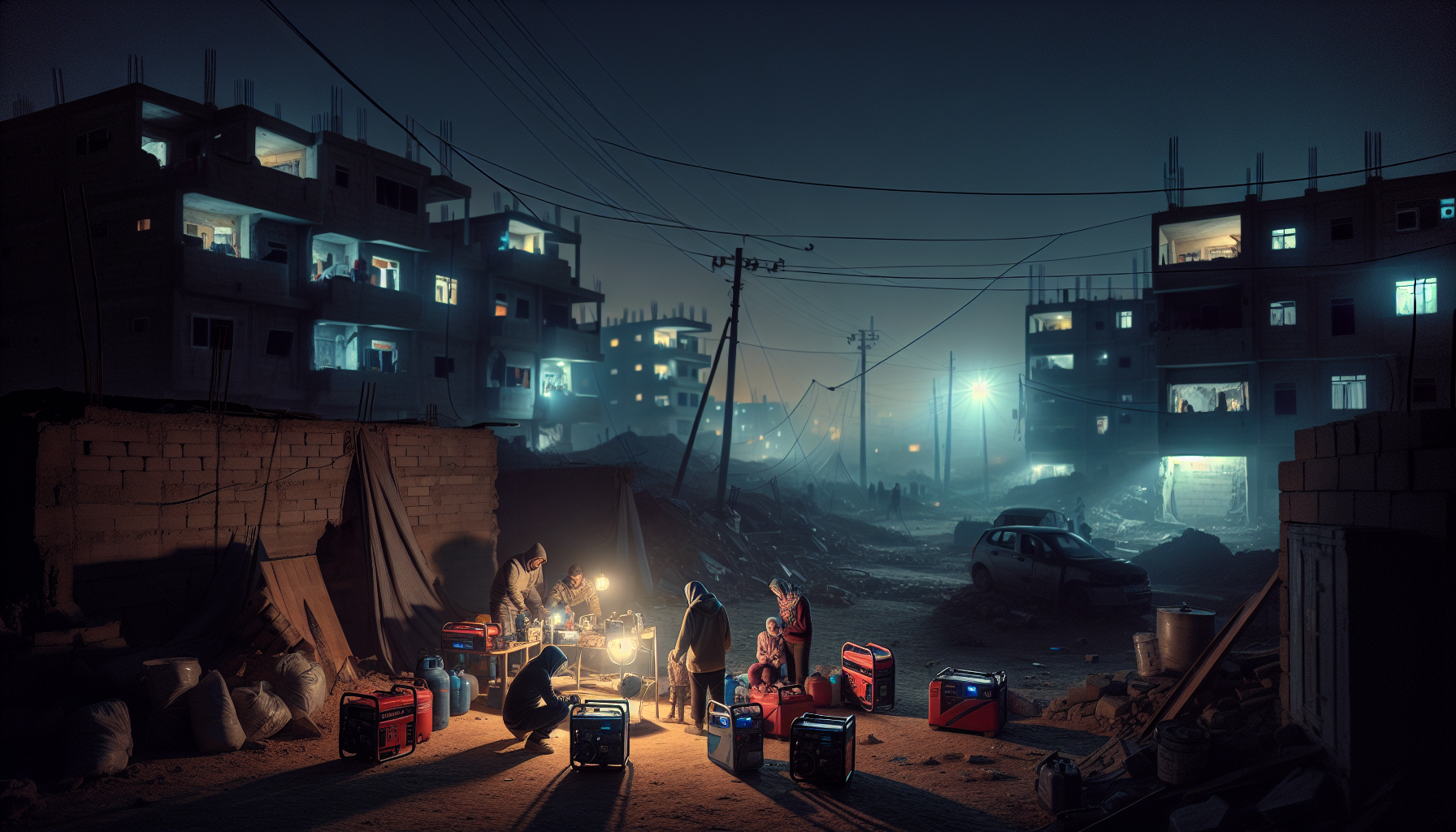
The ongoing conflict in Gaza has critically damaged the region’s electrical infrastructure, plunging many households into darkness. With the main power grid shattered, residents are forced to turn to alternative sources such as generators and privately operated charging points to meet their basic electricity needs. This disruption has severely impacted daily life, affecting everything from lighting to refrigeration and communication.
Electricity shortages in Gaza have long been a challenge due to limited fuel supplies and infrastructure constraints, but the recent war has exacerbated the crisis to unprecedented levels. The destruction of power facilities not only hampers civilian life but also complicates humanitarian efforts, as hospitals and essential services struggle to operate under these conditions. Meanwhile, the reliance on generators increases fuel consumption, which is scarce and expensive, further straining the population.
In a significant development, the power outage highlights the broader humanitarian consequences of the conflict, underscoring the urgent need for restoration and support. The electricity crisis in Gaza is emblematic of the region’s vulnerability and the challenges faced in rebuilding critical infrastructure amid ongoing hostilities. Restoring reliable power is essential for improving living conditions and enabling recovery efforts in the war-torn area.
