

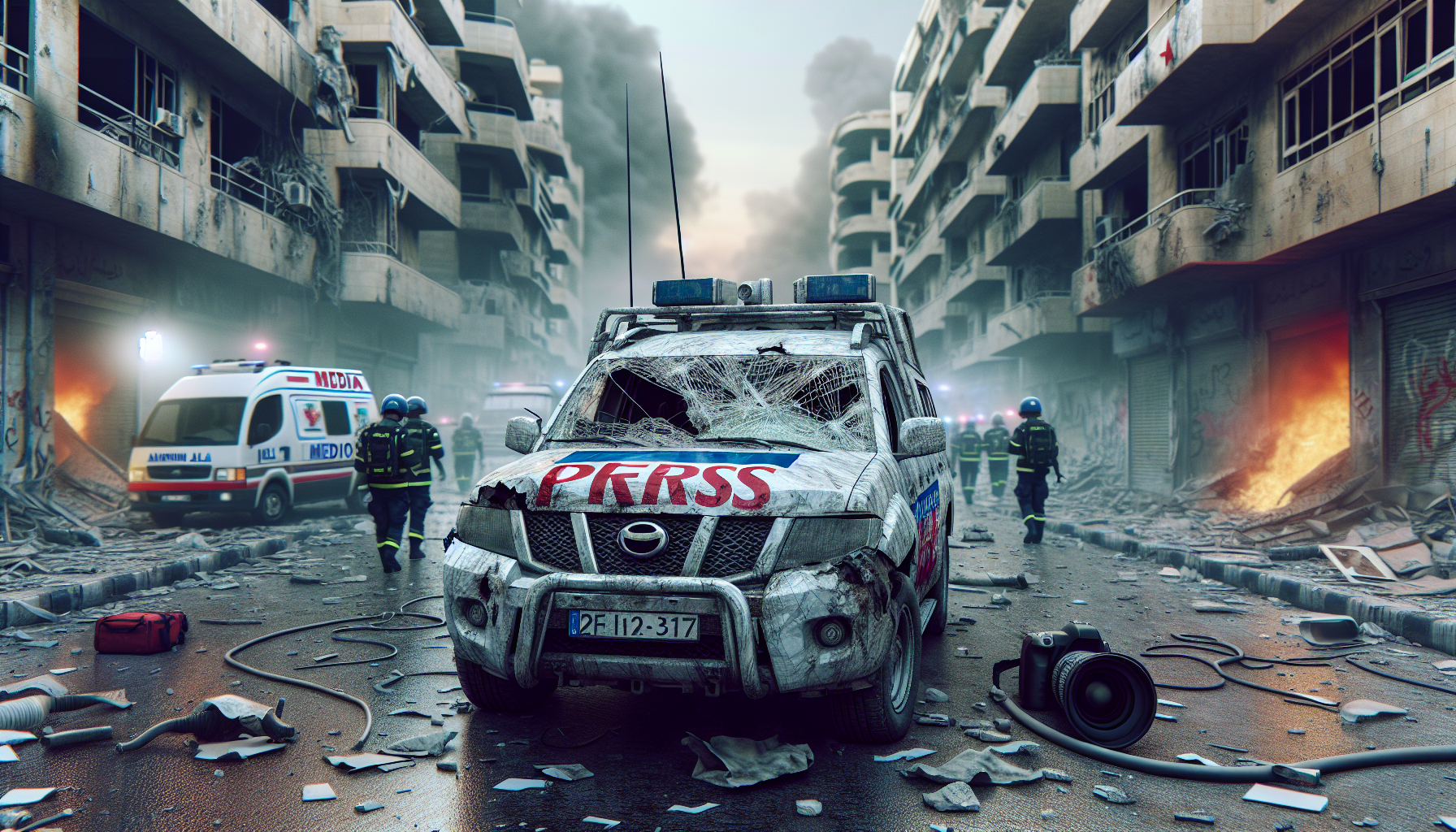
In a tragic incident, three journalists were killed when an Israeli airstrike hit a vehicle clearly identified as a press car in Lebanon. This attack has sparked outrage and condemnation from Lebanese officials, highlighting the dangers faced by media personnel in conflict zones. The targeted vehicle was marked to indicate its journalistic purpose, raising serious concerns about the protection of press freedom during military operations.
Lebanon’s president denounced the strike as a ‘blatant crime,’ emphasizing the severity of the attack on civilians performing their professional duties. The killing of journalists in such circumstances not only endangers lives but also threatens the flow of accurate information from conflict areas. This event underscores the ongoing volatility in the region and the risks borne by those reporting on the ground.
International observers have noted that attacks on media workers can have a chilling effect on press coverage, limiting transparency and accountability in war zones. The incident adds to a growing list of casualties among journalists in the Middle East, prompting calls for stronger safeguards to protect reporters. Meanwhile, the broader conflict continues to impact civilian populations and the essential role of independent journalism in documenting these events.
