

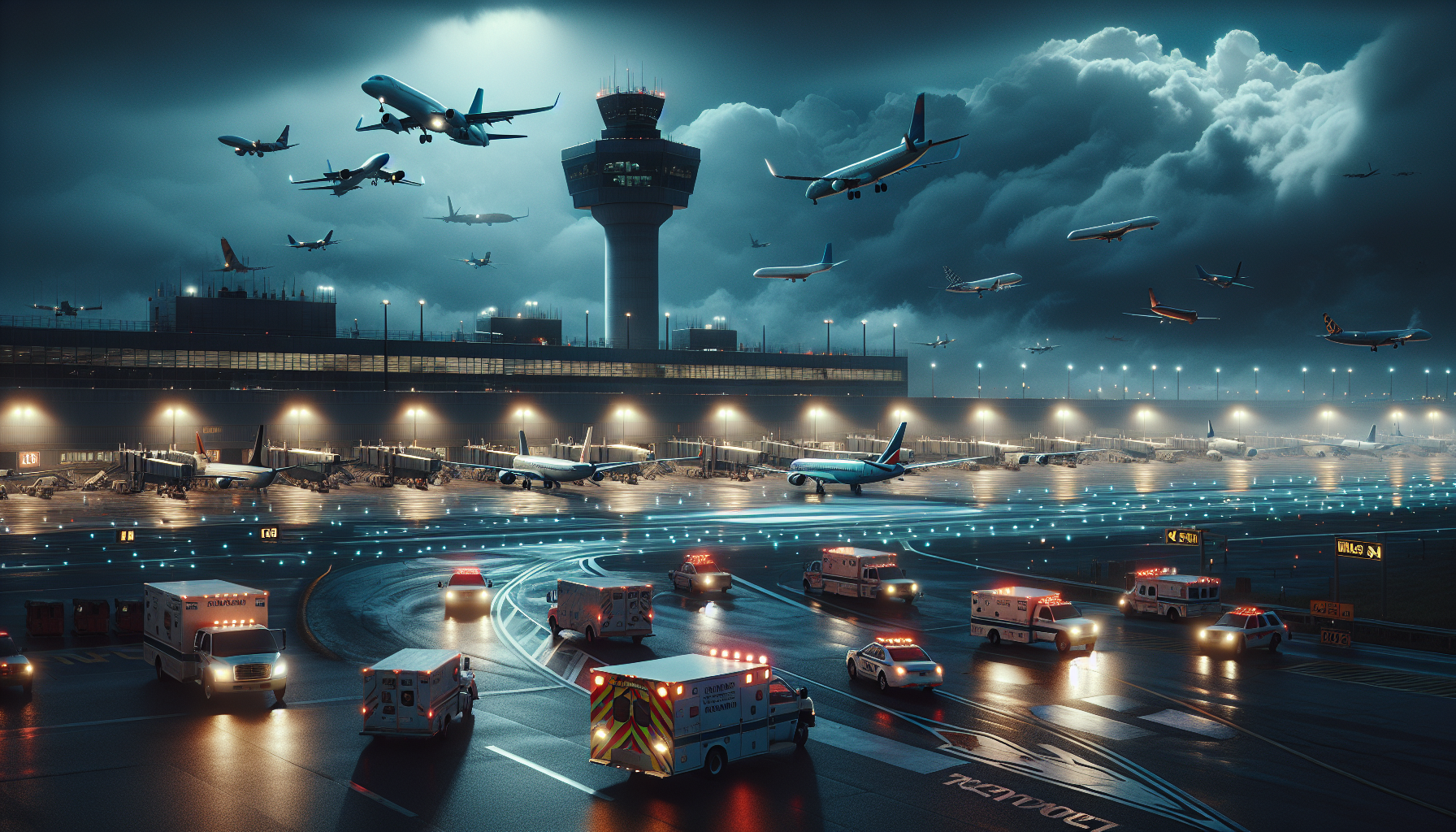
On the night of March 26, New York’s LaGuardia Airport experienced an exceptionally busy period prior to a tragic collision involving an Air Canada Express CRJ-900 regional jet and a fire truck. The crash, which occurred between 10 p.m. and 11:37 p.m., resulted in the deaths of both pilots. Aviation data reveals that 70 commercial flights took off or landed during this timeframe, significantly exceeding the average of 53 flights for Sunday evenings in March since 2022, and surpassing the 31 flights originally scheduled that night.
Several current and former U.S. air traffic controllers described the workload as heavy, noting that under such conditions, additional controllers are usually called in or shifts extended to manage the increased traffic. The situation was further complicated by a United Airlines flight declaring an emergency due to a strong odor onboard. This emergency prompted an air traffic controller to authorize a fire truck to cross the runway, inadvertently placing it in the path of the Air Canada jet. Attempts to halt the fire truck were unsuccessful, as revealed by audio recordings from LiveATC.net.
The incident has reignited concerns about the high workload faced by U.S. air traffic controllers, especially during late-night hours when staffing is often limited. Typically, only two controllers are on duty, with one sometimes responsible for managing both active runways and ground vehicle movements. U.S. Transportation Secretary Sean Duffy stated that LaGuardia had 33 certified controllers and six trainees at the time, close to the target staffing level of 37. The National Transportation Safety Board (NTSB), which is investigating the crash, confirmed that two controllers were present in the tower cab during the incident.
Experts analyzing the audio suggest that the controller handling the United Airlines emergency and the subsequent crash was managing both ground and local air traffic control duties simultaneously. However, the NTSB is still examining whether these responsibilities were officially combined. Ray Adams, a retired air traffic controller from Newark airport, remarked that combining such positions during busy night shifts was not typical in his experience. A 1997 NTSB report on a previous LaGuardia collision led to procedures preventing the combination of local and ground control roles before midnight, though it remains unclear if these rules are still enforced.
The Port Authority of New York and New Jersey deferred questions to the Federal Aviation Administration (FAA), which oversees U.S. air traffic control. The FAA has yet to comment on whether such procedures are currently in place at LaGuardia. The NTSB has indicated that their investigation will include a review of relevant tower protocols. NTSB Chair Jennifer Homendy emphasized that air crashes usually result from multiple factors and that it is premature to draw conclusions.
One air traffic controller from the New York area, speaking anonymously, noted that during adverse weather conditions and flight delays, controllers often extend their shifts to manage traffic flow. Weather reports from that night indicated ground-level and atmospheric icing, which contributed to slower operations and delays. The United Airlines flight involved had aborted takeoff twice due to issues with its anti-ice system, an industry source. United Airlines declined to comment on the matter.
Following the crash, the controller involved was not immediately relieved from duty, which the NTSB described as standard practice. Later, the controller admitted to another pilot that he had been handling an emergency earlier that night and expressed remorse, saying, “I messed up.” The pilot, who had witnessed the crash, responded with reassurance, “Nah, man, you did the best you could.”
