

The Oscars are set to leave Hollywood after nearly 25 years, with the Academy Awards ceremony moving from the Dolby Theatre on Hollywood Boulevard to the Peacock Theatre at L.A. Live in downtown Los Angeles starting in 2029. The Dolby Theatre, formerly known as the Kodak Theatre, has been the event’s home since 2002 and will continue to host the awards through the 100th ceremony in 2028, which will still air on ABC.
This venue change addresses practical challenges faced at the Dolby Theatre, including limited space as the Academy’s membership has grown beyond 11,000 members. Additionally, strict security measures involving road closures and a one-mile buffer zone, recently intensified due to global concerns, have complicated event logistics. In contrast, the new venue at L.A. Live offers a modern, centralized campus-style environment adjacent to Crypto.com Arena and the Los Angeles Convention Center.
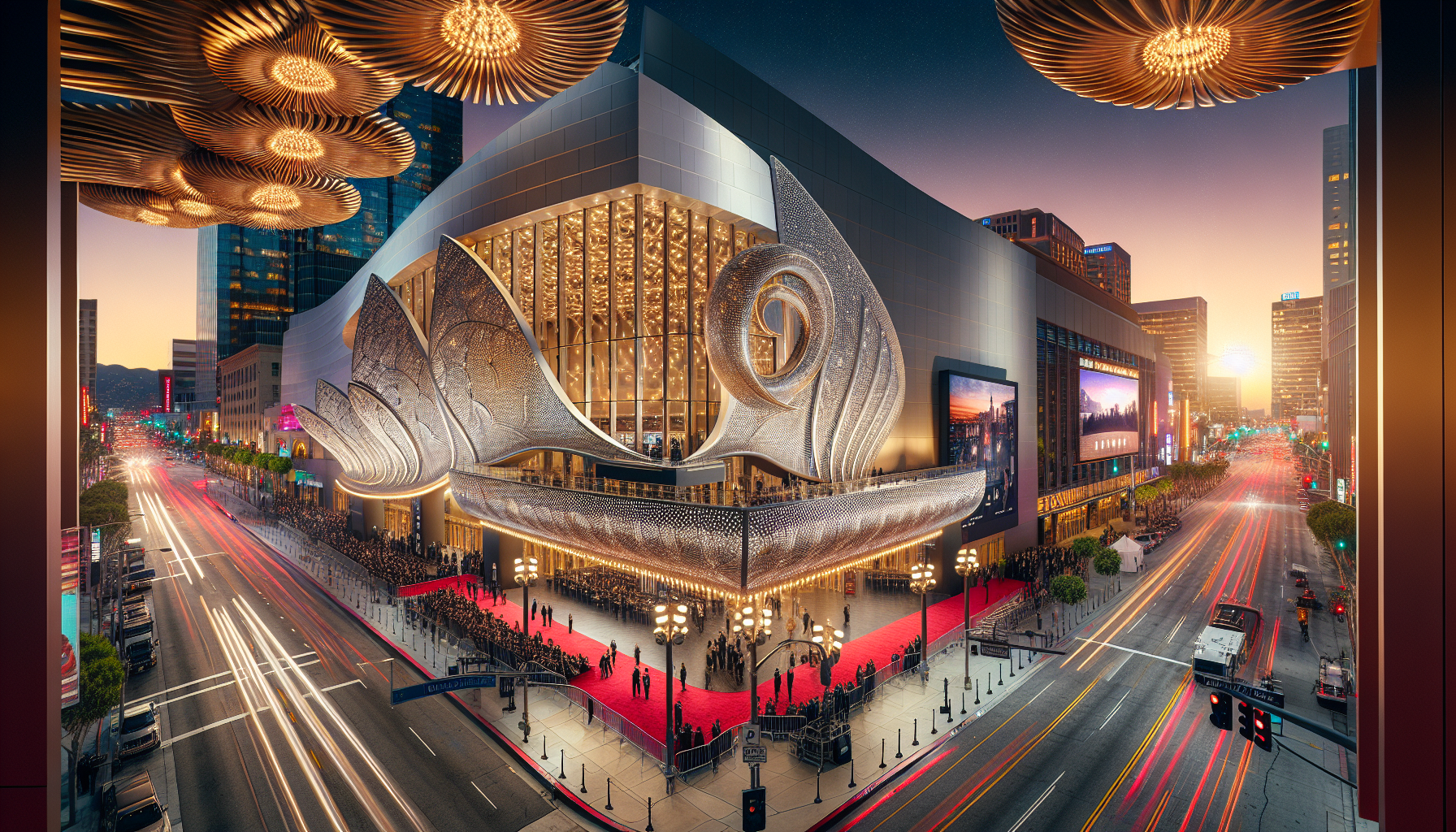
Operated by AEG, L.A. Live provides enhanced facilities such as a larger stage, improved sound and lighting systems, expanded press areas, green rooms, and backstage amenities. The entire event—from the red carpet and main ceremony to the Governors Ball and afterparties—can be hosted within one efficient location, with the nearby JW Marriott hotel offering added convenience for attendees. The Peacock Theatre is expected to be renamed before the Oscars’ arrival as part of a naming rights agreement. Renderings reveal plans for a larger design featuring a curved proscenium, bigger screens, and immersive elements, while preserving an elegant aesthetic.
Notably, this move marks a return to downtown Los Angeles, where the Oscars were previously held at venues such as the Dorothy Chandler Pavilion and the Shrine Auditorium before settling in Hollywood. This transition also aligns with a major broadcasting shift: after the 2028 ceremony, the Oscars will conclude their long-standing partnership with ABC and begin streaming live globally on YouTube starting in 2029. This change reflects the decline in traditional television viewership, which has dropped from over 40 million viewers in the late 1990s to approximately 17.9 million for the most recent ceremony.
Under a new multi-year agreement with AEG, the Oscars will remain at L.A. Live through 2039, granting the Academy greater control over staging, technical infrastructure, and sponsorship opportunities. Todd Goldstein, AEG’s chief revenue officer, expressed enthusiasm about the collaboration, highlighting L.A. Live’s role as a cultural hub and the Oscars’ status as a premier global event. Academy CEO Bill Kramer and President Lynette Howell Taylor also emphasized their excitement about working closely with AEG to make L.A. Live an ideal setting for celebrating cinema worldwide.
In a significant development, relocating to a larger, state-of-the-art venue in downtown Los Angeles aims to improve the experience for attendees, media, and global audiences while adapting to the evolving media landscape. Although some may feel nostalgic about the Oscars’ Hollywood Boulevard era, this move positions the awards for a more streamlined and immersive future, embracing streaming and expanding international reach. The Oscars’ departure from Hollywood marks an important chapter in its history, blending tradition with modern upgrades for the coming decade and beyond.
