

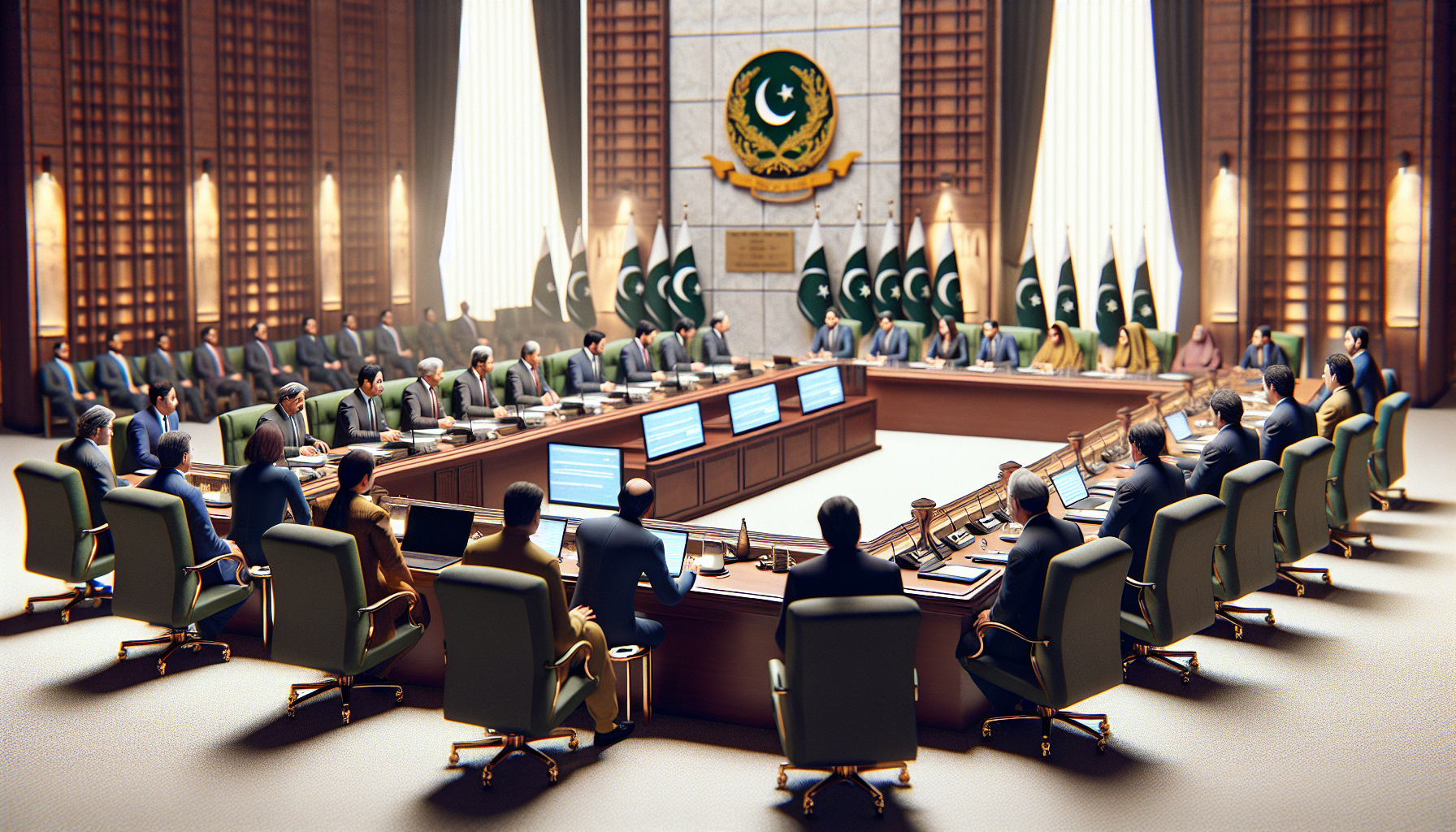
ISLAMABAD: On Wednesday, the federal and provincial governments convened a high-level consultative meeting to review the framework for a targeted subsidy on petroleum products. The session, chaired by Federal Minister for Finance and Revenue Senator Muhammad Aurangzeb at the Finance Division, was held under the directives of Pakistan’s President and Prime Minister.
The meeting commenced with an extensive briefing from the Petroleum Division, which confirmed that the supply of petroleum products nationwide remains stable and sufficient. Subsequently, the Ministry of Information Technology and Telecommunication introduced proposed technological solutions aimed at implementing the targeted subsidy mechanism, emphasizing transparency and efficient delivery.
Provincial representatives contributed their perspectives on the current petroleum situation and potential policy measures. Sindh Chief Minister Syed Murad Ali Shah commended the federal government for ensuring uninterrupted fuel availability while stressing the need for behavioral initiatives to encourage fuel conservation.
Representing Punjab, Senior Minister Marriyum Aurangzeb highlighted the importance of developing multiple policy scenarios to address the fluctuating petroleum prices. She underscored that any decrease in international petroleum costs must be passed on to consumers promptly and advocated for integrating behavioral strategies into crisis management to foster sustainable consumption patterns.
Khyber Pakhtunkhwa’s Finance Minister Muzzammil Aslam praised the management of petroleum supplies by Federal Ministers Muhammad Aurangzeb and Ali Pervaiz Malik, noting Pakistan’s comparatively superior handling of the situation relative to other regional countries. Balochistan’s Finance and Mines Minister Mir Shoaib Nosherwani also shared his insights during the discussions.
The Finance Division provided an update on the fiscal landscape, pointing out the limited fiscal space primarily confined to revenues from the petroleum levy. It emphasized that any subsidy relief must be carefully designed to preserve macroeconomic stability.
In his remarks, the Finance Minister framed the current challenges as an opportunity to implement structural reforms rather than viewing them as constraints. He stressed the necessity of data-driven policymaking, particularly in taxation and subsidy frameworks, to enhance transparency, efficiency, and the precise targeting of relief measures. Additionally, he highlighted the importance of promoting responsible consumption and ensuring that policy responses remain fiscally prudent while maximizing benefits for the public.
The attendees agreed to accelerate efforts to finalize the targeted subsidy framework by leveraging technological solutions and maintaining strong coordination between federal and provincial governments. The meeting included Chief Secretaries from all four provinces, Federal Minister for Petroleum Ali Pervaiz Malik, Federal Minister for Information Technology and Telecommunication Shaza Fatima Khawaja, federal secretaries of Finance, Petroleum, and IT & Telecommunication, as well as senior officials including the Chairman of NADRA.
