

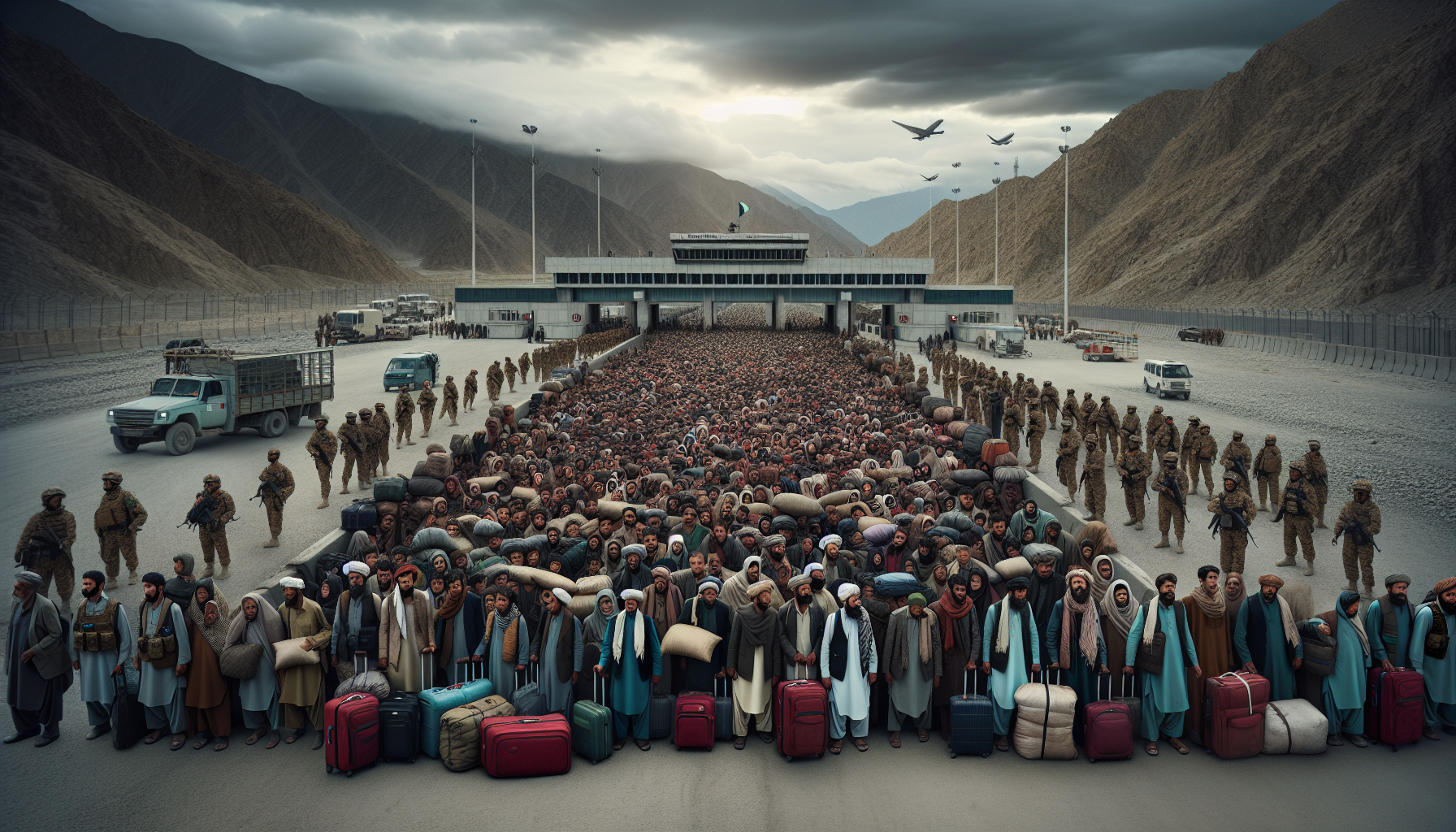
The Torkham border crossing, a crucial link between Pakistan and Afghanistan, has been temporarily reopened, offering a brief opportunity for hundreds of Afghan refugees to return home after nearly a month of being stranded. The crossing had been closed following violent clashes, leaving many families in a state of uncertainty and hardship.
On Thursday, the atmosphere at the border was marked by a mix of relief and frustration. Refugees, many of whom have resided in Pakistan for decades, lined up with their belongings, eager to cross before the passage was closed again. One returnee described the past weeks as a period of “immense hardship,” marked by a lack of permanent shelter and uncertainty about the future. Others voiced frustration over the diplomatic stalemate that has halted trade since Pakistani airstrikes in October.
In a significant development, the reopening occurs amid heightened geopolitical tensions. Although the border was briefly opened for humanitarian reasons, the overall security situation remains unstable. Pakistan’s Foreign Ministry confirmed that military operations targeting locations in Afghanistan have resumed after a short pause, effectively ending hopes for an immediate ceasefire.
This escalation follows some of the deadliest clashes in recent years, with heavy casualties reported on both sides during last month’s fighting. Islamabad has recently taken a firm stance on migration, insisting that all Afghan nationals without valid visas must leave Pakistan. Authorities justify this crackdown by citing security concerns, alleging involvement of some individuals in militant activities and domestic crimes.
For the estimated two million Afghans who have long sought refuge in Pakistan from ongoing conflicts in their homeland, the temporary reopening of Torkham represents a bittersweet chance to return to an uncertain future. The brief window at the border underscores the fragile nature of the situation and the complex challenges faced by refugees amid continuing regional instability.
