

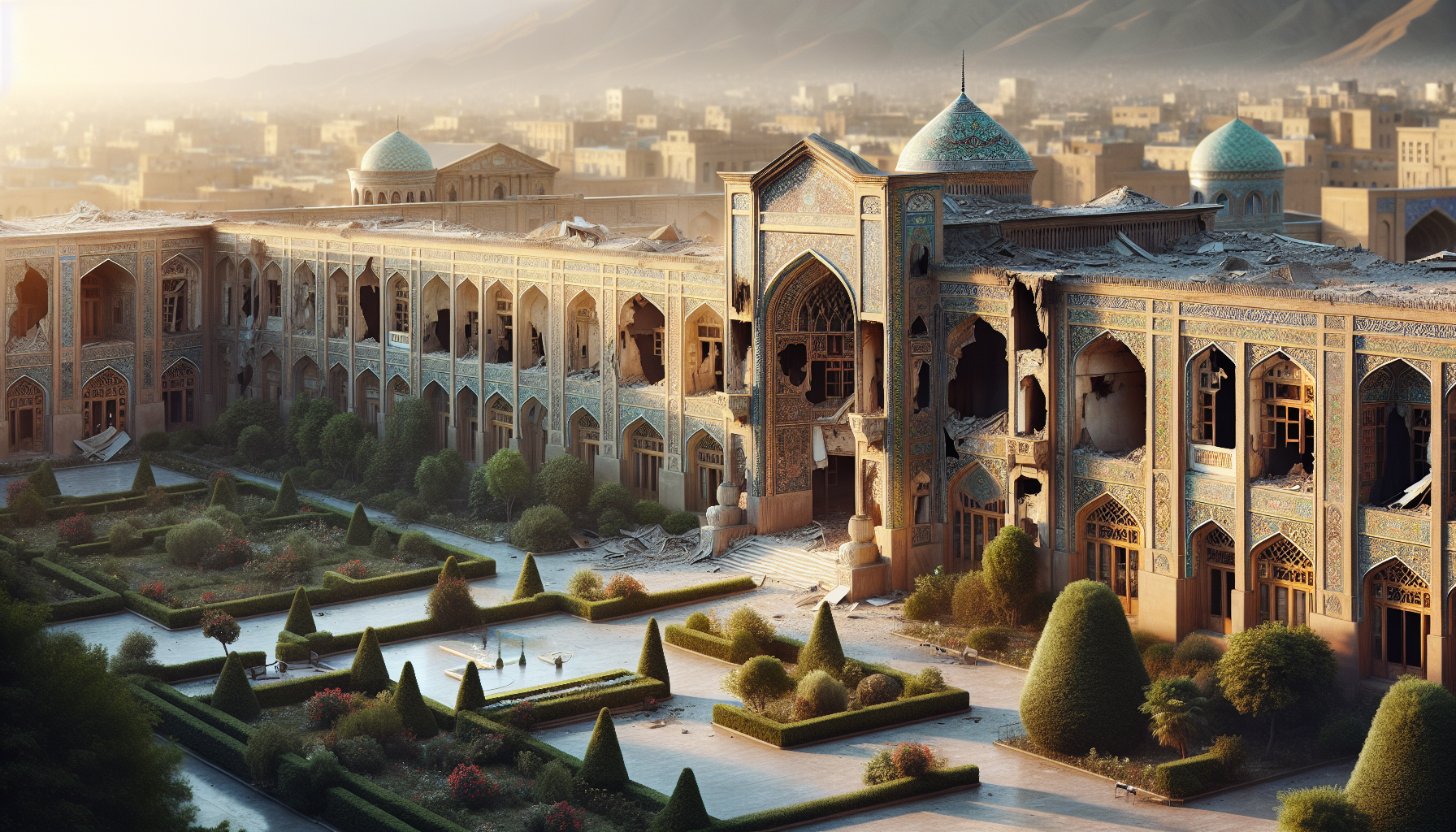
Al Jazeera recently conducted a report from Tehran, focusing on the Golestan Palace, a UNESCO World Heritage site renowned for its historical and architectural significance. The palace, which dates back to the Qajar era, is a major cultural landmark in Iran, attracting scholars and tourists alike. The visit comes amid claims by Iranian authorities that the site sustained damage due to military strikes attributed to US and Israeli forces. This development raises concerns about the protection of cultural heritage in conflict zones.
Golestan Palace, located in the heart of Tehran, has long been a symbol of Iran’s rich history and artistry, featuring intricate tile work, mirrored halls, and lush gardens. The reported damage to such a treasured monument underscores the broader impact of geopolitical conflicts on cultural preservation. Notably, the US and Israel have been involved in various covert and overt operations in the region, intensifying tensions with Iran. The palace’s condition now serves as a poignant reminder of the collateral effects of these hostilities.
In a significant development, the international community may face increased pressure to safeguard heritage sites amid ongoing conflicts in the Middle East. The damage to Golestan Palace could prompt UNESCO and other cultural organizations to reassess protective measures for vulnerable landmarks. Meanwhile, Iran’s highlighting of the palace’s damage aims to draw global attention to the consequences of military actions on cultural identity and history. This incident may influence diplomatic dialogues surrounding cultural preservation and conflict resolution in the region.
