

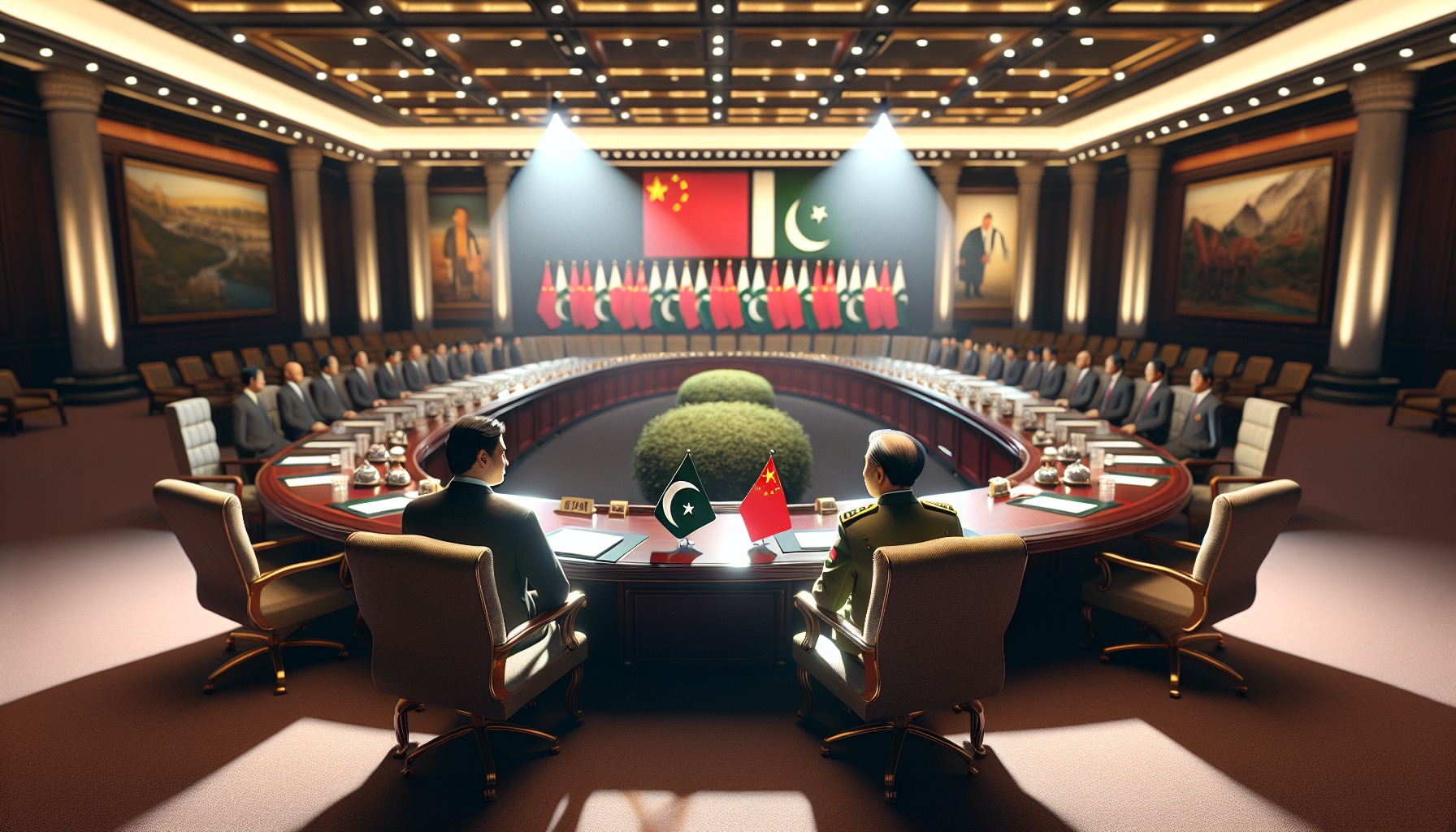
Pakistan and China have jointly urged the United States, Israel, and Iran to immediately halt hostilities and commence peace negotiations to resolve the ongoing conflict in the Middle East. This appeal followed a meeting between Pakistan’s Deputy Prime Minister and Foreign Minister Ishaq Dar and China’s Foreign Minister Wang Yi in Beijing on Tuesday.
The conflict, which erupted on February 28, has lasted over a month and involves the US, Israel, and Iran, significantly impacting the broader Middle East region. The war has also triggered severe economic repercussions, notably due to Iran’s effective blockade of oil and gas shipments through the strategic Strait of Hormuz, disrupting global markets.
During their discussions, both ministers emphasized the urgent need for an immediate cessation of hostilities and concerted efforts to prevent the conflict’s expansion. They also stressed the importance of allowing humanitarian aid access to all affected areas.
This high-level bilateral meeting coincides with Pakistan’s intensified diplomatic efforts to mediate an end to the US-Israel conflict with Iran. Islamabad recently hosted a quadrilateral meeting involving foreign ministers from Saudi Arabia, Turkiye, and Egypt, facilitating communication between Washington and Tehran.
Following the Islamabad summit, Ishaq Dar and Wang Yi convened in Beijing to review bilateral relations and deliberate on regional and shared concerns. Both countries called for the swift initiation of dialogue, underscoring the necessity to protect the sovereignty, territorial integrity, national independence, and security of Iran and the Gulf states.
They highlighted that dialogue and diplomacy remain the only viable means to resolve disputes, urging all parties to commit to peaceful conflict resolution and to refrain from using or threatening force during negotiations. The two nations also called for the protection of civilians and non-military targets, urging all involved to comply fully with international humanitarian law.
Additionally, Pakistan and China condemned attacks on critical infrastructure, including energy, desalination, power facilities, and peaceful nuclear installations such as nuclear power plants. Recognizing the Strait of Hormuz as a vital global shipping route for goods and energy, they called for safeguarding ships and crews stranded in the waterway and restoring safe passage for civilian and commercial vessels at the earliest.
Both countries advocated for genuine multilateralism to reinforce the United Nations’ central role and urged the parties involved in the Iran conflict to support the establishment of a comprehensive peace framework to achieve lasting stability.
Meanwhile, reports indicate that US President Donald Trump expressed willingness to end military operations against Iran even if the Strait of Hormuz remains largely closed, deferring efforts to reopen it to a later time.
In his televised address after the Islamabad quadrilateral meeting, Deputy Prime Minister Dar emphasized the urgent need for a permanent ceasefire and highlighted Pakistan’s role in facilitating regional dialogue to ease tensions stemming from the Iran conflict.
During the Beijing meeting, Dar and Wang Yi also reviewed the strong bilateral relationship, exchanged views on West Asian regional developments, and discussed a broad spectrum of mutual interests. Both reaffirmed their commitment to deepening the “all-weather strategic cooperative partnership” as they mark the 75th anniversary of diplomatic ties this year.
Discussions focused on promoting high-quality development, expanding economic and strategic cooperation under the China-Pakistan Economic Corridor (CPEC) 2.0, and enhancing high-level exchanges and collaboration across various sectors. They also pledged to maintain close coordination in multilateral forums and agreed to sustain regular communication.
The Foreign Office described Deputy Prime Minister Dar’s visit to Beijing as a reflection of the enduring warmth, mutual trust, and unbreakable friendship that characterize Pakistan-China relations.
