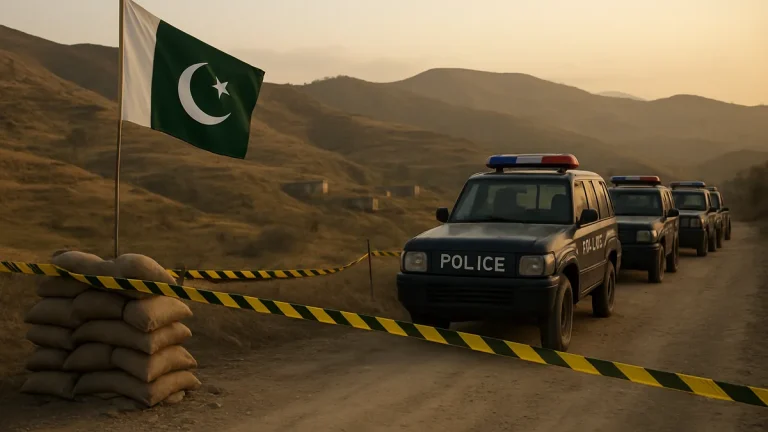
In a significant military response to escalating cross-border hostilities, Pakistan initiated a large-scale offensive named “Operation Ghazab-lil-Haq,” targeting Taliban military infrastructure across key Afghan provinces including Kabul, Paktia, and Kandahar. This operation marks a decisive retaliation against unprovoked attacks launched by the Afghan Taliban regime along Pakistan’s western frontier, signaling Islamabad’s firm stance on safeguarding its territorial integrity.
During the course of the operation, Pakistani forces reportedly inflicted heavy damage on Taliban assets, destroying multiple military headquarters, tanks, artillery units, and numerous check posts. The Director General of the Inter-Services Public Relations (DG ISPR) confirmed that 274 Taliban fighters were killed, while over 400 sustained injuries in the retaliatory strikes. This substantial toll reflects the intensity and scale of Pakistan’s counteroffensive, which was launched following repeated provocations by Afghan forces.
Officials revealed that the initial spark for the operation was a series of unprovoked attacks by Afghan Taliban forces targeting various border locations. In response, Pakistan’s security apparatus mobilized swiftly, conducting coordinated strikes that resulted in the destruction of more than 115 tanks, artillery pieces, and armored vehicles. Additionally, 73 Taliban check posts were completely demolished, and Pakistani forces successfully captured 18 of these strategic positions, thereby strengthening their control along the volatile border region.
Meanwhile, in Khyber Pakhtunkhwa, militants attempted to execute drone attacks in the districts of Abbottabad, Swabi, and Nowshera. However, Pakistan’s advanced anti-drone defense systems intercepted and neutralized all incoming drones, preventing any casualties or damage. Federal Information Minister Attaullah Tarar highlighted these thwarted attacks as further evidence of the Afghan Taliban regime’s direct involvement in orchestrating terrorist activities within Pakistan’s borders.
In addition to ground operations, the Pakistan Air Force conducted precision air strikes targeting critical Taliban military installations. These aerial assaults focused on key locations such as Kabul, Kandahar, and Paktia, with a significant ammunition depot in Nangarhar province being completely destroyed. Security sources disclosed that two brigade headquarters in Kabul were obliterated, while in Kandahar, both a corps headquarters and a brigade headquarters were targeted and demolished. The air strikes also destroyed an ammunition depot and a logistics base in Kandahar, and a corps headquarters in Paktia was eliminated, further crippling Taliban operational capabilities.
Taliban officials have acknowledged the bombings, confirming that a military center in Kabul was struck around 1:50 am. The timing and precision of these strikes underscore Pakistan’s strategic intent to dismantle the Taliban’s command and control infrastructure in response to their cross-border aggression.
On the ground, Pakistani forces made significant territorial gains by capturing five Afghan posts in Paktia province opposite South Waziristan, raising the Pakistani flag to assert control. These posts included positions opposite Shawal, Angoor Adda, and Zarmalan. The Afghan terminal at Angoor Adda was also destroyed during the operation, disrupting Taliban supply lines and border operations. Heavy retaliatory actions were reported across multiple sectors along the Pak-Afghan border, including Bajaur, Tirah, Chitral, Mohmand, Wali Khan, and Kurram, where several Taliban check posts were destroyed and additional fighters were neutralized. Security officials also shot down quadcopters allegedly deployed by the Taliban to target Pakistani positions, showcasing the multifaceted nature of the conflict.
However, the conflict’s spillover into civilian areas has raised concerns. Following significant losses, Taliban forces reportedly shelled civilian zones in Bajaur, with mortar rounds landing in the Laghrai area. This attack injured five civilians, including three women, who were promptly transported to Khar Hospital for medical treatment. A mosque in Bajaur also sustained damage during the shelling, highlighting the tragic human cost of the ongoing hostilities.
Information Minister Attaullah Tarar provided a detailed account of the operation’s outcomes, confirming that 133 Taliban fighters were killed and over 200 wounded in the retaliatory strikes. He emphasized the destruction of 27 Taliban posts and the capture of nine others. The minister further detailed the elimination of two corps headquarters, three brigade headquarters, two ammunition depots, one logistics base, three battalion headquarters, and two sector headquarters. More than 80 tanks, artillery guns, and armored personnel carriers were also destroyed, delivering a severe blow to Taliban military capabilities.
Prime Minister’s spokesperson Musharraf Zaidi confirmed that the operations were ongoing as of 3:45 am on Friday, February 27, and categorically denied any reports suggesting that Pakistani posts had been overrun or personnel taken captive. President Asif Ali Zardari reaffirmed the armed forces’ unity and commitment to defending Pakistan’s sovereignty and territorial integrity, asserting that the country would not be cowed by any threats or aggression. Similarly, Prime Minister Shehbaz Sharif reiterated Pakistan’s readiness to protect its borders and respond firmly to any hostile acts.
The international community has expressed concern over the escalating tensions. Russia and Iran have called for an immediate ceasefire and urged both Pakistan and Afghanistan to resolve their differences through diplomatic dialogue. The Russian Foreign Ministry emphasized the importance of de-escalation, while Iran’s Foreign Minister Abbas Araghchi offered to mediate talks aimed at fostering reconciliation and cooperation between the two neighbors. In a related development, Pakistan’s Deputy Prime Minister and Foreign Minister Senator Mohammad Ishaq Dar engaged in a telephone conversation with Turkish Foreign Minister Hakan Fidan to discuss recent regional developments, particularly the situation between Pakistan and Afghanistan.
Security officials have reiterated that Pakistan’s armed forces remain vigilant and fully prepared to defend the border against any further aggression, underscoring the country’s resolve to maintain peace and security in the region. As the situation continues to evolve, the international community watches closely, hoping for a peaceful resolution to the conflict that threatens stability along this critical frontier.