

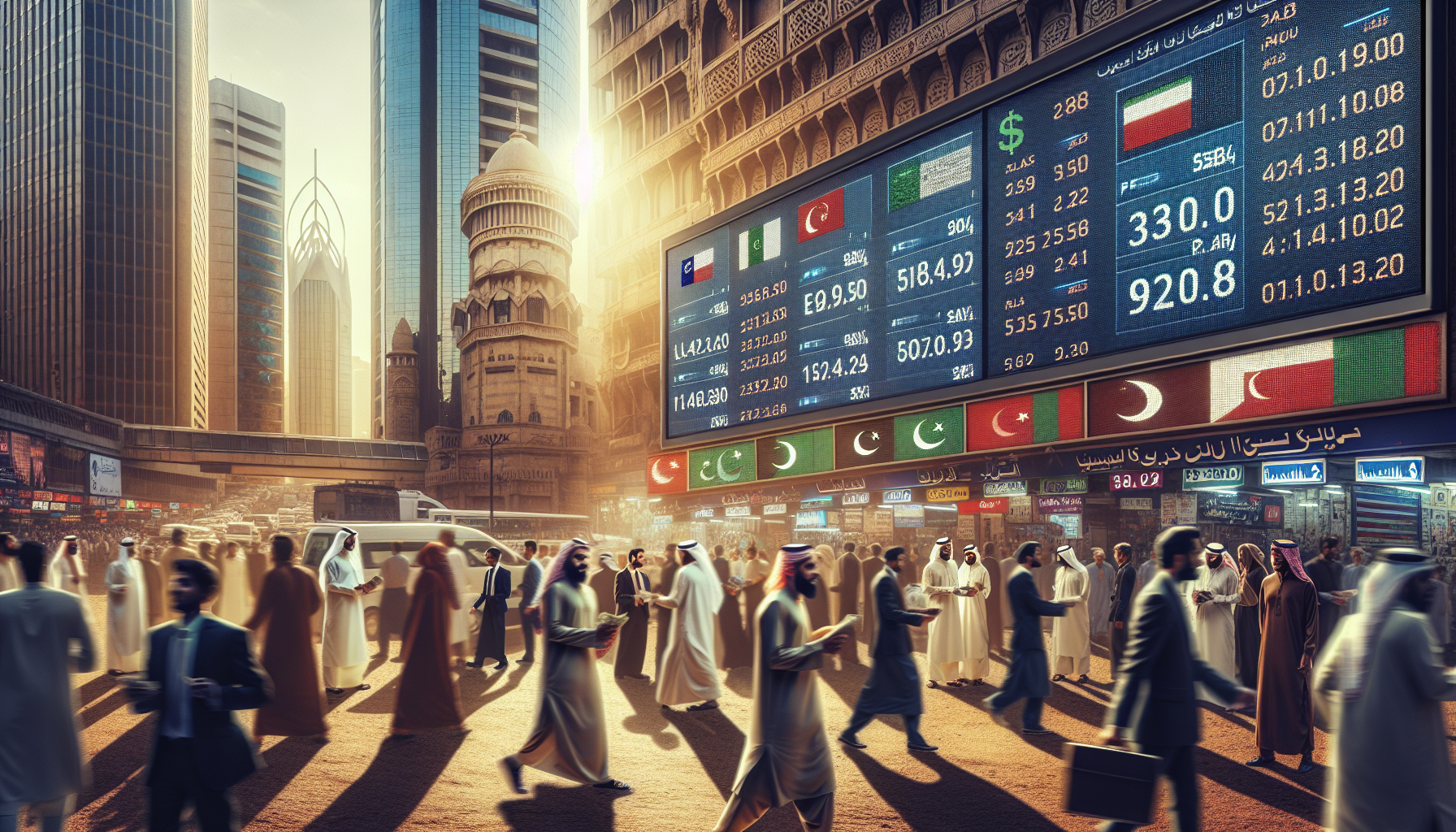
On March 30, 2026, the Saudi Riyal (SAR) is exchanging at Rs74.42 against the Pakistani Rupee (PKR) in Karachi’s open market. The selling price remains close to Rs74.99. This currency pair has been confined within an exceptionally narrow and low-volatility range since early January 2026, marking over eleven weeks of stable price movement.
Today’s rate remains well below the mid-2025 peak of Rs76.03 recorded in July and is close to the softer levels last seen consistently in late October 2025. This stability reflects a prolonged period of minimal fluctuations in the SAR-PKR exchange rate.
Meanwhile, the Saudi Riyal continues to be the primary source of monthly income for millions of Pakistani families. Workers employed in Saudi Arabia’s construction, healthcare, hospitality, and domestic sectors keep the remittance flow steady and dependable. Saudi Arabia remains the leading country for remittances, contributing $913.3 million in May 2025 alone, the highest single-country inflow.
From July 2024 to May 2025, total remittances reached $34.9 billion, representing a robust 28.8% increase compared to the previous year. At the current exchange rate of Rs74.42, every 1,000 Riyals sent home converts to Rs74,420. However, this reflects a gradual but persistent decline from earlier 2025 levels, placing quiet but growing pressure on families reliant on these funds amid ongoing inflation.
In economic terms, a Riyal trading between Rs74.40 and Rs74.50 creates mixed effects. Families receiving remittances experience a slow erosion of their real purchasing power. Conversely, importers of Saudi crude oil, refined products, and petrochemicals benefit from reduced costs in rupee terms, providing modest relief to Pakistan’s trade balance.
Foreign exchange reserves, which stood above $11 billion in late 2024, continue to be bolstered by these inflows, aiding the State Bank of Pakistan in managing inflation and external debt. Additionally, the relatively softer Rupee helps maintain the competitiveness of Pakistani exports such as rice, textiles, leather, surgical instruments, and fresh produce in global markets.
For context, the Saudi Riyal is subdivided into 100 halala and is firmly pegged to the US dollar at approximately 3.75 SAR per USD, managed by the Saudi Arabian Monetary Authority (SAMA) to ensure maximum stability. The Pakistani Rupee, symbolized as ₨, operates under a managed float system overseen by the State Bank of Pakistan, influenced by inflation, trade balance, and crucially, remittance volumes.
Looking forward, the SAR-PKR exchange rate has remained in this compressed range for over eleven weeks, one of the longest periods of sustained low volatility in recent memory. With strong outflows of overseas Pakistani workers and seasonal factors such as Hajj and Umrah travel and fiscal year-end bonuses continuing to support remittances, this corridor remains one of Pakistan’s most dependable economic lifelines.
Any significant movement outside this range would likely depend on major changes in global dollar strength, oil prices, or domestic foreign exchange reserves. For now, the Riyal at Rs74.42 remains a quiet yet vital support for millions of households, even as the gradual decline in value is increasingly felt.
