

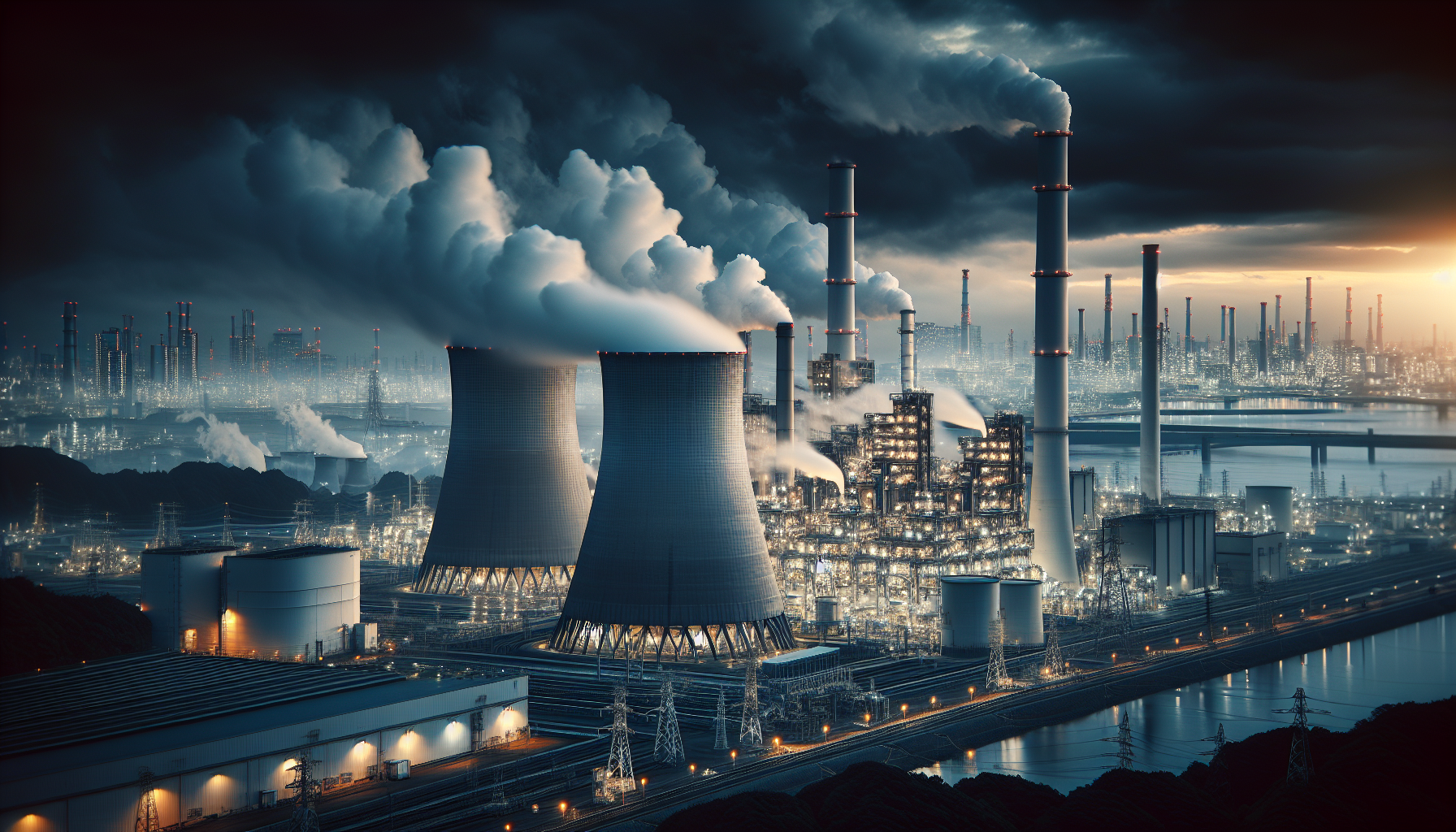
Japan’s government is preparing to temporarily relax limits on coal-fired power plants to mitigate an energy shortage triggered by the ongoing conflict in the Middle East, an industry official confirmed on Friday. Earlier reports indicated that the Ministry of Economy, Trade and Industry would unveil this proposal during an expert panel meeting scheduled for the same day.
Previously, coal-fired thermal power stations, known for their high carbon dioxide emissions, were restricted to operating at no more than 50 percent capacity. However, the new plan will permit these older, less efficient coal plants to run at full capacity for one year, starting from the new fiscal year in April.
This move aligns with a broader regional trend, as several Asian countries are increasing reliance on coal to sustain their energy needs amid disruptions caused by the Middle East war. The conflict, which began late last month, has led Iran to partially close the vital Strait of Hormuz, a key energy trade route. South Korea has announced plans to remove limits on coal power generation and boost nuclear energy output, while the Philippines aims to increase coal plant production to stabilize electricity prices amid gas supply challenges.
Thermal power plants generate approximately 70 percent of Japan’s electricity, with coal being a primary fuel source. Although Japan depends heavily on the Middle East for oil, nearly 80 percent of its coal imports come from Australia and Indonesia, the Agency for Natural Resources and Energy.
In a related development, Japan began releasing additional reserves from its strategic oil stockpile on Thursday to counter supply difficulties, as about 90 percent of its oil imports typically originate from the Middle East.
