

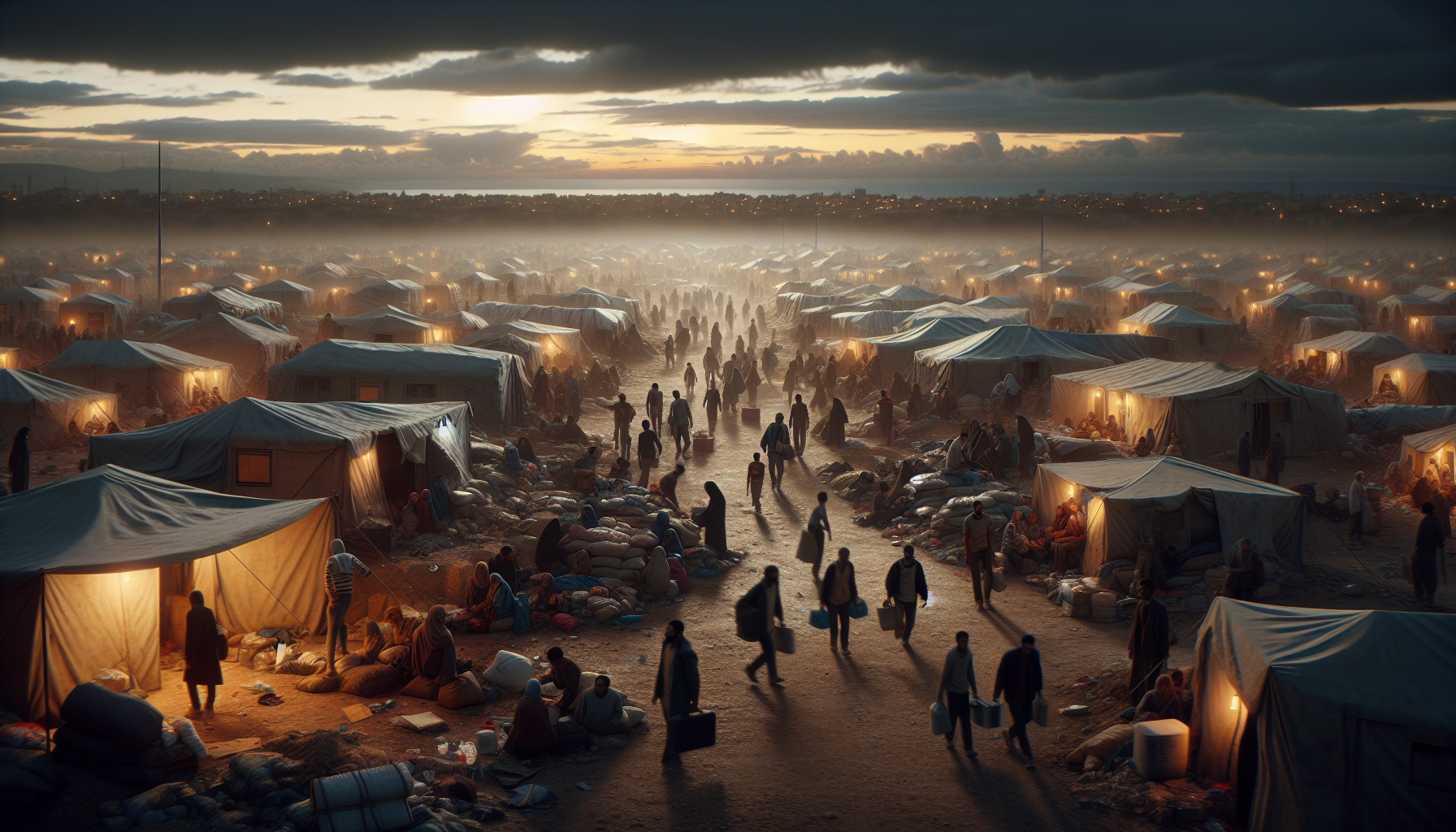
In the wake of recent Israeli airstrikes targeting the southern suburb of Dahiyeh in Beirut, Palestinian refugees residing in Lebanon are once again facing the harsh reality of forced displacement. Among those affected is Dalal Dawali, a Palestinian refugee who was compelled to leave her home and seek refuge in the Beddawi camp, a site that has long served as a sanctuary for displaced Palestinians.
The bombing campaign has intensified the precarious situation for Palestinian communities in Lebanon, many of whom have already endured decades of instability and hardship. Dahiyeh, known for its dense Palestinian population, has been a frequent target in regional conflicts, and the recent air raids have exacerbated the vulnerability of its residents. Dalal’s flight to Beddawi camp is emblematic of the broader displacement crisis that continues to unfold amid ongoing hostilities.
It is worth noting that Beddawi camp itself is no stranger to overcrowding and limited resources, conditions that are further strained as new waves of refugees arrive seeking safety. The camp, located in northern Lebanon, has historically been a refuge for Palestinians who have been uprooted from other parts of the country or neighboring regions. Dalal’s arrival there underscores the cyclical nature of displacement faced by Palestinian refugees, caught between conflict zones and inadequate living conditions.
Meanwhile, humanitarian organizations and local authorities are grappling with the challenge of providing adequate support to those displaced by the recent bombings. The influx of refugees into camps like Beddawi places additional pressure on already stretched services, including shelter, food, and medical care. The situation calls for urgent attention to ensure that the basic needs of displaced Palestinians are met during this turbulent period.
In a related development, the international community continues to express concern over the escalating violence in Lebanon and its impact on vulnerable populations. The plight of Palestinian refugees, who have long been marginalized and denied full rights in Lebanon, remains a critical issue amidst the broader geopolitical tensions in the region. Dalal Dawali’s story is a poignant reminder of the human cost of conflict and the enduring struggle for safety and stability faced by displaced communities.
