

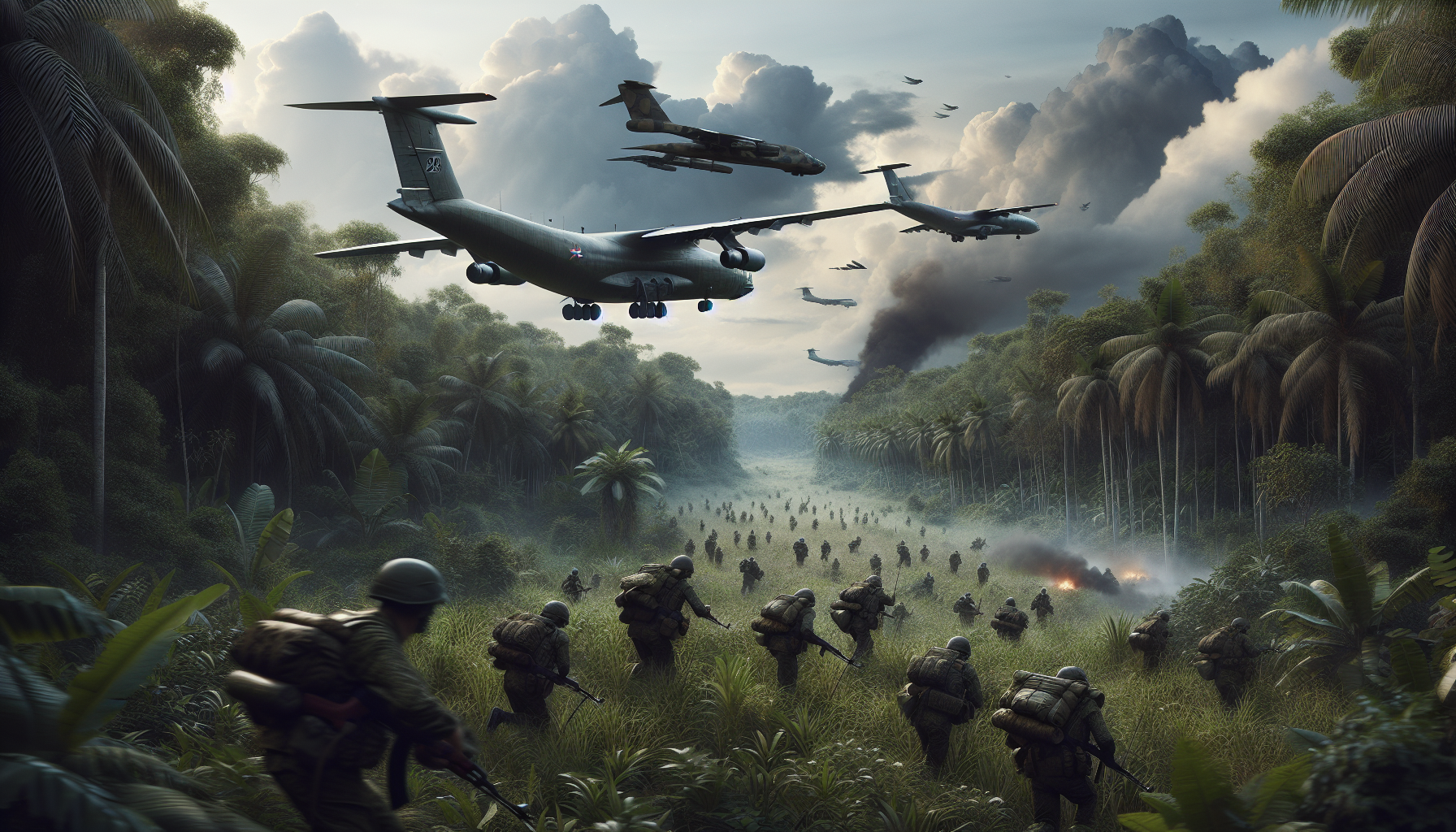
The ongoing civil war in Myanmar has increasingly exhibited the influence of Russian military strategies and weaponry, drawing parallels to the conflict witnessed in Ukraine. From the deployment of Russian-made aircraft to the controversial use of large waves of conscripted soldiers in aggressive offensives, the tactics shaping Myanmar’s battlefield bear a striking resemblance to those that have become notorious in the Ukrainian war.
It is worth noting that the Myanmar military, also known as the Tatmadaw, has been actively incorporating Russian equipment and combat methods into its operations. This includes the use of Russian fighter jets and helicopters, which have significantly enhanced the military’s aerial capabilities. These aircraft have been instrumental in conducting airstrikes and reconnaissance missions against various ethnic armed groups and opposition forces within Myanmar.
Meanwhile, the ground tactics employed by Myanmar’s armed forces have also mirrored Russian approaches, particularly the deployment of mass conscripts in what are often described as ‘meat assaults.’ These offensives involve sending large numbers of poorly trained and inadequately equipped soldiers into heavily fortified enemy positions, resulting in high casualty rates. Such tactics were infamously observed during the early phases of the Ukraine conflict, where Russian forces relied heavily on overwhelming numbers despite significant losses.
Experts suggest that the adoption of these strategies by Myanmar’s military reflects a broader trend of Russian influence extending beyond its immediate geopolitical sphere. The transfer of military hardware and tactical doctrines appears to be part of Russia’s effort to maintain strategic partnerships and expand its defense footprint in Southeast Asia. This development has raised concerns among regional observers about the potential for prolonged conflict and increased civilian suffering in Myanmar.
In a related development, humanitarian organizations have reported a sharp increase in casualties and displacement as a result of intensified fighting. The use of Russian-style air power combined with relentless ground assaults has devastated several regions, exacerbating the already dire humanitarian situation. Calls for international intervention and peace negotiations have grown louder as the conflict shows little sign of abating.
As Myanmar’s civil war continues to evolve under the shadow of Russian military influence, the international community remains watchful. The replication of tactics seen in Ukraine within Myanmar’s borders underscores the global reach of modern warfare strategies and the complex challenges faced in resolving such conflicts peacefully.
